
Last updated September 20, 2026
Free on-site gate assessment - hinges, posts, and your LiftMaster or Nice gate operator checked before anything is quoted
The assessment is free and the quote is the invoice.
 Before
 After
After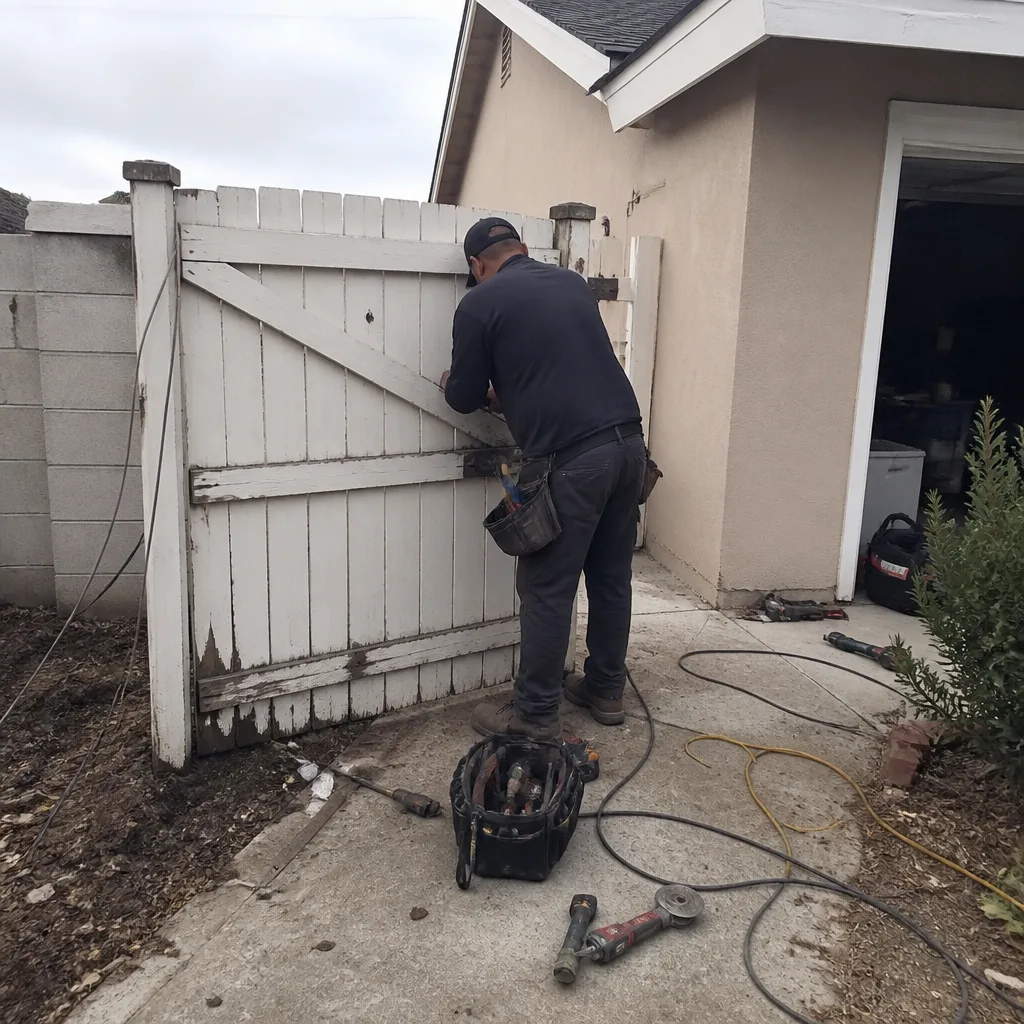 Before
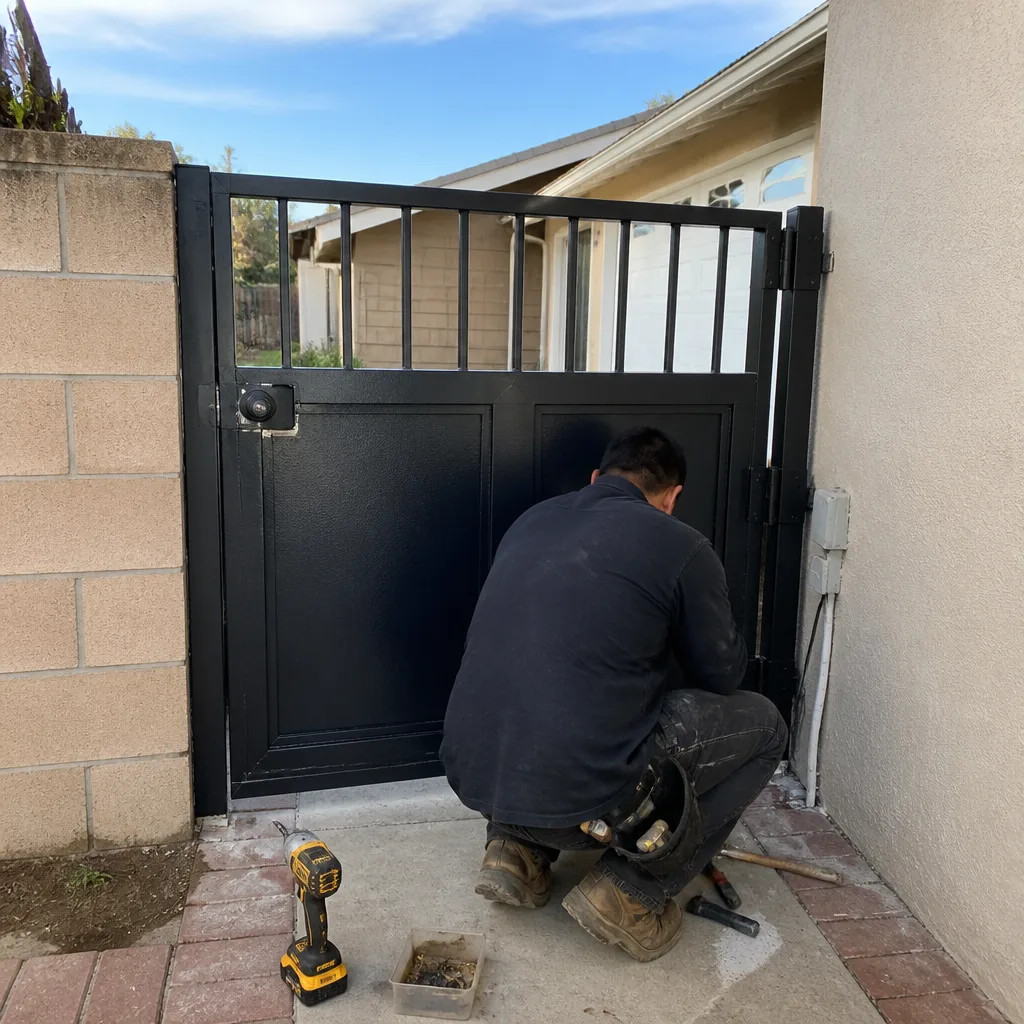 After
After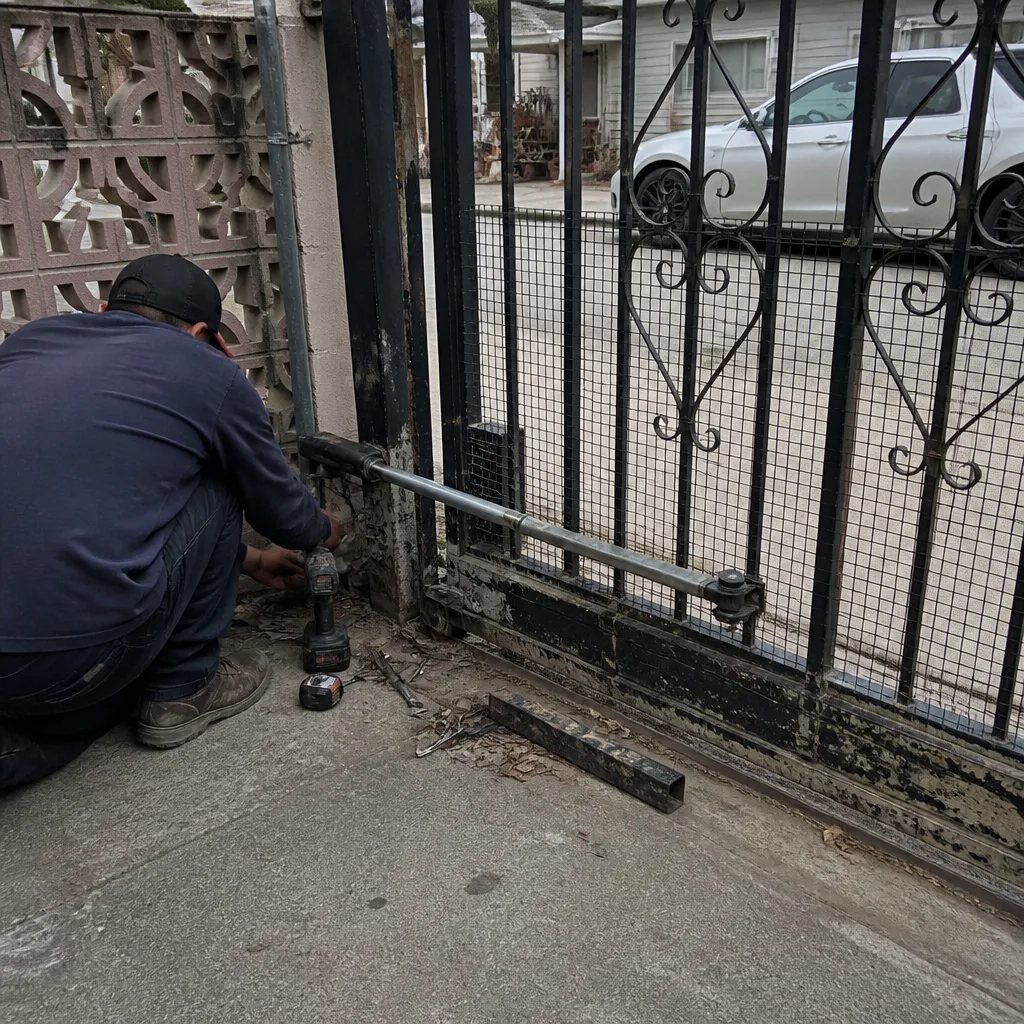 Before
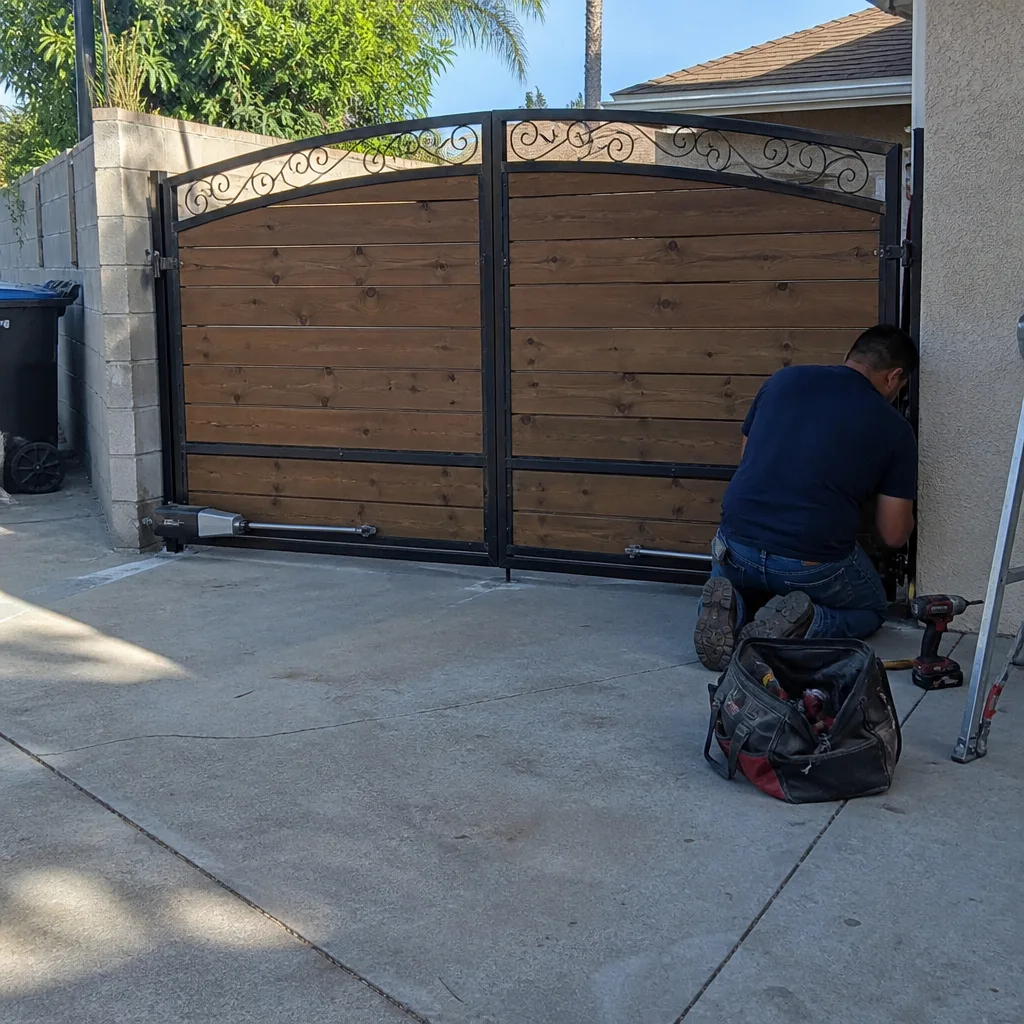 After
AfterGate Repair Cost Breakdown: The Anaheim Homeowner’s Reference for 2026
Two Anaheim homeowners call two different gate companies on the same Tuesday morning. Both have the identical problem: a V-groove roller that has seized, causing a steel gate to drag and grind against its track. One receives a quote for $180. The other gets a quote for $410. Neither company is lying, and neither quote is necessarily unreasonable. The gap exists because one company itemized diagnostic time, parts sourcing, and documentation while the other bundled everything into a single number that no one can audit. This Gate Repair guide exists to close that gap. By the time you finish reading, you will know how to read a gate repair quote the way a technician reads a wiring diagram: line by line, with an eye for what is present and what is quietly missing. We will walk through 2026 parts costs, honest labor math, the diagnostic fee question, repair-versus-replace break-even points for operators, and why documentation on a residential gate in Anaheim is not a nicety but a long-term cost control. This is the reference we wish every homeowner had before the first broken roller.
Quick Answer
Gate repair in Anaheim in 2026 typically costs between $180 and $650 for mechanical fixes like roller or hinge replacement, and between $400 and $1,400 when the operator, control board, or actuator arm is involved. The single biggest variable in any quote is whether diagnostic time and documentation are itemized or hidden. A written, line-item price agreed before work starts will almost always save you money over a five-year window, even when the sticker price looks slightly higher than a verbal estimate; see our Gate Repair Maintenance Checklist for Anaheim Homeowners for what to document.
Table of Contents
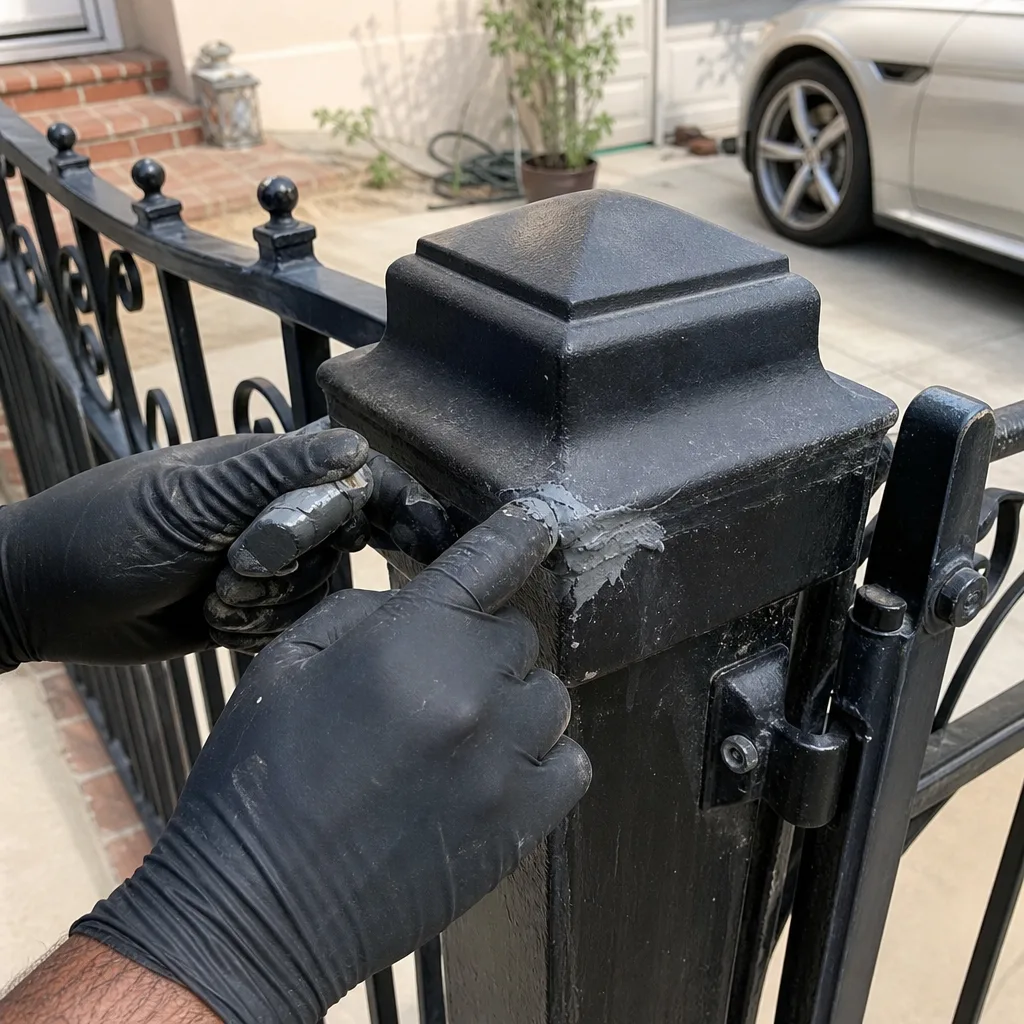
- 2026 Parts-Cost Anchors for Common Anaheim Repairs
- How to Read a Labor Line: What an Honest Hourly Rate Covers
- The Diagnostic Fee Question: Why It Exists and When It Should Disappear
- Repair vs. Replace for Gate Operators: The Break-Even Math
- What Post-Job Documentation Is Worth Over Five Years
- Anaheim-Specific Factors That Move Gate Repair Pricing
- How to Read Your Gate Repair Quote: A Step-by-Step Walkthrough
- Common Mistakes to Avoid
- When to Call a Professional
- Frequently Asked Questions
- The Bottom Line
BeforeAfter2026 Parts-Cost Anchors for Common Anaheim Repairs
Every legitimate gate repair quote is built on top of a parts cost that you can verify independently if you know what you are looking at. The most common repairs on residential gates in Anaheim involve a short list of components, and their wholesale prices are remarkably stable across suppliers. What varies is the markup, and markup is where a transparent quote separates itself from a bundled one.
Here are the 2026 parts-cost anchors for the four repairs we see most often. These are wholesale ranges before any markup, before labor, and before the drive to your property. A transparent residential quote will typically show these parts at a 20 to 40 percent margin over wholesale, which is how a parts supplier and a service company both stay in business. A quote that hides the part number or refuses to show the line item is asking you to trust a number you cannot check.
V-Groove Rollers (Most Common Repair)
Wholesale cost: $12 to $35 per roller, depending on load rating and bearing type. Anaheim homes with heavier steel gates, the kind common in the neighborhoods east of the 57 and in the tracts around Anaheim Hills, often require a higher-load roller rated for 1,500 pounds or more. Those sit at the top of that range.
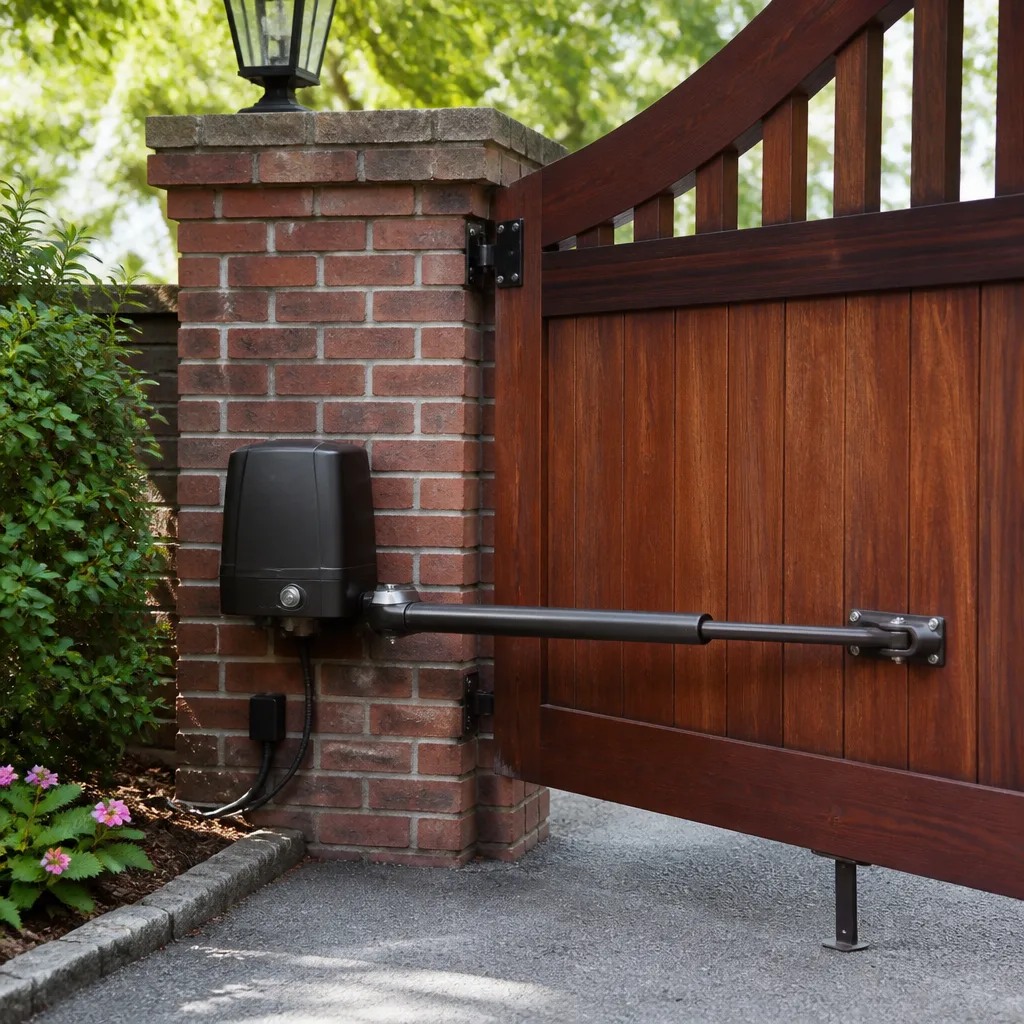
Actuator Arms (Swing Gate Operators)
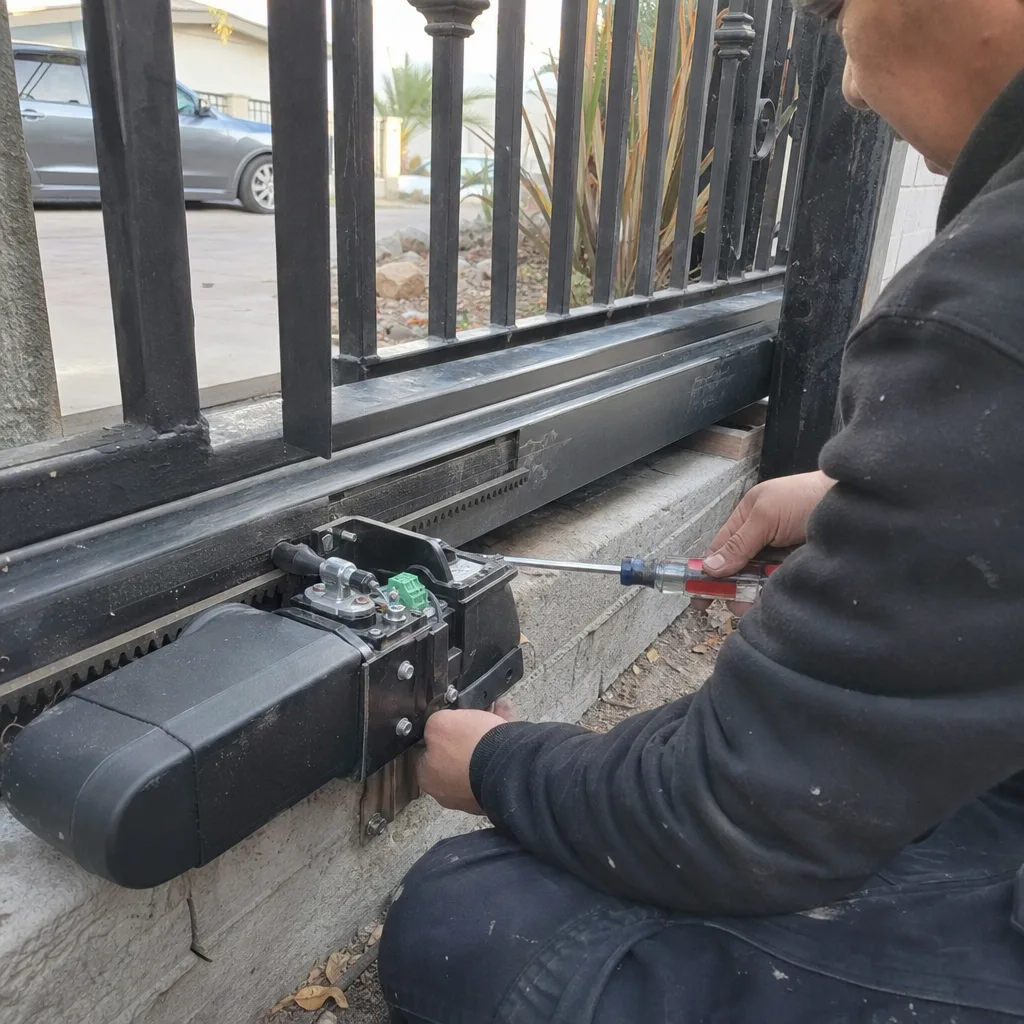
Wholesale cost: $140 to $380. This is the mechanical arm that pushes and pulls a swing gate open. When it fails, the failure is usually at the internal drive screw or the coupling. The brand matters here: a LiftMaster arm and a Mighty Mule arm are not interchangeable, and the price difference is real. We service both, along with seven other brands, and the arm replacement cost is dictated by the manufacturer, not by the installer.
Control Boards (Operator Motherboards)
Wholesale cost: $180 to $520. This is the single most misdiagnosed part in gate repair, because a board that appears dead is often being fed bad information by a limit switch or a photo-eye that costs a fraction of the board. A technician who quotes a board replacement without first checking the switches and photo-eyes is either guessing or padding the invoice.
Photo-Eyes (Infrared Safety Beams)
Wholesale cost: $35 to $90 per pair, with DoorKing and Elite branded units falling in that range. These are the sensors that stop a gate when anything crosses its path. In Anaheim, where direct sun and heat can warp plastic housings over several summers, misalignment is more common than outright failure. A misaligned photo-eye may cost nothing to fix but fifteen minutes of adjustment.
The takeaway: when you see a parts line on a quote, ask for the part number. If the company will not provide it, you are not looking at a transparent price. And if the quote bundles parts and labor into one round number, you have no way to know whether you are paying $40 for a roller and $140 in labor or $140 for a roller and $40 in labor.
How to Read a Labor Line: What an Honest Hourly Rate Covers
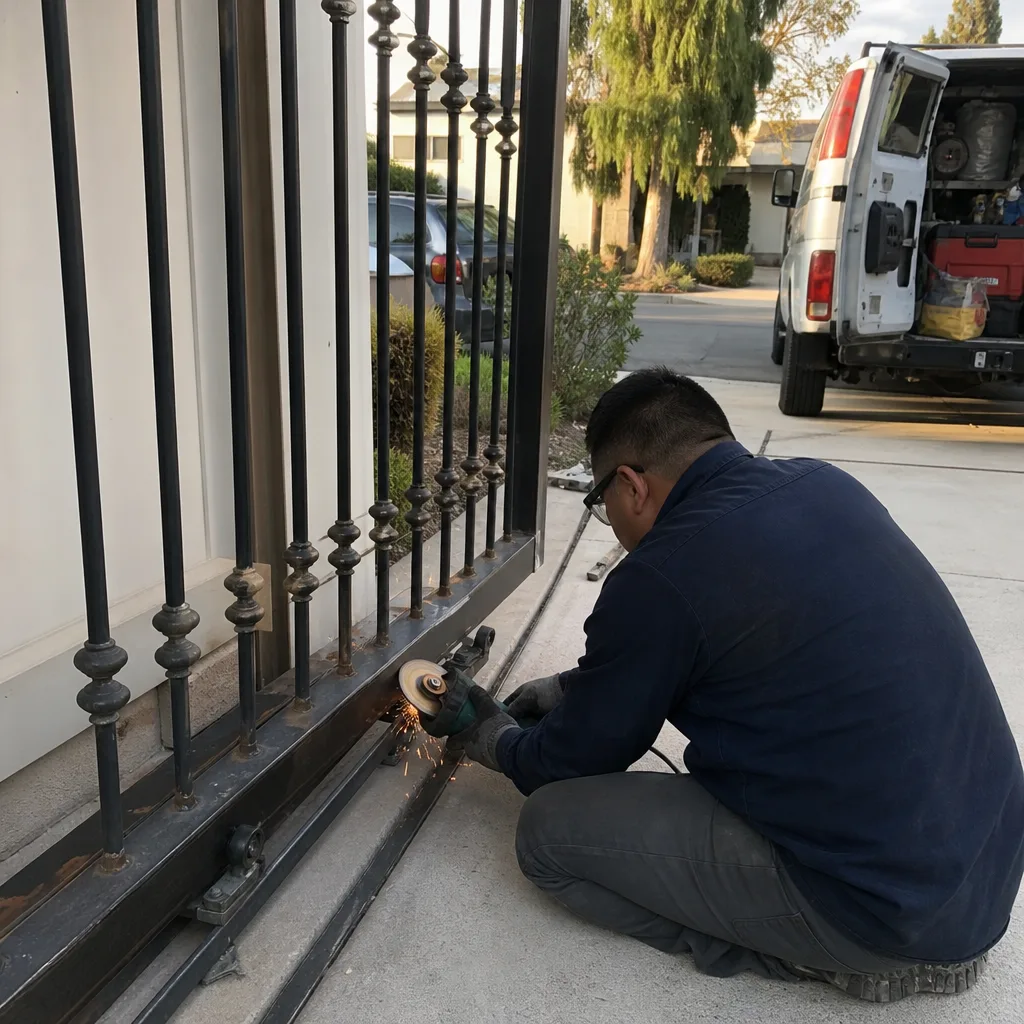
Anaheim’s gate repair market in 2026 supports an hourly labor rate between $95 and $165 for residential work, with most established independents sitting between $115 and $145. That rate is not arbitrary, and it is not what the technician takes home. It covers insurance, vehicle maintenance, fuel for driving across Orange County, background-checked staffing, ongoing training on nine different automation platforms, and the administrative overhead of running a company that answers the phone 24 hours a day. When you see a labor rate below $90 in Anaheim, ask yourself what is being cut to hit that number.
But the hourly rate is only half of what you need to see on a labor line. The other half is time. An honest quote answers three questions: how many hours, at what rate, and what specifically happens during those hours? A flat “labor: $275” figure with no time estimate conceals the calculation. Does that represent two hours at $137.50? Three hours at $91? A flat number without time is designed to prevent you from doing the math.
Here is how an honest labor line reads for a roller replacement on a sliding gate in Anaheim:
- Gate removal and securing: 0.5 hours
- Roller replacement and track cleaning: 0.75 hours
- Rehang, balance, and travel test: 0.5 hours
- Documentation and photo record: 0.25 hours
- Total: 2.0 hours at $130 = $260
Compare that to a competing line item that says only “labor: $260.” The total is identical, but one of these is auditable. The customer who receives the detailed line knows they are paying for two hours of work. The customer who receives the flat number has to take it on faith that the work cannot be done in an hour and a half. Over the life of a gate, that faith costs money.
Anaheim’s labor market also includes a geographic factor. Homes in the flatlands of central Anaheim are quick to reach from most shop locations. Homes up in Anaheim Hills, or across in the canyon-adjacent streets, add drive time. A company that charges a flat trip fee on top of labor is often being more honest than one that quietly pads the labor rate to absorb the drive. Either model can be fair. What matters is that it is visible.
The Diagnostic Fee Question: Why It Exists and When It Should Disappear
The diagnostic fee is the most misunderstood line item in residential gate repair, and in Anaheim it typically runs between $59 and $99. The purpose is simple: a technician has driven to your home, spent 30 to 60 minutes identifying the specific failure, and produced information you did not have before. That information has value even if you choose not to proceed with the repair. The diagnostic fee compensates the company for producing it.
Here is the part most homeowners miss: a diagnostic fee is neutral. It is neither a sign of honesty nor a sign of gouging. What matters is what happens to the fee when you approve the repair.
There are three common policies, and they produce very different incentives:
- Diagnostic fee waived when repair is approved. This is the most consumer-friendly model. The fee exists to discourage free-estimate fishing, but if you actually hire the company, the diagnostic time gets rolled into the overall job. You do not pay extra for the privilege of hiring the company you called.
- Diagnostic fee credited toward the repair. Functionally similar to waiving, but the fee appears as a line item deduction on the final invoice. You pay it upfront, then see it subtracted. This is transparent and fair.
- Diagnostic fee collected on top of the repair. You pay $89 to find out what is wrong, then you pay the full repair price on top. This model is not inherently dishonest, but it is the one most likely to accompany an inflated repair quote, because the company has already captured revenue and has less incentive to keep the repair price competitive.
Our position is straightforward: we waive the diagnostic fee entirely when the repair is approved. You should not pay twice for the same visit. If a company refuses to break out what the diagnostic fee covers, or refuses to tell you upfront whether it will be waived against the repair, that refusal is not a policy decision. It is a signal.
Repair vs. Replace for Gate Operators: The Break-Even Math
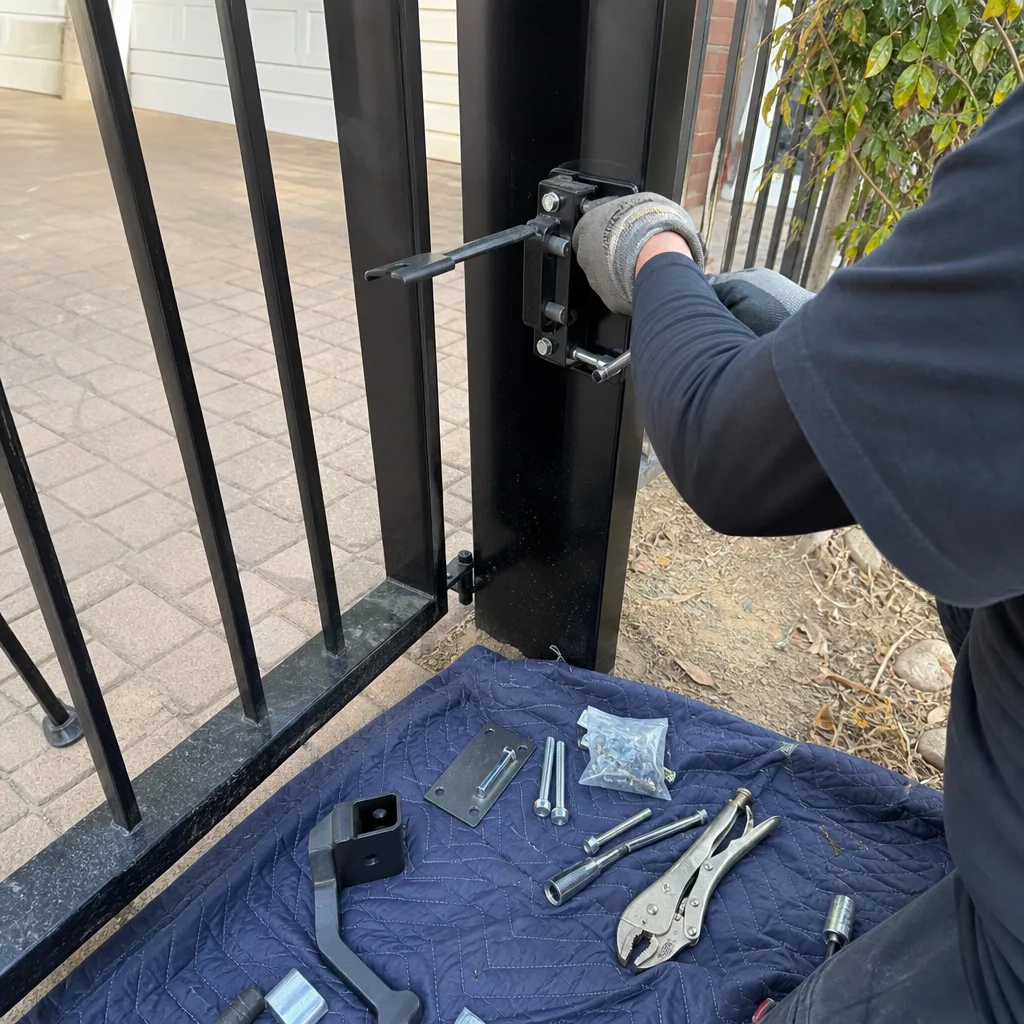
At some point every Anaheim homeowner with an automated gate faces the question: repair the operator that failed, or replace it entirely? There is a real mathematical answer to this question, and it is built from three variables: the age of the current operator, the specific failure, and the expected remaining service life after the repair.
Here is the break-even framework we use when a customer asks us the same question. Adjust the numbers for your specific situation, but the logic holds.
The Calculation
- Establish the operator’s installed cost. A new operator installed on a residential gate in Anaheim in 2026 runs between $1,800 and $3,800, depending on the brand (a LiftMaster residential swing operator with installation lands in the $2,200 to $3,200 range for most homes), the gate weight, and whether new arms or brackets are required. Use $2,800 as a working midpoint.
- Establish expected service life. A properly installed and maintained residential operator lasts 10 to 14 years in Anaheim’s climate, where heat and sun exposure accelerate plastic and capacitor degradation. Use 12 years as a midpoint.
- Calculate annualized cost of new. $2,800 divided by 12 years equals $233 per year of gate operation.
- Price the specific repair. A control board replacement on a 6-year-old operator runs $500 to $700. An actuator arm replacement runs $450 to $800. A new motor and gearbox runs $600 to $1,100.
Now apply the rule of thumb: if the repair costs less than the annualized cost of replacement multiplied by the years of expected remaining life, repair is the better financial move.
A 6-year-old operator with a dead control board. Expected remaining life after board replacement: 5 to 7 years. Repair cost: $650. Annualized new cost: $233. The math says board replacement ($650) versus buying roughly $1,400 to $1,600 worth of “new operator years.” Repair wins clearly.
An 11-year-old operator with a failed motor, cracked housing, and a corroded limit switch assembly. Expected remaining life after those repairs: 2 years, maybe 3. Repair cost: $900 plus. You would be paying $900 for roughly $466 to $700 worth of remaining gate years. Replace wins clearly.
The failure type matters as much as the age. A motor or gearbox failure on an older unit is usually a sign of cascading wear. A control board or photo-eye failure on a mid-life unit is usually an isolated electrical fault. The first pushes toward replacement. The second pushes toward repair. If a company immediately steers you toward full replacement without walking through this calculation, ask them to show their work.
And one more note: we service nine automation brands, including DoorKing, Elite, LiftMaster, and Mighty Mule, so the repair path is always a real option on our side of the table. We are not incentivized to push replacement when repair is the honest answer.
What Post-Job Documentation Is Worth Over Five Years
This is the section most cost guides skip, and it is the one that costs Anaheim homeowners the most money over time. A gate repair is not a one-time event. It is a single entry in a serial record that will span the life of your gate. When that record is missing, every future technician starts from zero. Starting from zero costs hours. Hours cost money.
Under the Haven Standard, our operating protocol for every residential job, Clause 4 requires a documented photo record on every visit: what was found, what was adjusted, what was replaced. The homeowner receives a written record of the part number installed, the limit-switch settings, the photo-eye alignment, and a photo log of the work. That record is also filed in our job history. When we return to a gate we worked on two years ago, we are not rediscovering it. We are continuing from where the record stopped.
Here is what a missing record costs in real terms. Model the most common repeat-call scenario: a swing gate operator that intermittently reverses direction. First company diagnoses a photo-eye issue, replaces the sensors, charges $280, leaves no documentation. The problem persists. Second company arrives, cannot confirm what the first company did, and starts diagnosis from scratch. Another diagnostic hour, another set of possibilities. This is the “pay twice to rediscover the same problem” tax.
- Year 1: First repair, no documentation. $280 paid. Problem persists.
- Year 1, second visit: Second company re-diagnoses from zero. Finds it was never the photo-eye; it was a failing limit switch on a Linear operator. $350 paid. Problem fixed.
- Year 3: New symptom appears. Third company arrives, no record from first or second repairs. One hour to establish baseline. $95 in diagnostic labor that would have been $20 with a record.
Over five years, a gate with no documentation will conservatively cost $300 to $500 more in re-diagnosis time than a gate with a complete record. The documented repair from a company like ours, or from any company that takes records seriously, costs the same or less over five years than the cheaper undocumented repair. The sticker price is not the price.
Anaheim-Specific Factors That Move Gate Repair Pricing
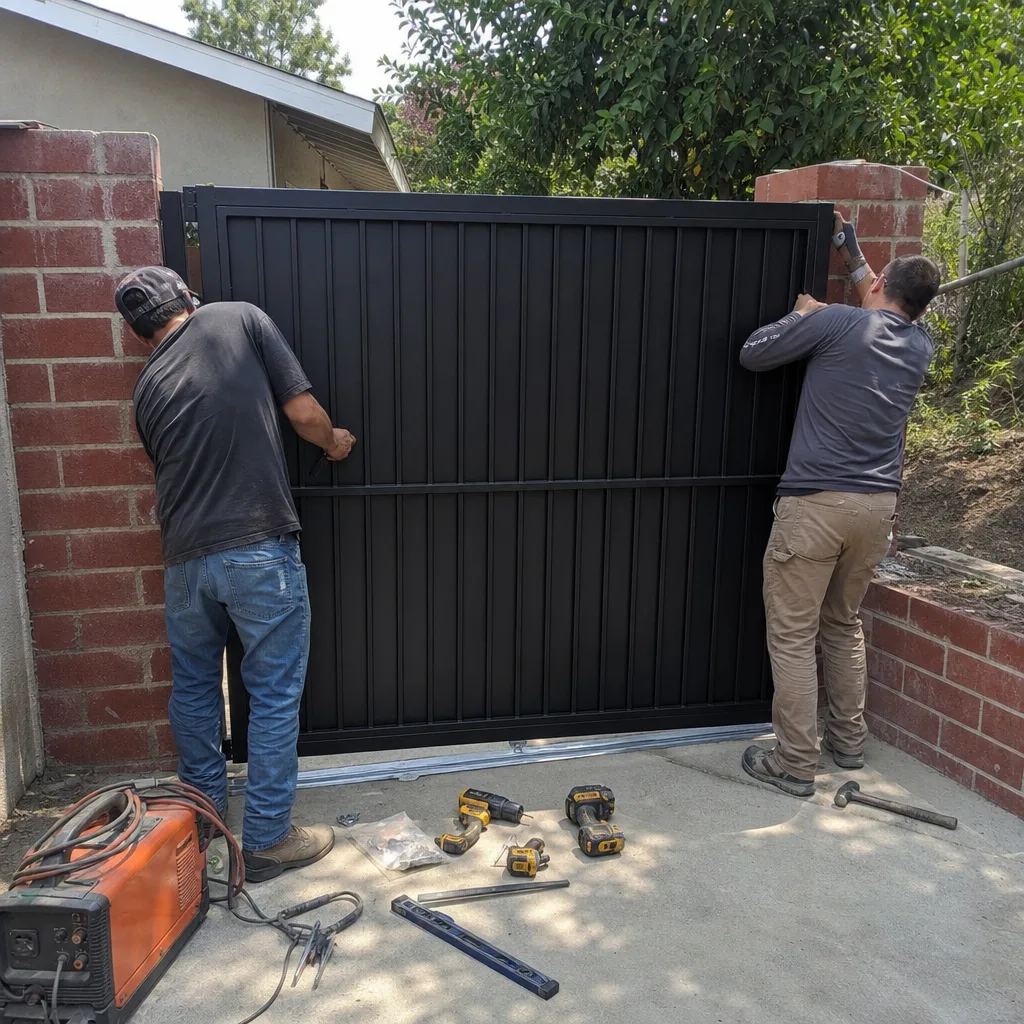
Gate repair pricing is not uniform across Southern California, and Anaheim has three local factors that push costs in specific directions. Understanding them helps you evaluate whether a quote is reasonable for this city specifically, rather than for some generic national average; our Gate Repair Permits, Codes & Inspections in CA: What You Need to Know covers the regulatory side.
Heat and UV exposure. Anaheim’s summers routinely push 90 degrees and higher, with direct sun on gate components for six to eight hours a day. What this means in practical terms: plastic capacitor housings degrade faster, photo-eye lenses haze and crack, and control boards in unventilated metal operator boxes run hot enough to shorten component life. A gate in Anaheim will typically need its first electrical component replacement two to three years earlier than an identical gate in a coastal climate like Huntington Beach. When a technician tells you that heat contributed to a failure, that is not a sales tactic. It is a mechanical reality of this city.
Soil movement in the flatlands. Central and west Anaheim sit on alluvial soil that shifts subtly with seasonal moisture changes. Residential gates on long runs, particularly sliding gates on concrete pads, can develop post settlement that pulls the gate out of alignment and accelerates roller wear. A roller replacement that is followed by the same failure six months later is often a sign that the underlying post footing has moved and the repair needs to include a re-level, not just a parts swap. A technician who only replaces the roller and does not check post plumb has fixed the symptom and left the cause.
The Anaheim Hills factor. Canyon-adjacent and hillside lots in Anaheim Hills and the surrounding streets add a different set of conditions: steeper driveways, heavier custom steel gates, and wind loading that works against actuator arms and hinges. A swing gate on a sloped driveway in Anaheim Hills exerts constant uneven load on its actuator, and that load accelerates internal wear. Heavier-duty arm specifications are not an upsell in these conditions; they are the difference between a repair that lasts two years and one that lasts eight.
None of these factors appear as line items on a quote, but they should appear in the technician’s thinking. When you hear a company reference local conditions by name rather than speaking in generics, you are hearing a business that repairs gates in Anaheim because it knows Anaheim, not because it happens to be nearby.
How to Read Your Gate Repair Quote: A Step-by-Step Walkthrough
Most homeowners read a gate repair quote the way they read a restaurant check: total first, then a quick scan for anything obviously wrong. Here is a better method, developed from the commercial access-control documentation habit we brought to residential work. Read it in this order:
- Find the diagnostic line. Is there a diagnostic fee? Is it waived against the repair? If the answer to either question is unclear, stop and ask before proceeding.
- Read the parts section. Every part should have a name and a part number. “Roller assembly” is not a part number. “VGR-1500-2” is a part number. If no part numbers appear, you are trusting the company’s word on what was actually replaced.
- Read the labor line. Is there a time estimate? If the quote says “labor: $310” with no hours, ask how many hours that represents. If the company hesitates, that hesitance is the answer.
- Look for the documentation line. Some companies include a small line item for documentation or photo records. Others include it in labor. Either is fine. If no documentation is mentioned anywhere and the quote is for work on a gate you expect to own for years, ask whether you will receive a written record of the work.
- Check the payment terms. Is the price written and agreed before work starts, or is it an estimate subject to change? In California, a written quote that includes parts, labor, and time is a stronger protection than any verbal promise.
- Confirm the warranty. What is covered, and for how long? A one-year workmanship warranty is a reasonable baseline. Our standard is the 365-Day Done Right Promise: if the repair is not right, we make it right within one full year, no argument, no fee.
Common Mistakes to Avoid
- Accepting a verbal quote for anything beyond a simple roller swap. If the work involves wiring, operators, or control boards, get the price in writing before work starts. A verbal quote has no enforceable terms and no record of what was promised.
- Approving a board replacement without confirming the switches and photo-eyes were tested first. A dead output on a control board is occasionally a bad board, but more often it is a bad input from a $40 sensor. The technician should confirm the elimination process before quoting the expensive part.
- Comparing two quotes by total price alone. A $410 quote with itemized parts, documented labor hours, and a written record may be a better value than a $350 flat figure with no breakdown. The sticker price is not the price over five years.
- Skipping the photo-eye check after any operator repair. Anaheim’s heat causes sensor drift even when the repair was unrelated. A five-minute alignment check after any operator service prevents a future reversal problem that will feel like a new failure.
- Replacing an operator because a chain store suggested it. Some high-volume home service chains do not stock parts for older operators and will steer toward replacement because it is what they can sell. Get a second opinion from a company that stocks parts before you commit to a full replacement.
- Ignoring post settlement on a sliding gate that eats rollers. If you have replaced rollers twice in two years, the roller is not the problem. Have the posts checked for plumb and the concrete pad checked for level before the next roller install.
- Paying a diagnostic fee without asking if it is credited toward the repair. The question takes ten seconds to ask and can save you $89. Ask it every time.
When to Call a Professional
Gate repair sits in an uncomfortable middle ground: some of it looks simple, and some of it genuinely is simple, but the line between “simple” and “dangerous” is not always visible from the outside. If a gate has come off its track, if an operator is grinding or sparking, or if any wiring has been exposed to weather, call before you touch anything further. A sliding gate weighs several hundred pounds and stores kinetic energy. A swing gate actuator arm is under constant load and can release unexpectedly if disconnected incorrectly. The electrical side is not more forgiving: a control board carries enough voltage to damage equipment and injure a person who does not know which terminals are live. Vance Gate Repair Anaheim offers free estimates across Anaheim. Call (657) 567-5799 and a live person answers, at any hour, no automated attendant.
Frequently Asked Questions
Gate repair in Anaheim typically costs between $180 and $650 for mechanical repairs and between $400 and $1,400 when operators, control boards, or actuator arms are involved. The range is wide because the underlying failure determines the parts cost, and the documentation and diagnostic approach determines the labor cost. Call (657) 567-5799 for an exact written quote on your specific gate; estimates are free, and the price is agreed before any work starts.
For most repairs, yes. We maintain same-day availability for gate failures across Anaheim, and a live person answers the phone 24 hours a day, seven days a week. Emergency situations, like a gate stuck open or a vehicle trapped behind a failed operator, are prioritized accordingly. Call (657) 567-5799 and you will speak to a person, not a queue.
It depends on the operator’s age and the specific failure. A mid-life operator (5 to 8 years old) with an isolated electrical fault, like a control board or photo-eye failure, is almost always worth repairing. An operator past 10 years with a motor or gearbox failure is usually a better replacement candidate. The break-even math is in this guide, and a technician who is willing to show their calculation is more trustworthy than one who skips straight to replacement.
A full gate installation in Anaheim includes the gate itself, posts, hinges or track hardware, an operator and control system if automation is requested, safety photo-eyes, and any required power run and bonding. Pricing is quoted per job after a free on-site measure, because gate weight, driveway slope, and access to power vary too much for a flat rate. Gate Installation in Anaheim is quoted in writing before any fabrication or installation begins.
Yes. Electrical rough-in for the operator, including conduit, wire pull, and connection, is part of the standard scope on operator and automation work. Safety edges and photo-eyes are installed and tested on every automated gate we touch. This is not an optional add-on; it is what makes an automated gate legal and safe to operate in California. Full-scope details are covered on our Gate Motor & Opener service in Anaheim page.
The Haven Standard is the operating protocol we built for every Vance Gate Repair job: a written scope and price before work starts (Clause 1), a documented photo record on every visit (Clause 4), and a full year for any repair to be made right at no additional charge. We brought these habits from commercial access-control work, where undocumented repairs are not accepted, into residential service, where they should be. You can see more on our Gate Repair in Anaheim page.
The Bottom Line
A gate repair quote in Anaheim should not be a black box. It should be a document you can audit: parts with real numbers, labor with real hours, a diagnostic fee with a clear policy, and a written record of what was done. The cheapest quote on the day of the repair is very often the most expensive quote over five years, because what you do not pay for in documentation, you will pay for in re-diagnosis. Browse our more guides & resources to keep your gate costs predictable. The gate on your Anaheim property is going to need service again. The only question is whether the next technician starts from your record or from scratch. A written price, a photo log, and a part number left on the kitchen counter are not extras. They are the cheapest insurance a gate owner can buy.
Written by Adrian Vance, Owner at Vance Gate Repair Anaheim, serving Anaheim since 2014.