
Last updated September 20, 2026
Free on-site gate assessment - hinges, posts, and your LiftMaster or Nice gate operator checked before anything is quoted
The assessment is free and the quote is the invoice.

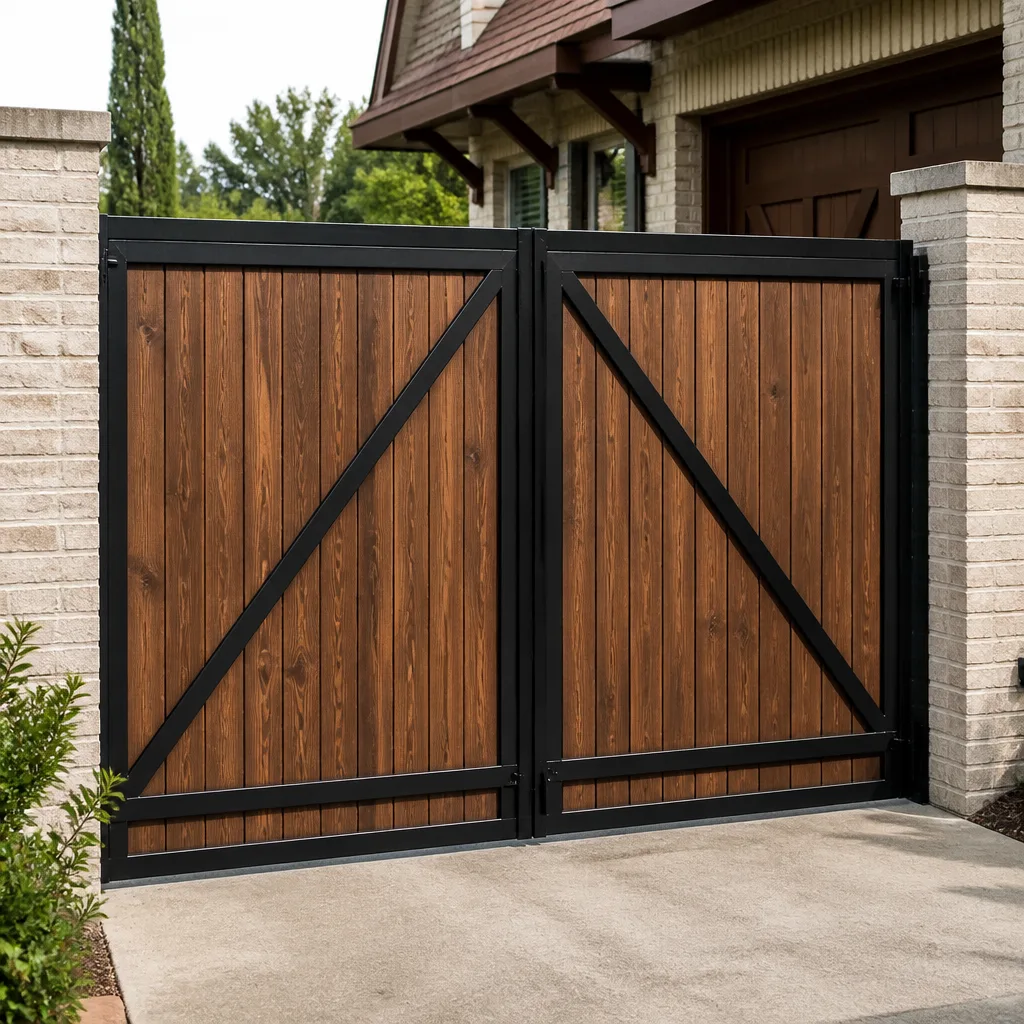
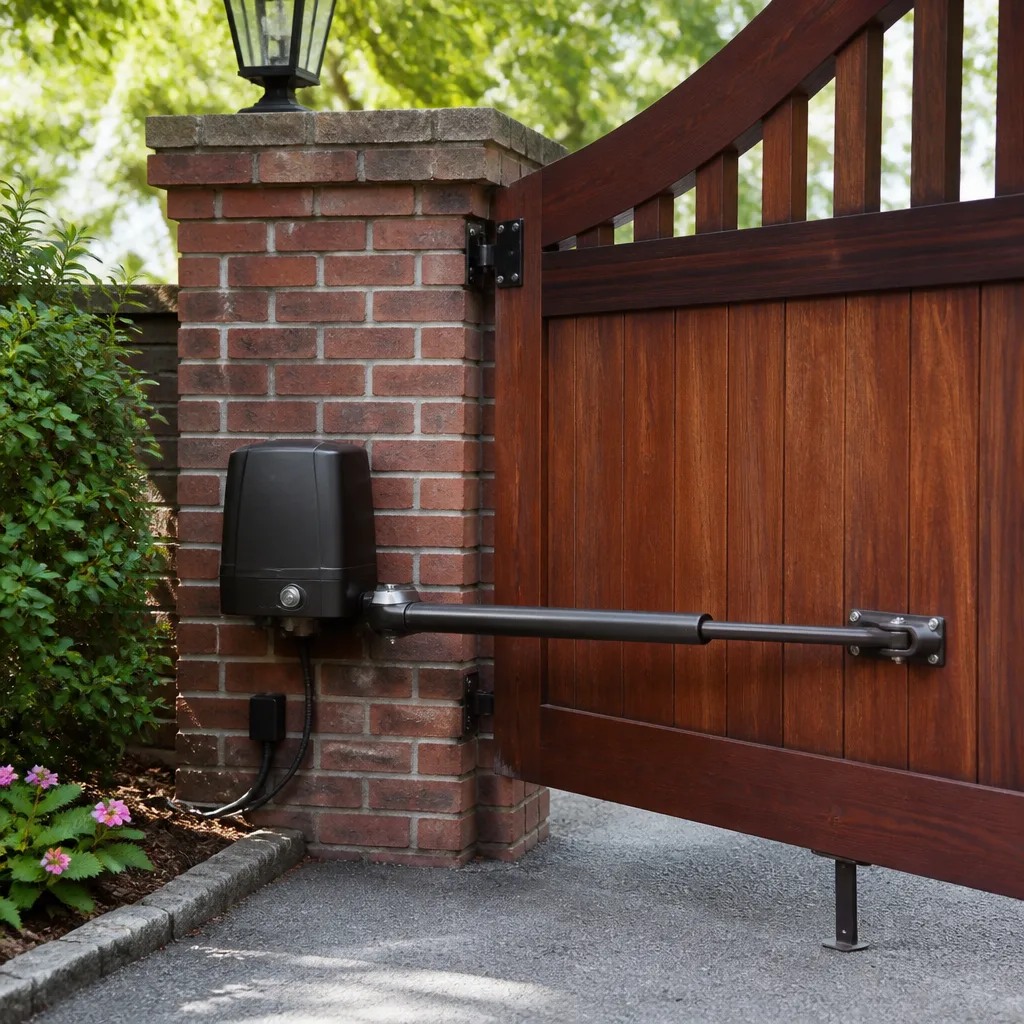
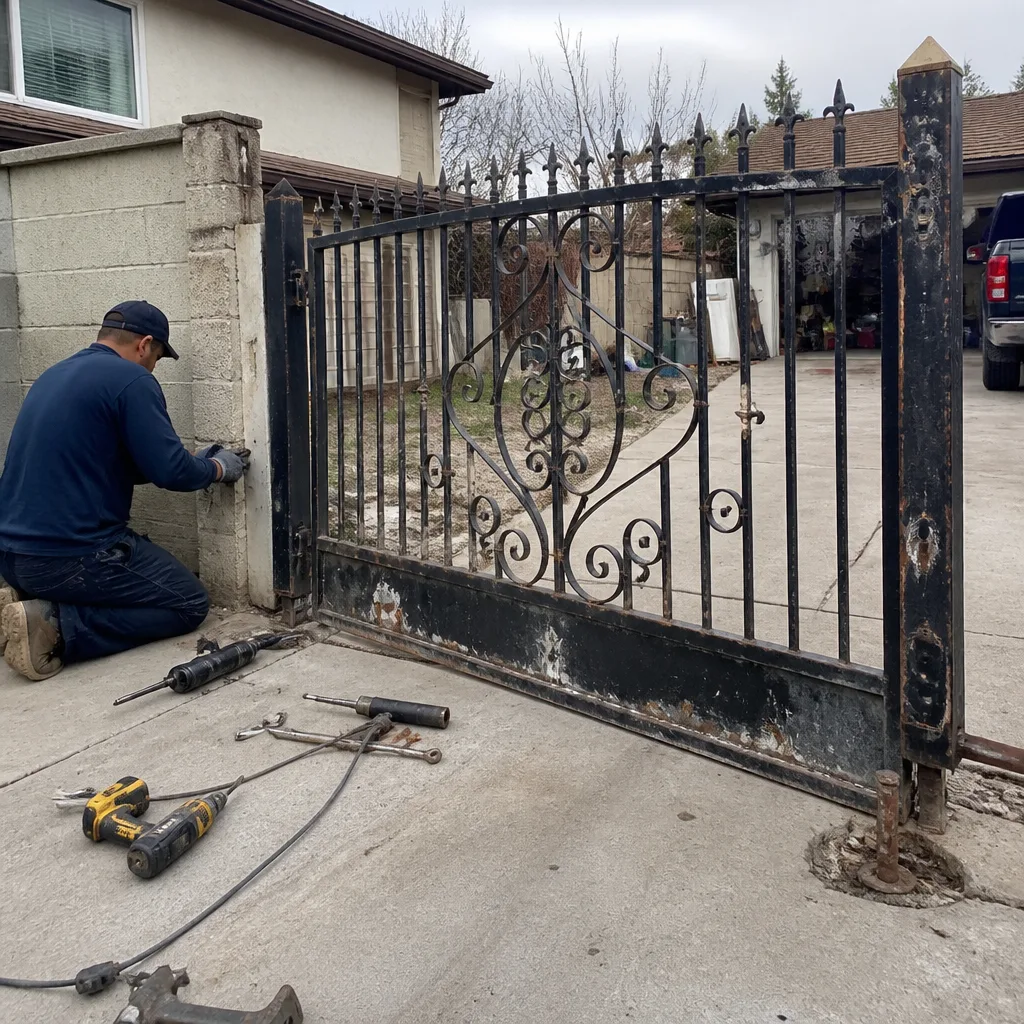 Before
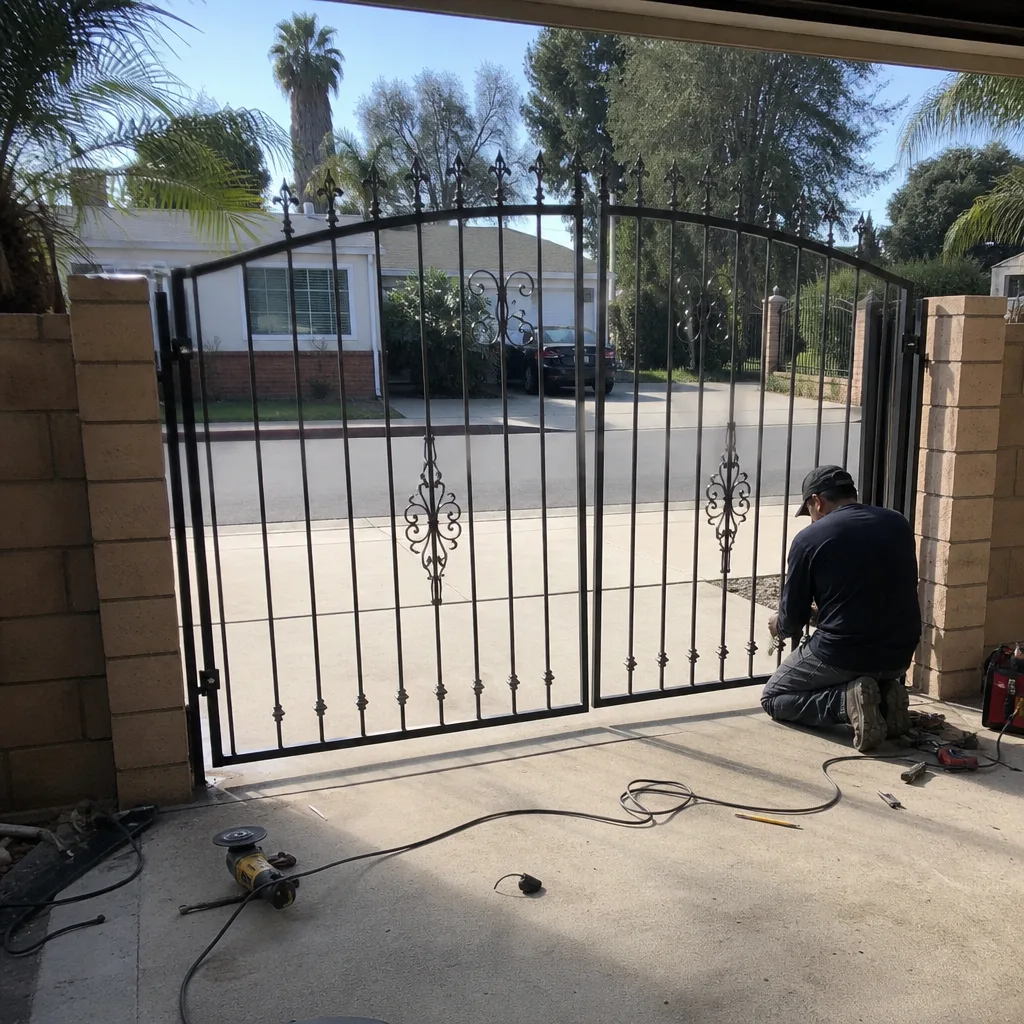 After
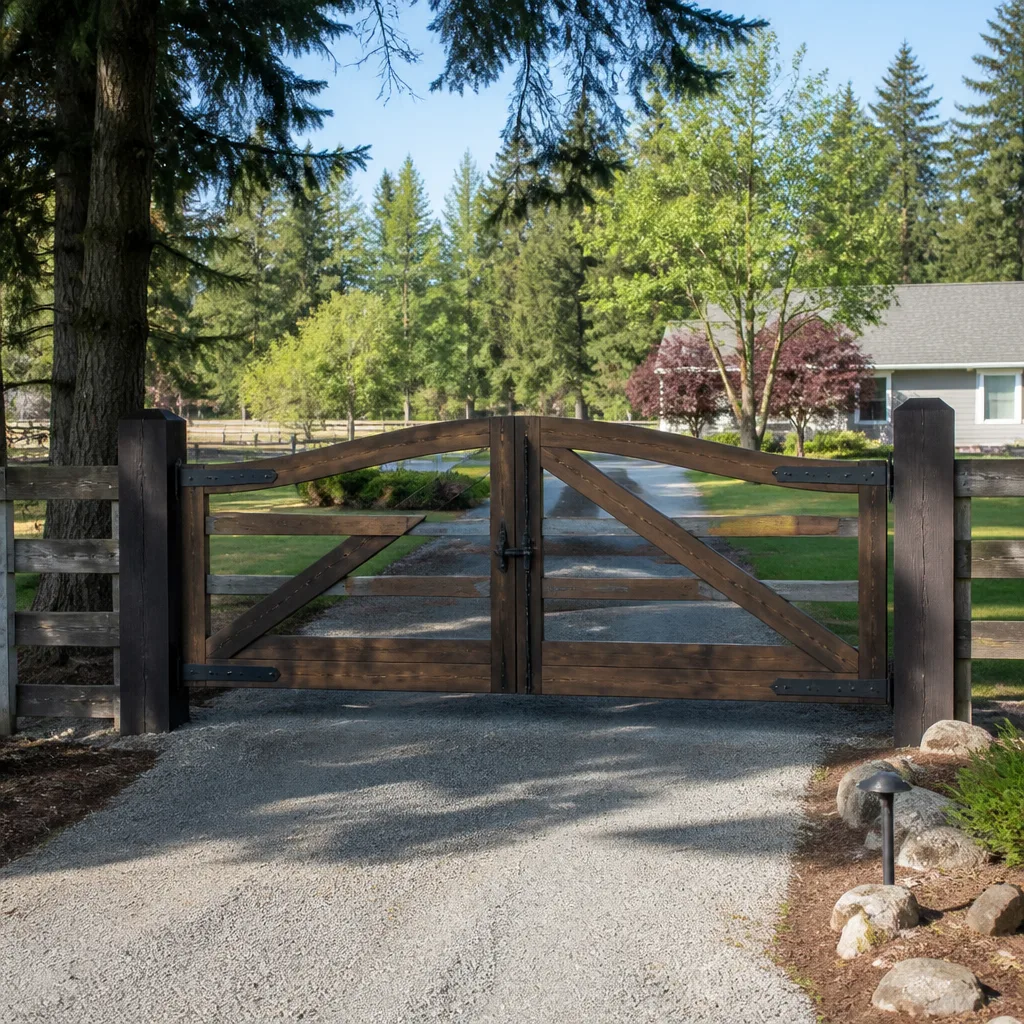
After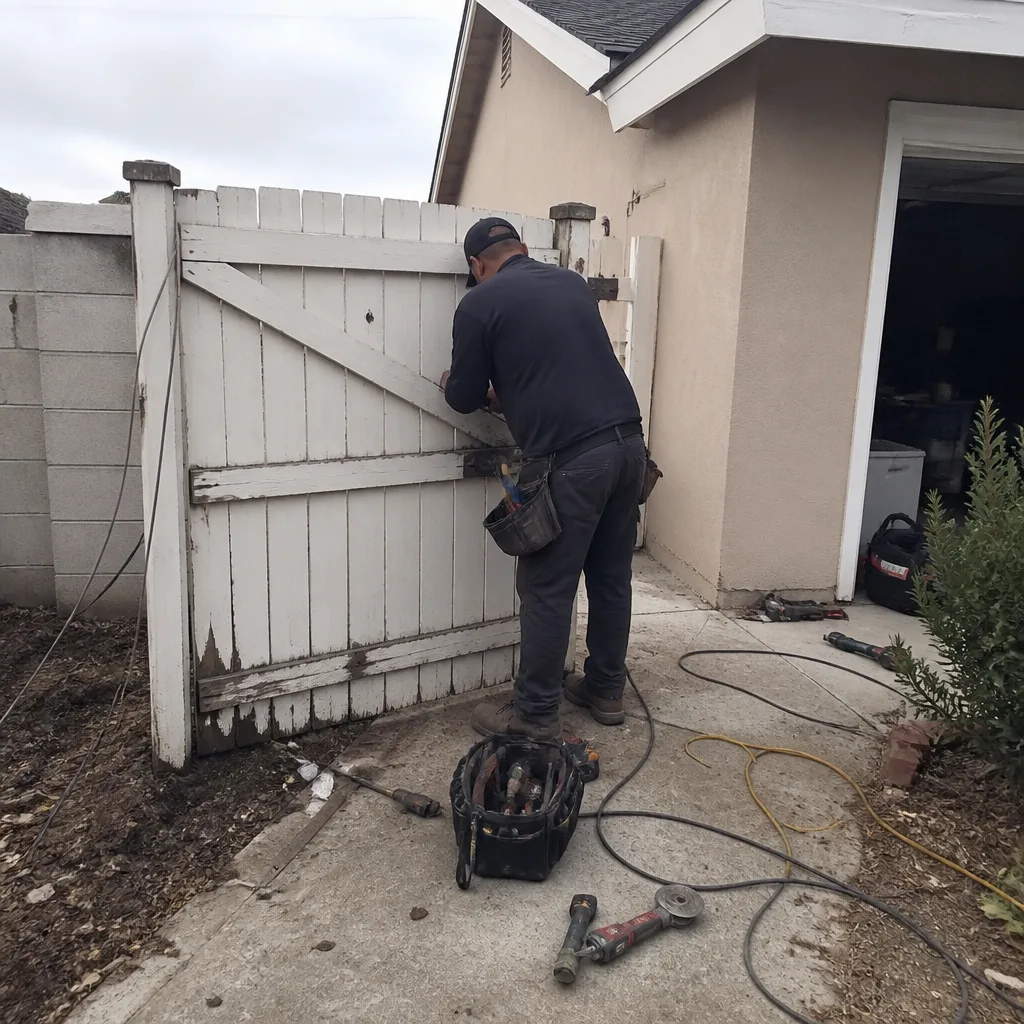 Before
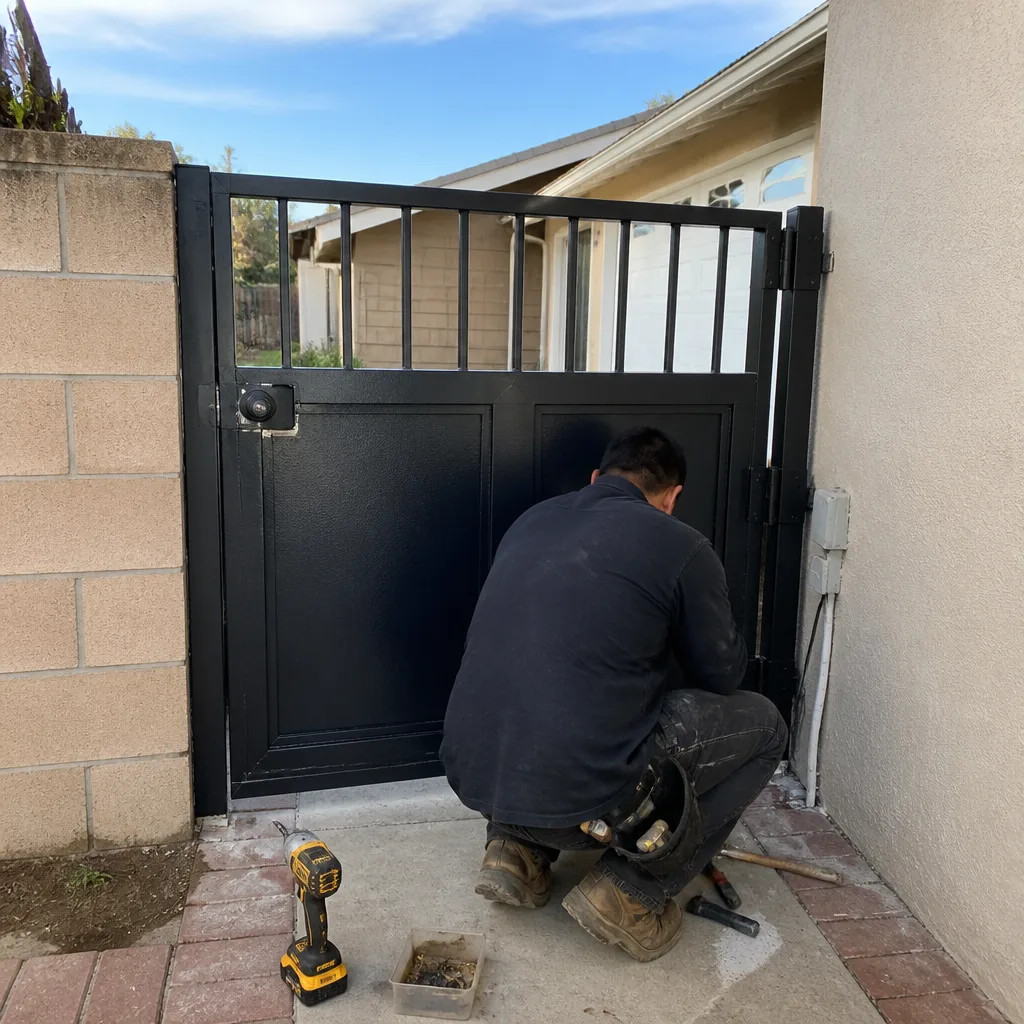 After
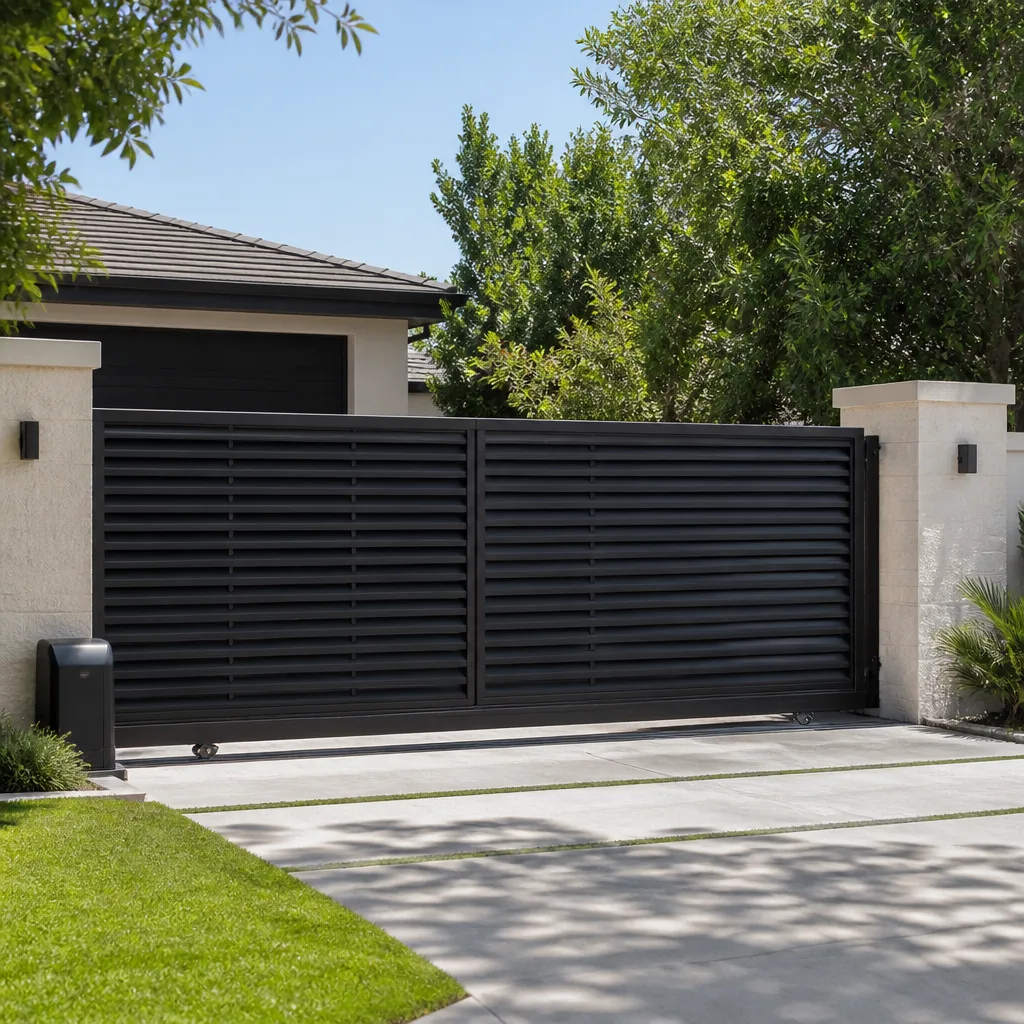
After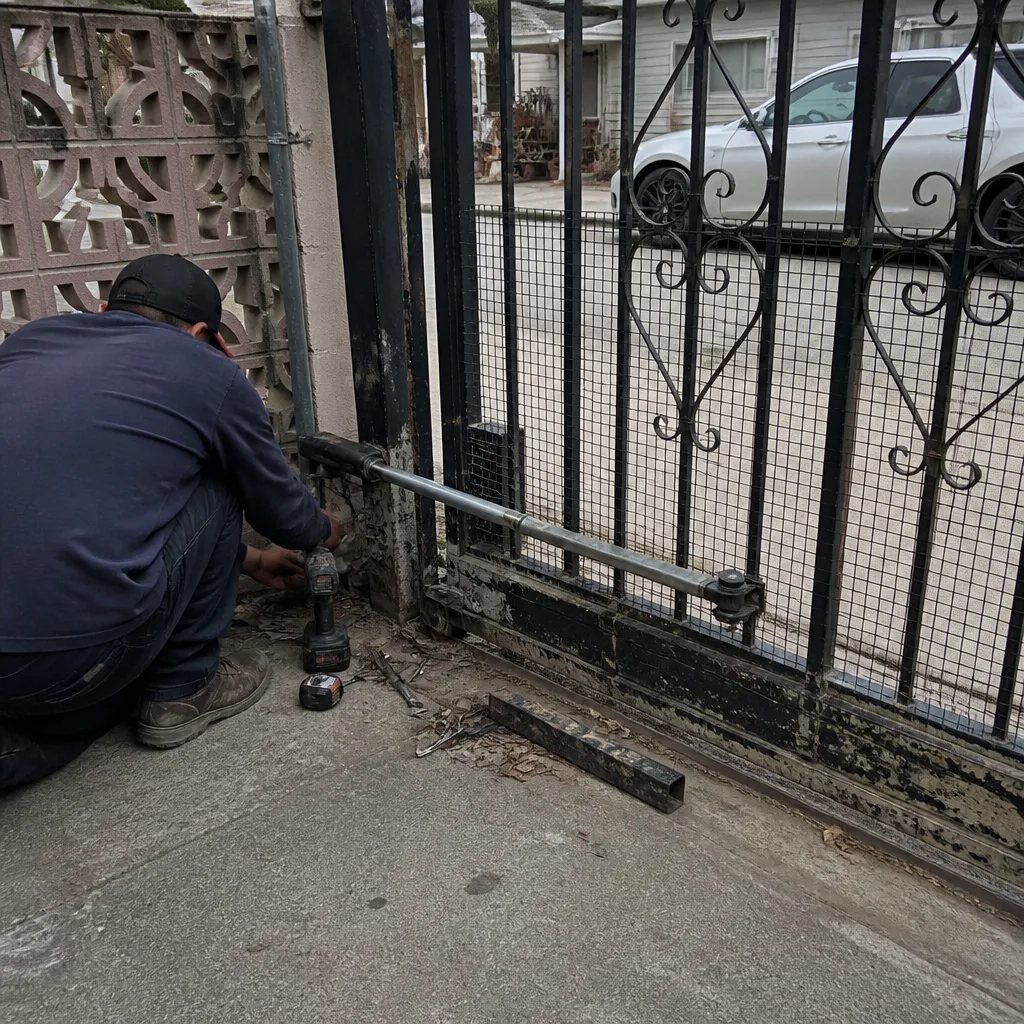 Before
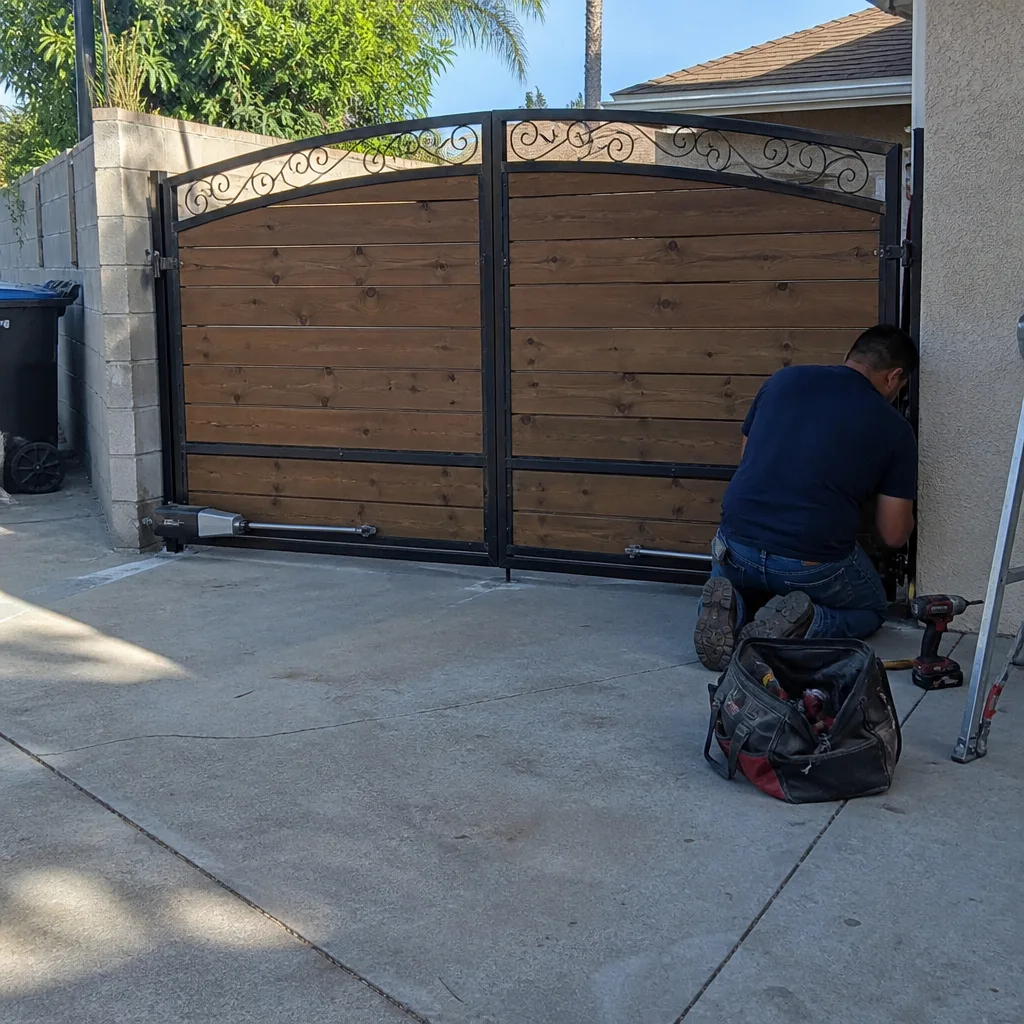 After
AfterSeasonal Gate Repair Care for Anaheim: Year-Round Homeowner’s Guide
Anaheim’s “mild climate” label misleads homeowners into skipping seasonal gate care, but the city’s dry-to-wet transition in late October puts more lateral stress on gate posts than most cold-weather cities see all winter. Most gate failures we’re called to fix in Anaheim don’t happen randomly. They cluster in two predictable windows: February, when rain-saturated clay soil shifts post footings, and October, when the first Santa Ana winds find every loose hinge bolt and under-torqued bracket on the property. This guide maps each season to the specific failure it produces and the task that neutralizes it, so you can service the right components during the right quarter and avoid paying for emergency repairs that seasonal maintenance would have prevented. You’ll learn what to check, what to document, what to leave alone, and when a written estimate from a gate repair professional in Anaheim is the cheaper option than another Saturday under the gate arm.
Quick Answer
Seasonal gate care in Anaheim comes down to four tasks, matched to four quarters: torque hardware and inspect gate arms before Santa Ana wind season each fall, check post footings and limit-switch calibration after winter rains, protect and lubricate operator components during summer UV months, and photograph your limit-switch settings and operator draw every spring to establish a documentation baseline. Gates that receive this four-quarter cycle rarely fail catastrophically; gates that skip it fail most often in February and October, when Gate Repair services in Anaheim are in highest demand and wait times run longest.
Table of Contents
- Anaheim’s Real Stress Cycle: Why “Mild” Weather Still Breaks Gates
- October-November: Santa Ana Wind Prep and Hardware Torque
- January-February: Clay Soil, Post Footings, and Limit-Switch Drift
- March-April: The Documentation Baseline That Saves You Money
- June-August: UV Degradation, Powder Coat, and Lubricant Breakdown
- The Quarter-by-Quarter Gate Care Calendar
- What’s Worth Documenting Versus What’s Routine
- Common Mistakes to Avoid
- When to Call a Professional
- Frequently Asked Questions
- The Bottom Line
BeforeAfterAnaheim’s Real Stress Cycle: Why “Mild” Weather Still Breaks Gates
Anaheim doesn’t get freeze-thaw cycles, snow load, or salt corrosion like a Cleveland or Minneapolis gate does. What it gets instead is a specific combination of conditions that produces its own failure pattern: long dry stretches that bake lubricants and powder coat, followed by sudden saturation events that swell clay soil and shift concrete footings a fraction of an inch. A gate post that moves half an inch in Anaheim clay doesn’t announce itself. It just changes the geometry of the gate enough that the operator’s limit switch, which was set for the old position, now stops the gate short or over-travels it. That’s why we see a spike in “my gate won’t close all the way” and “the arm is grinding” calls every February in Anaheim, not because anything broke, but because the relationship between post, gate, and operator settings changed slowly over the wet season.
This matters because it changes what “seasonal maintenance” should mean here. In cold climates, seasonal gate care is mostly about corrosion control and battery health. In Anaheim, it’s about geometry management: keeping hardware tight through wind season, keeping footings stable through rain season, keeping lubricants alive through UV season, and keeping a documented record of your operator’s settings so that when something shifts, you can prove what changed. That last part is the one most homeowners skip, and it’s the one that costs them the most money over time, because a technician without a baseline is guessing at what “correct” looked like.
We’ve been servicing gates in Anaheim since 2014, and the pattern we’ve documented across 22,000+ gates is consistent enough to plan around. The gates that fail in February are the ones that were never retorqued in October. The gates that need new operator arms in July are the ones that were lubricated with a petroleum-based product in May. The gates that cost the most to repair are the ones where nobody can produce a single record of what the limit switch was set to before the problem started. Seasonal care isn’t just about preventing failure; it’s about leaving a trail when failure finds you anyway. For more guides & resources on building that trail, see our other Anaheim gate maintenance articles.
October-November: Santa Ana Wind Prep and Hardware Torque
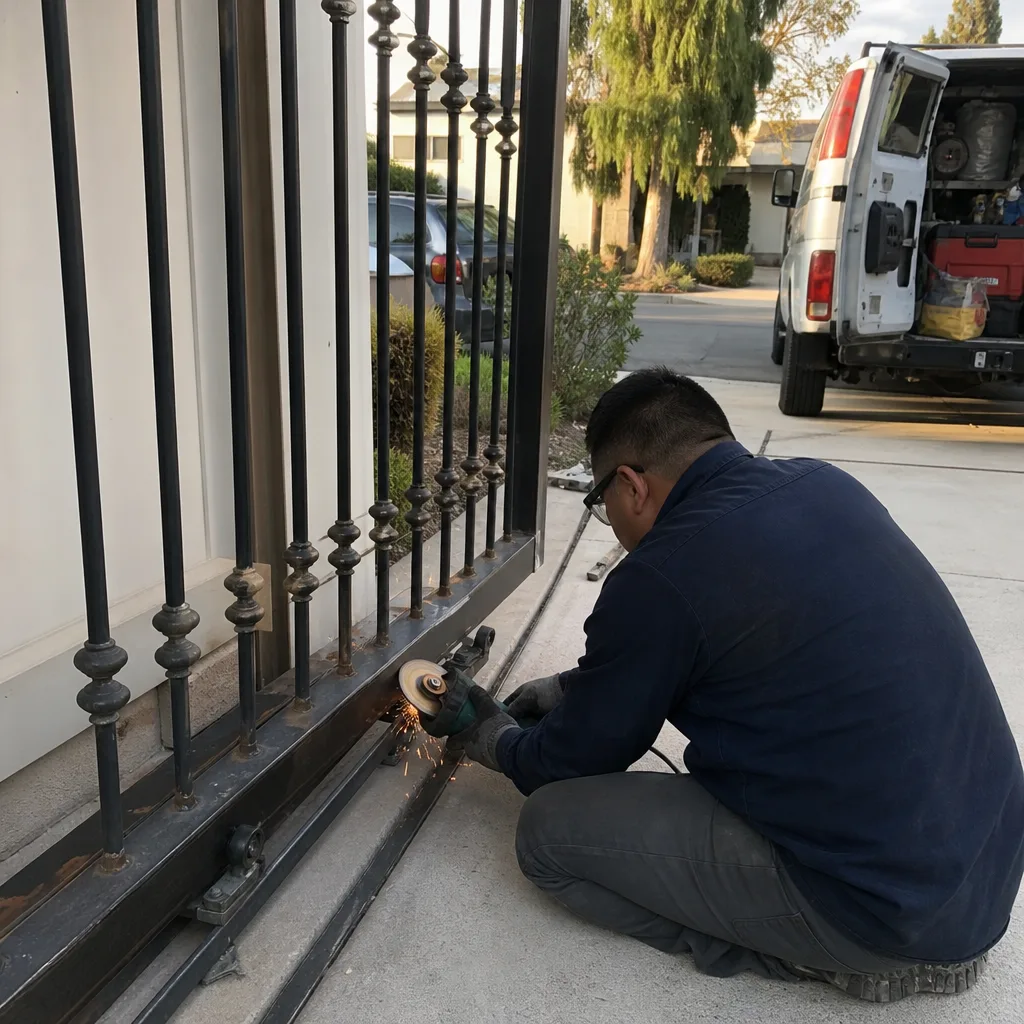
Santa Ana winds in Anaheim routinely gust above 40 miles per hour, and the first strong event of the season typically arrives in October. What most homeowners don’t realize is that a swing gate acts as a sail: a 12-foot gate leaf presents about 72 square feet of surface area to a gust, and the force on the gate arm, hinges, and operator mount climbs quickly with wind speed. By the time you can hear the gate rattling from inside the house, the hardware has already been cycling through thousands of small load reversals that loosen threads a few thousandths of an inch at a time. The failure doesn’t happen during the wind event. It happens weeks later, when a hinge bolt has backed out far enough that the gate starts sagging, and the sag throws the operator’s geometry out of spec.
The October-November task list is specific and mostly mechanical:
- Torque every hinge bolt, bracket bolt, and operator mount bolt to spec. On most residential gates in Anaheim, that means 30 to 45 foot-pounds depending on bolt diameter, but the important thing is that each fastener is checked with a wrench, not a visual glance. A bolt that looks seated can still be 10 pound-feet under spec.
- Walk the gate through its full travel and listen. Creaking at the hinge point means metal-on-metal contact and needs lubrication or bushing replacement. A clunk at the end of travel means the limit switch is allowing the gate to hit a stop or bottom out hard. Both of these get worse under wind load.
- Check the gate arm attachment bracket. On LiftMaster and FAAC swing operators, the arm attaches to the gate through a bracket that takes enormous repetitive load during wind events. If the bracket shows any cracking at the weld or the bolt holes, replace it before wind season, not after.
- Clear the track and the leading edge. For slide gates, a single palm frond or piece of leaf litter in the track changes the rolling resistance enough that the operator’s force sensing gets confused, especially during the fall leaf drop that hits Anaheim neighborhoods with mature ficus and sycamore trees.
One thing worth naming directly: this is not the quarter to lubricate heavily. Whatever lubricant goes on in October has to survive a wet winter, and a heavy grease attracts grit and holds moisture against the metal. A light synthetic lubricant on pivot points only, applied after hardware is torqued, is the right call. Save the heavier lubrication discussion for the summer section below, because the product choice changes with the season.
If you’ve never had your gate’s torque settings checked by someone who does it professionally, October is the month to book it. We schedule preventive torque-and-inspect visits all through October in Anaheim, and the findings are documented in the gate motor and opener service record you keep on file, which makes the following February a lot less likely to end in an emergency call.
January-February: Clay Soil, Post Footings, and Limit-Switch Drift
Anaheim sits on a patchwork of clay-heavy soils, and clay does something predictable when winter rains saturate the ground: it expands. A gate post set in a 24-inch concrete footing is usually stable enough that the expansion doesn’t matter, but a post set in a shallow footing, or a footing that’s been undermined by irrigation runoff or root intrusion, can shift. The movement is small, often a quarter-inch to a half-inch at the post top, but a half-inch at the post translates to a much larger error at the gate’s leading edge, because the gate amplifies the post’s tilt. The result is a gate that used to close perfectly now stops an inch short of the latch, or over-travels and jams against the receiver post.
January and February in Anaheim are when we see the highest volume of limit-switch recalibration calls, and most of them are not actually limit-switch failures. The limit switch is doing exactly what it was told to do. The problem is that the whole gate geometry shifted under it, and the settings that were correct in October are now wrong. This is why the spring documentation baseline matters, and we’ll get to that in the next section.
Here’s what to look for during the rain months:
- Look at the gap at the latch post in mid-January. If the gap between gate edge and latch post has visibly changed since fall, the post has moved. Use a tape measure and write the number down. There is no faster way to catch footing drift than measuring this gap monthly during wet season.
- Check the operator’s force setting. When the gate gets stiffer because the hinges are wearing or the track is loading with debris, the operator has to push harder. If you hear the motor strain at the midpoint of travel, the force setting likely needs adjustment, but don’t guess at it. An overset force setting turns a normal obstruction into a crushed fence panel or a damaged car.
- Inspect gate arms for visible deflection. On LiftMaster and Elite swing operators, the arm is usually the first component to fail when post movement puts the gate out of plane. A bent arm means the geometry problem has already produced mechanical damage.
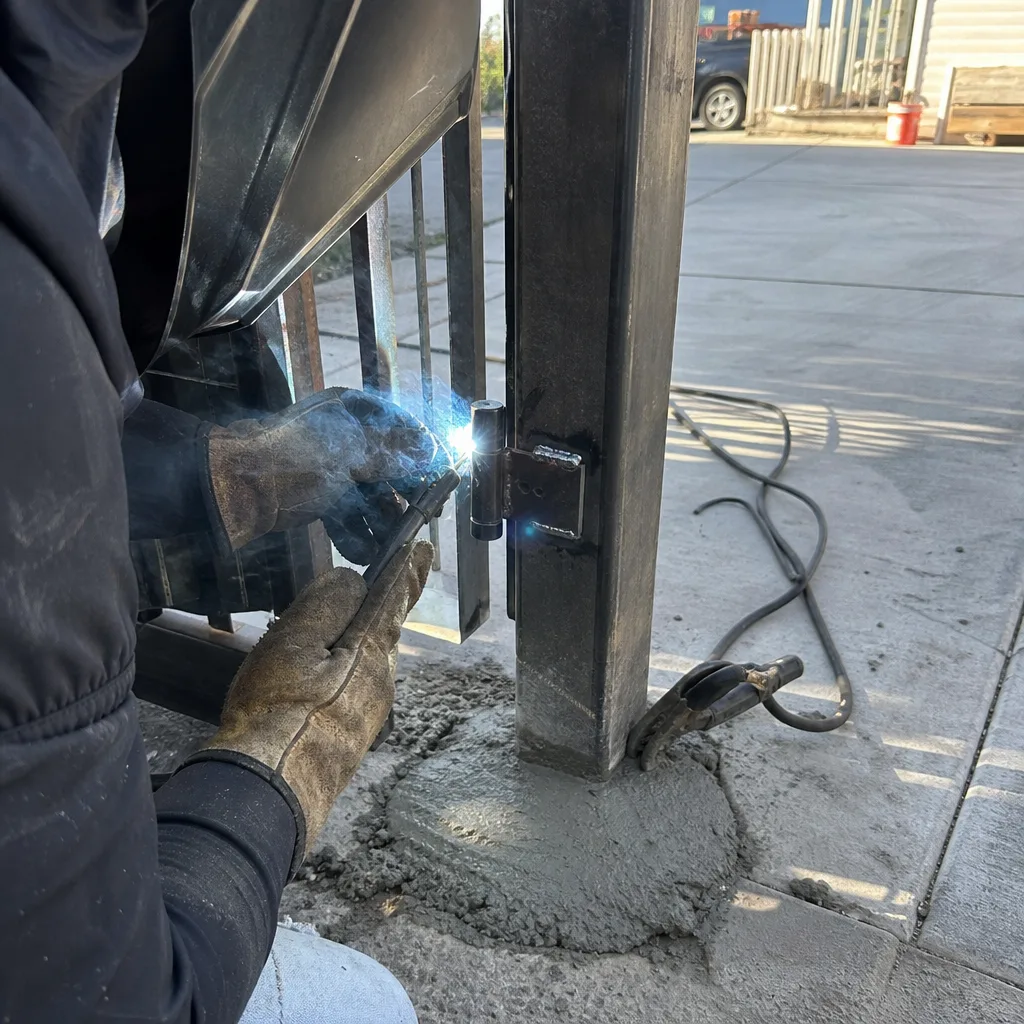
- Don’t pour concrete until the ground dries. If you discover a loose post in February, the instinct to reset it immediately is understandable, but pouring a footing in saturated clay produces a footing that never bonds properly. Late March or April is the right time for that repair in Anaheim, when the soil has drained and compacted somewhat.
For most homeowners, the February task is measurement and observation, not repair. Measure the gaps, note what’s changed, and if the gate’s behavior has shifted, have the limit switch and force settings recalibrated to the new reality rather than fighting the post. A recalibration visit is a fraction of the cost of a post reset, and in our experience it resolves the symptom correctly about seven times out of ten. The other three times, the measurement record tells you exactly which post moved, how far, and when, which makes the eventual repair a documented correction rather than a guess.
March-April: The Documentation Baseline That Saves You Money
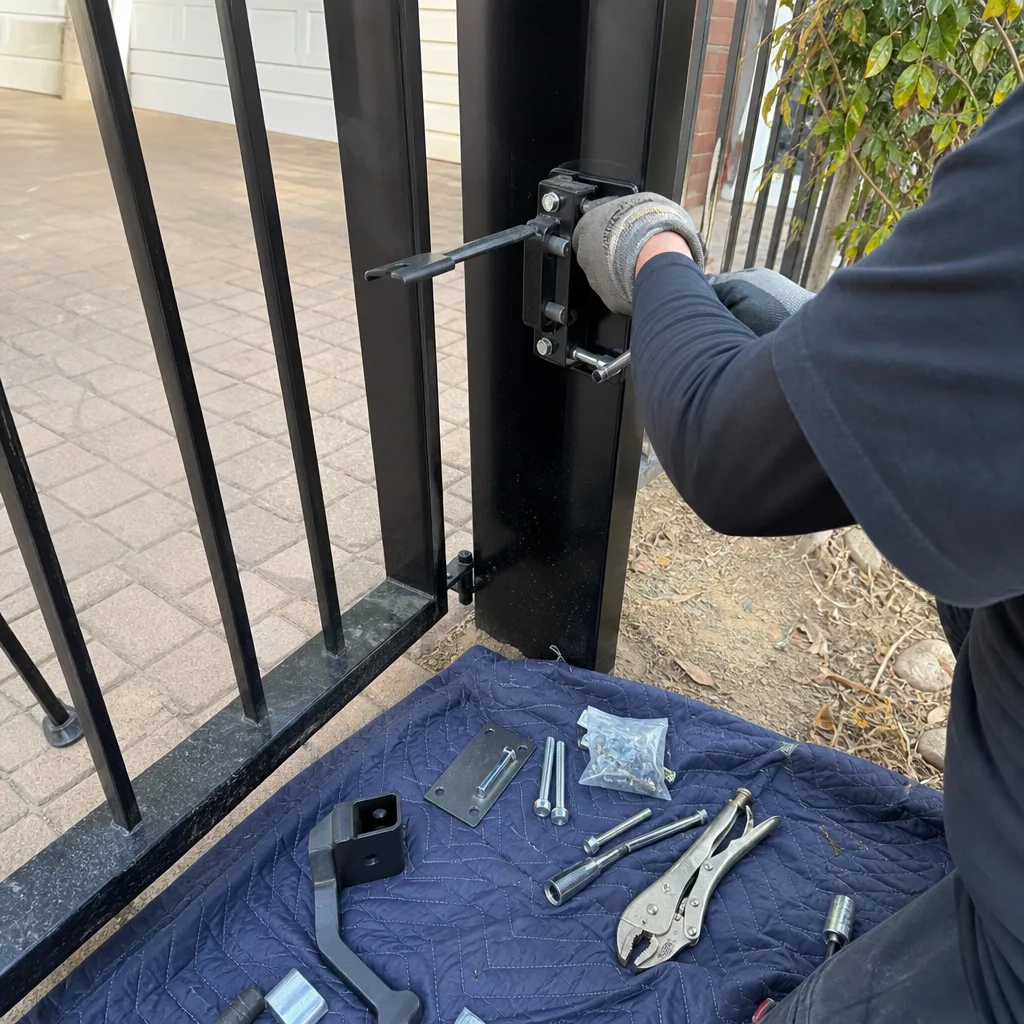
Spring is the correct time to photograph and document your gate’s limit-switch settings and operator draw, and this single habit is the highest-value task in the entire seasonal calendar. Here’s why: every future diagnosis of a gate problem depends on knowing what “correct” looked like. If your gate starts misbehaving in August, and there’s no record of where the limit switch was set in March, the technician has to infer the correct setting from scratch, and every inference is a place where a mistake can happen. If you have a photo of the limit-switch cam positions and a written record of the amp draw at each phase of travel, the technician can see in three minutes what changed. That’s the difference between a $180 recalibration and a $600 diagnostic chase.
The March-April baseline session should capture:
- Limit-switch positions. Open the operator cover and photograph the limit cams exactly as they sit. Write down the number of turns from closed to open and back. This is the single most valuable record on a gate operator.
- Operator amp draw at start, midpoint, and end of travel. A clamp meter reads the draw at each phase. Write all three numbers down. When the gate gets stiffer over the summer, the midpoint draw rises, and you now have a number that tells you exactly when to service hinges or rollers before the operator burns out.
- Battery voltage on backup systems, if equipped. Write down the voltage and the date. Batteries degrade on a schedule, not when it’s convenient.
- Gate gap measurements at both the latch post and the hinge post. Same as the February measurement, but now you’re recording it as a baseline for the year rather than responding to a change.
At Vance Gate Repair Anaheim, every visit includes a documented photo record of what was found, what was adjusted, and what was installed, as detailed in The Complete Guide to Gate Repair in Anaheim. It’s the same wiring-diagram habit Adrian Vance developed on commercial access-control sites starting in 2014, applied to residential gates in Anaheim. The point of the record isn’t to impress you with a folder of photos. It’s so that when the gate misbehaves in October, there’s a documented answer to the question “what was it set to when it was working?” That’s the question that saves real money, and it’s almost never answerable without a baseline.
For homeowners who want to do the spring baseline themselves, a smartphone photo of the limit cams and a notepad with the three amp-draw numbers is enough to start. For everyone else, a spring maintenance visit from a gate installation and service company in Anaheim that documents settings is the cleaner path. Either way, the record belongs in a folder, not in a memory.
June-August: UV Degradation, Powder Coat, and Lubricant Breakdown
Anaheim’s summer afternoon cycle routinely pushes 95°F and higher, with direct sun on gate surfaces for ten-plus hours a day. What that does to gate components breaks down by material, and knowing the differences determines what you should be looking at in summer.
Powder-coated steel degrades fastest under UV. The coating chalks, then cracks, then exposes the steel underneath, and in Anaheim’s dry summer air, the exposed steel doesn’t rust quickly, which lulls homeowners into thinking the gate is fine. The problem is that the cracking is structural to the coating’s adhesion: once moisture arrives in October, rust starts at every crack, and the coating peels in sheets. Summer is when you inspect powder coat for hairline cracks and address them before the wet season.
Galvanized steel holds up better under UV, but the zinc layer is sacrificial and thin. In Anaheim’s dry climate, galvanized gates can last a decade without visible rust, but the zinc is exhausting itself silently. The tell is a dulling of the galvanized finish and the appearance of small white blooms, which are zinc corrosion products doing their job. Those blooms are the warning sign that the zinc is nearly spent.
Aluminum does not rust, full stop. What it does do is oxidize, and the oxidation is self-limiting, which is why aluminum gates are common in Anaheim and the right choice for most coastal-adjacent properties. The summer task for aluminum is inspection of welds and fasteners, because aluminum expands more than steel under heat, and a gate that fits perfectly in March can bind in July at the hinge point if the clearances were undersized.
Lubricant choice is the other summer issue, and the one that produces the most August service calls. Petroleum-based lubricants break down rapidly in sustained direct-sun heat, thin out, and run off the pivot points they were meant to protect. By August, a gate that was lubricated in May can be running metal-on-metal. The right summer lubricant for Anaheim conditions is a synthetic or PTFE-based product rated for high-temperature outdoor use. Apply it in May or early June, keep it off the track surfaces, and wipe away the excess. A thin film is right; a dripping glob is wrong. We’ve replaced operator arms on Elite and Mighty Mule systems that burned out their bushings because the summer lubricant choice was wrong for the heat load. That’s a $400 to $900 repair depending on the operator, and it’s entirely avoidable.
The Quarter-by-Quarter Gate Care Calendar
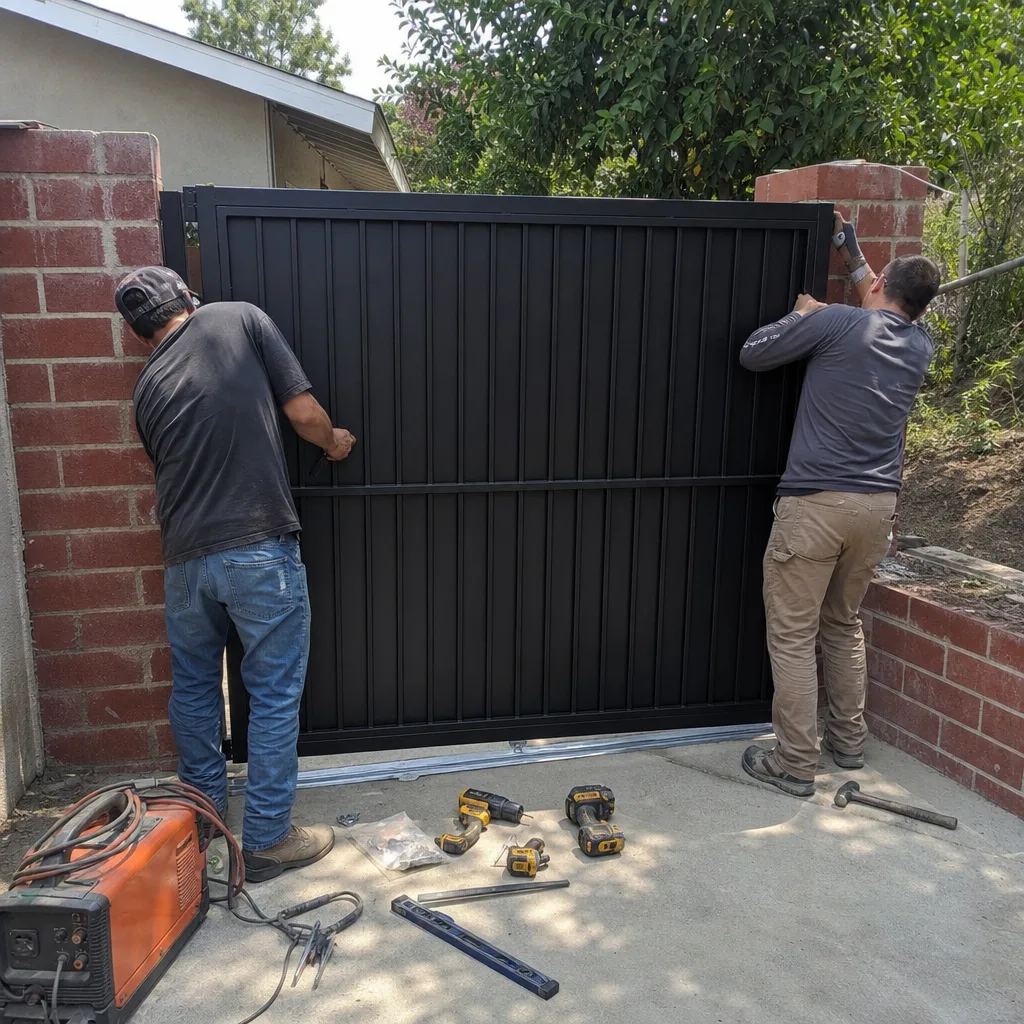
Here’s the full annual cycle mapped to Anaheim’s actual weather patterns. Print it, pin it, or forget it and call us in February. The choice is yours.
January – February: Observe and Record
- Measure and record gate gap at latch post weekly during heavy rain periods.
- Listen for strain in the operator motor at midpoint of travel.
- Call for recalibration if the gate stops short or over-travels.
- Do not attempt post resets in saturated clay.
March – April: Baseline and Document
- Photograph limit-switch cam positions.
- Record amp draw at start, midpoint, and end of travel.
- Check and record battery backup voltage.
- Schedule post reset or footing repair if February measurements showed movement.
May – June: Lubricate and Protect
- Apply synthetic or PTFE-based high-temperature lubricant to pivot points only.
- Inspect powder coat for hairline cracks and seal them before rain season.
- Check aluminum gates for binding at hinge points as temperatures climb.
- Clean slide gate tracks thoroughly; summer is the dry season and debris stays loose.
July – September: Monitor Under Load
- Recheck gate gap measurements against spring baseline.
- Listen for changes in operator sound that indicate wear from heat cycling.
- Watch for sagging or binding on south-facing gates that get maximum UV exposure.
October – November: Torque and Secure
- Torque all hinge bolts, bracket bolts, and operator mount bolts with a wrench.
- Walk the gate full travel and listen for creaking or clunking.
- Inspect gate arm brackets for cracking, especially on LiftMaster and FAAC operators.
- Clear track and leading edge before fall leaf drop and Santa Ana winds.
If that calendar looks like more work than you want to take on, the entire cycle can be compressed into two professional visits per year: one in October for wind prep, one in March or April for documentation and baseline. Two visits a year, roughly $150 to $300 each depending on what gets found, versus an emergency February call that averages much higher. The arithmetic on seasonal gate care in Anaheim is not complicated.
What’s Worth Documenting Versus What’s Routine
Not every maintenance task deserves a photo and a written record. Some tasks are routine, and documenting them adds no future value. Knowing the difference matters because it determines what you pay a technician to do versus what you do yourself.
Tasks with documentation value:
- Limit-switch setting changes. Every adjustment should be photographed and noted with the date and the reason for the change.
- Operator amp draw readings. These numbers are a wear indicator, and a series of them over years tells you exactly when hinges, rollers, or the operator itself are heading for failure.
- Post movement measurements. A numbered record of gate gap changes is the only way to prove footing drift.
- Any repair that involves a part number. The part number, date, and brand belong in the record. When the part fails again, you know whether it failed early.
Routine tasks with no record value:
- Lubrication. Apply it. There’s no baseline to record.
- Hardware torque checks that find nothing loose. The value is in the checking, not the record.
- Track cleaning. The track is either clean or it isn’t.
- General visual inspection. The observation matters in the moment; it doesn’t need a file.
The dividing line is simple: if the information could answer a future question about what changed, document it. If the information is only useful in the moment, don’t. Under our own Haven Standard, the documentation we leave with homeowners in Anaheim covers Clause 4: Evidence on every job, a photographed record of what was found, what was set, and what was installed. That’s the documentation that pays for itself in avoided rediscovery costs.
Common Mistakes to Avoid
- Lubricating with WD-40 or another penetrating oil. Penetrating oils are for freeing seized fasteners, not for lubricating gate pivots. They wash out the existing lubricant and leave the metal with less protection than it had. In Anaheim’s heat, the effect is worse because the carrier evaporates faster.
- Oversetting the operator force setting when the gate binds. When a gate gets stiffer, the correct response is to find and fix the stiffness, not to turn up the force. A force setting that can push through a binding hinge can also push through a child or a dog. If the gate suddenly needs more force, something mechanical changed, and that’s the thing to investigate.
- Postponing the October torque check until after wind season starts. By the time the first Santa Ana arrives, thousands of load cycles have already passed through loose hardware. The check needs to happen before the wind, not after the damage.
- Pouring concrete in February for a post reset. Saturated clay doesn’t hold a new footing the way drained clay does. Wait until April. Yes, it’s inconvenient to have a loose post for two months. It’s more inconvenient to reset the same post twice.
- Ignoring the amp draw numbers on an older operator. A rising midpoint draw is the earliest warning sign of hinge wear, roller failure, or operator stress. Ignore it and the first sign you get of the problem is a dead operator on a Sunday.
- Replacing an operator when the problem is the hinge. We’ve seen homeowners in Anaheim spend $800 on a new LiftMaster when the actual issue was a $60 hinge bushing. The amp draw tells you which one it is. The documentation record tells you how long the problem has been developing.
When to Call a Professional
Annual lubrication and hardware torque checks are within reach for a careful homeowner with a wrench and the right lubricant. Beyond that, the line is bright: if the task involves high-tension springs, gate arm replacement, limit-switch adjustment on a unit you don’t understand, or any diagnosis where the operator is behaving unpredictably, call someone who does this daily. Gate operators store significant mechanical energy, and a mis-set limit switch or an overset force control can turn a gate into a hazard. We’re not going to give you step-by-step instructions for those tasks here, because the safe answer is a trained technician. See DIY vs Professional Gate Repair: The Anaheim Homeowner’s Decision Guide for help drawing that line. Vance Gate Repair Anaheim offers free estimates in Anaheim, call (657) 567-5799, and every estimate comes in writing before any work starts.
Frequently Asked Questions
A twice-yearly preventive maintenance visit typically runs $150 to $300 per visit in Anaheim, depending on the gate type, operator brand, and what gets found during the inspection. A spring baseline documentation visit that includes limit-switch photography and amp draw readings costs toward the lower end. A fall torque-and-wind-prep visit lands mid-range. Emergency repairs in February and October regularly cost two to five times more than preventive visits, because the failure takes out components that maintenance would have caught. Call (657) 567-5799 for a written quote on a seasonal maintenance plan, the price is set before any work begins.
Yes, because Anaheim’s failure pattern is driven by the dry-to-wet transition and Santa Ana wind season, not by temperature extremes. One visit in October for wind prep and hardware torque, and one visit in March or April for documentation and baseline, catches the two highest-risk windows in the year. Gates that get both visits rarely fail catastrophically. Gates that get neither fail most often in February, when post movement and soil saturation combine to throw limit switches out of calibration.
The most common cause in February is post footing movement from rain-saturated clay soil. When the post shifts even a quarter-inch, the gate’s geometry changes, and the limit switch that was set for the old geometry now stops the gate short or over-travels it. It’s not a limit-switch failure. The switch is doing exactly what it was told to do. The fix is recalibration to the new geometry, and if the post has moved significantly, a post reset when the soil dries in spring. A fall torque check removes the other February culprit: loose hardware that finally shifted enough to bind.
A synthetic or PTFE-based high-temperature lubricant rated for outdoor use holds up in Anaheim’s 95°F-plus afternoon cycle. Petroleum-based lubricants break down, thin out, and run off in sustained direct-sun heat, leaving pivot points dry by August. Apply a thin film on pivot points only, keep it off track surfaces, and wipe away excess. If the operator arm bushings are already running metal-on-metal, lubrication won’t save them, replacement is the repair.
The lubrication, hardware torque checks, gate gap measurements, and track cleaning are within reach for a careful homeowner with a wrench, a tape measure, and the right lubricant. Limit-switch adjustment, gate arm replacement, force setting changes, and anything involving high-tension springs or operator internals should go to a professional. The energy stored in a gate operator is significant, and a mis-set limit switch is a safety hazard. For homeowners who want the documentation value without the risk, call (657) 567-5799 and we’ll do the full baseline visit and leave you the written record.
We service LiftMaster, Elite, Mighty Mule, FAAC, and five other major gate-automation brands, and we don’t steer repairs toward replacement when the existing operator can be made right. The written estimate you receive before work starts includes the brand-specific diagnosis and the part number, and the photo record at the end of the visit shows exactly what was adjusted or replaced. If you have another company’s estimate in hand, we’ll review it at no cost and give you a second opinion on paper.
The Bottom Line
Anaheim’s gate failures are predictable because the climate stress that causes them is predictable: Santa Ana winds in October, saturated clay in February, UV and heat in August. The right seasonal response is a quarter-by-quarter rhythm, torque and secure before wind season, measure and observe through the rain, document and baseline in spring, lubricate and protect through the summer. Two professional visits a year cover the cycle, and the documentation those visits produce is what keeps future repairs honest and affordable. We’re Vance Gate Repair Anaheim, and we’ve been doing this work since 2014. Every visit includes a written price before work starts and a photographed record when we leave. Call (657) 567-5799 for a free estimate, and we’ll tell you exactly what your gate needs and what it costs, in writing, before anyone picks up a tool.
Written by Adrian Vance, Owner at Vance Gate Repair Anaheim, serving Anaheim since 2014.