
Last updated September 20, 2026
Free on-site gate assessment - hinges, posts, and your LiftMaster or Nice gate operator checked before anything is quoted
The assessment is free and the quote is the invoice.

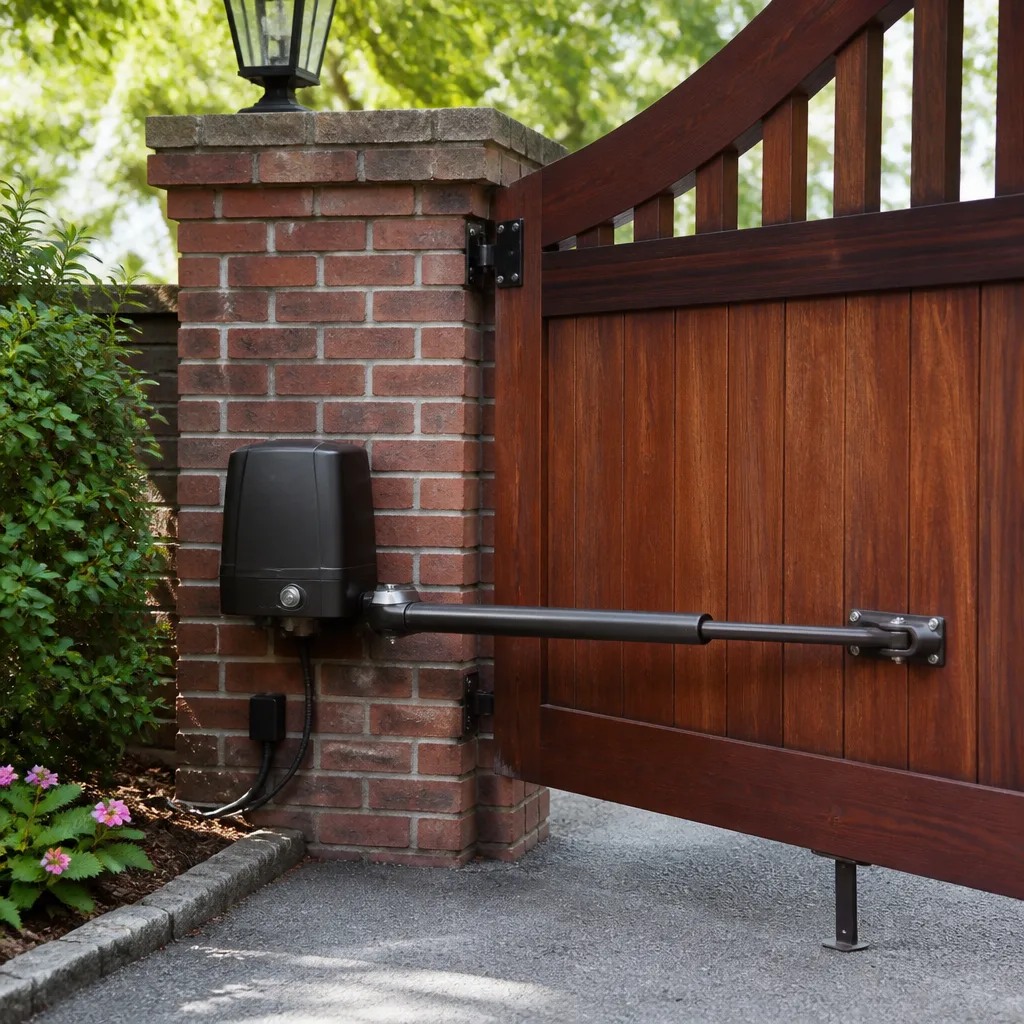
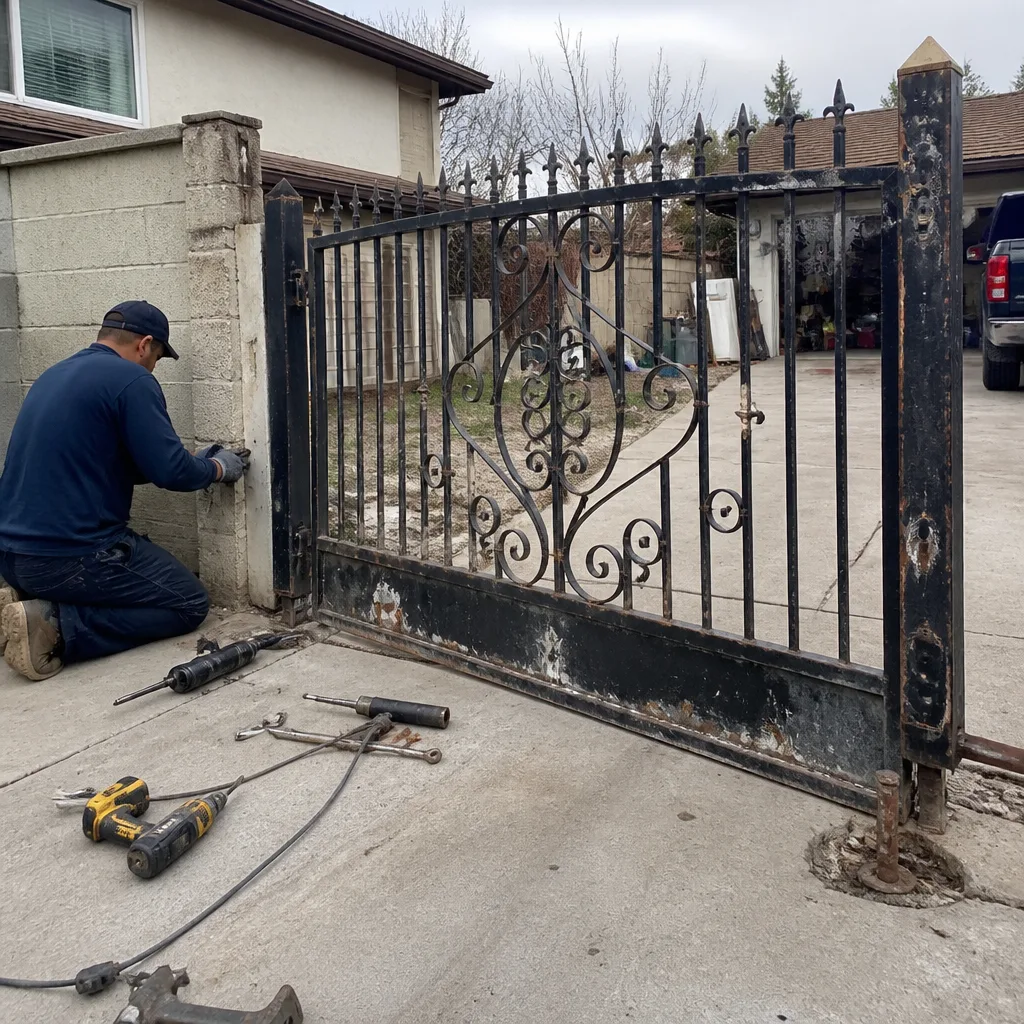 Before
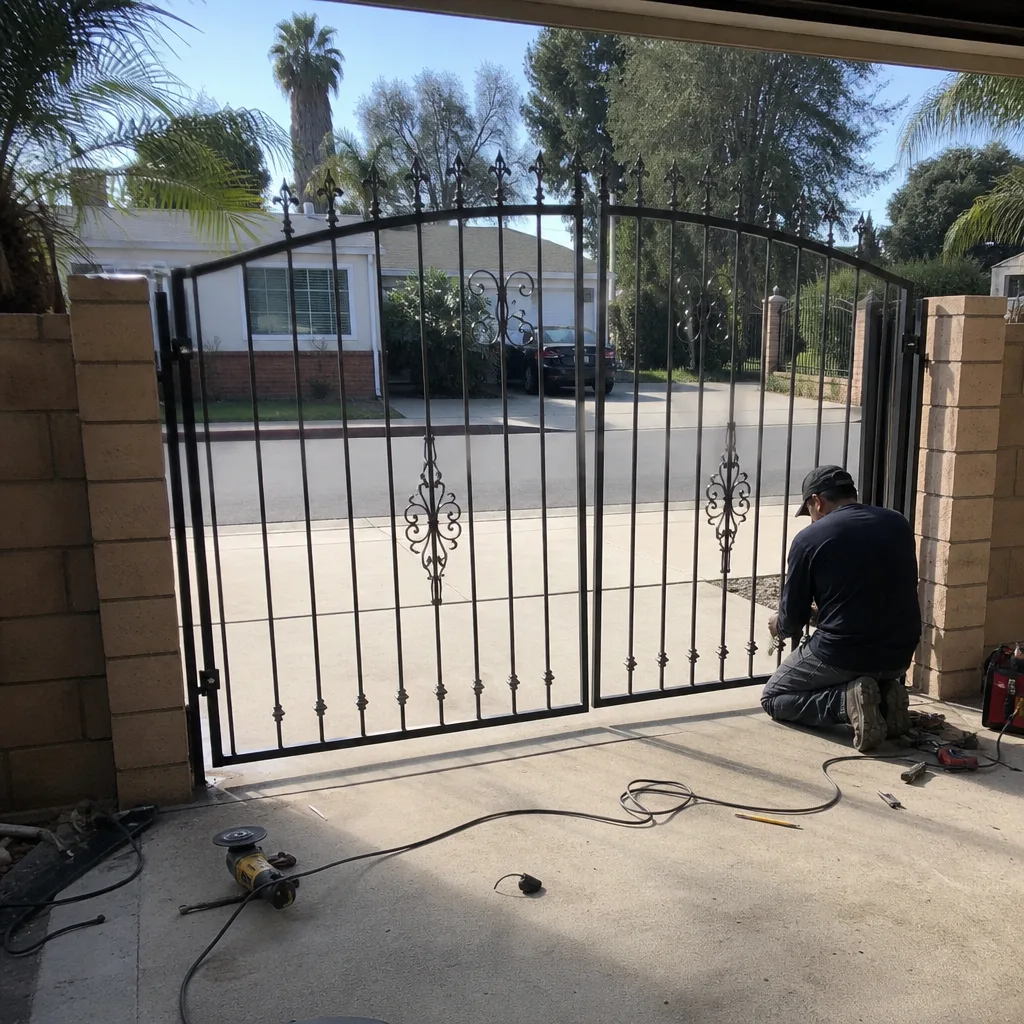 After
After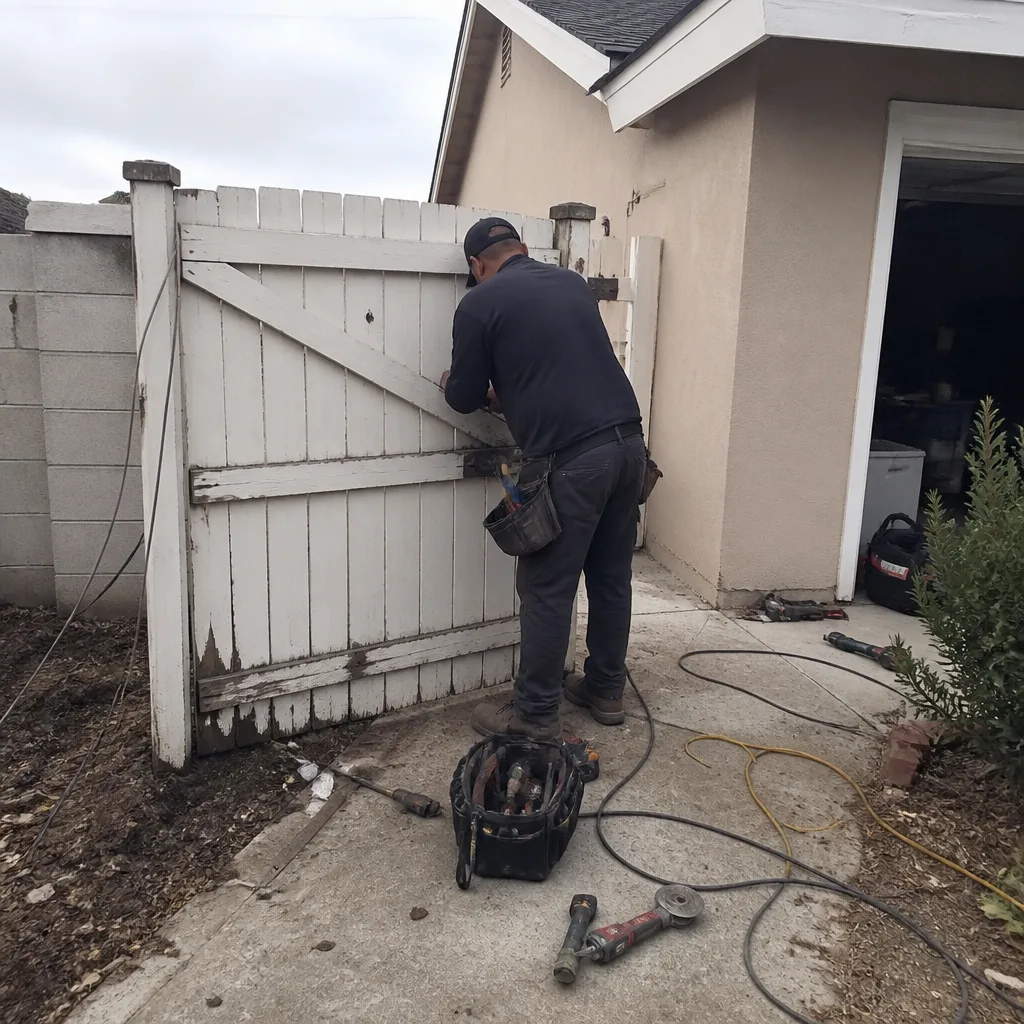 Before
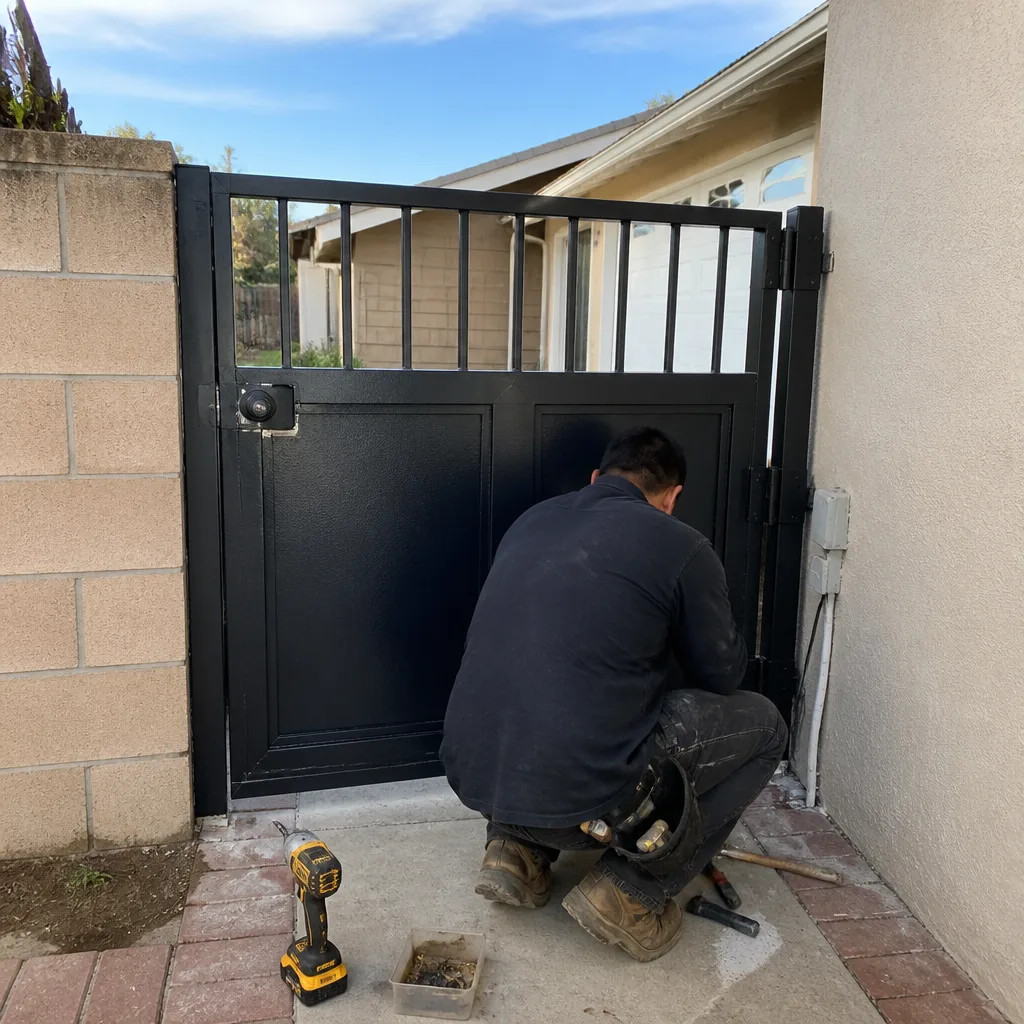 After
After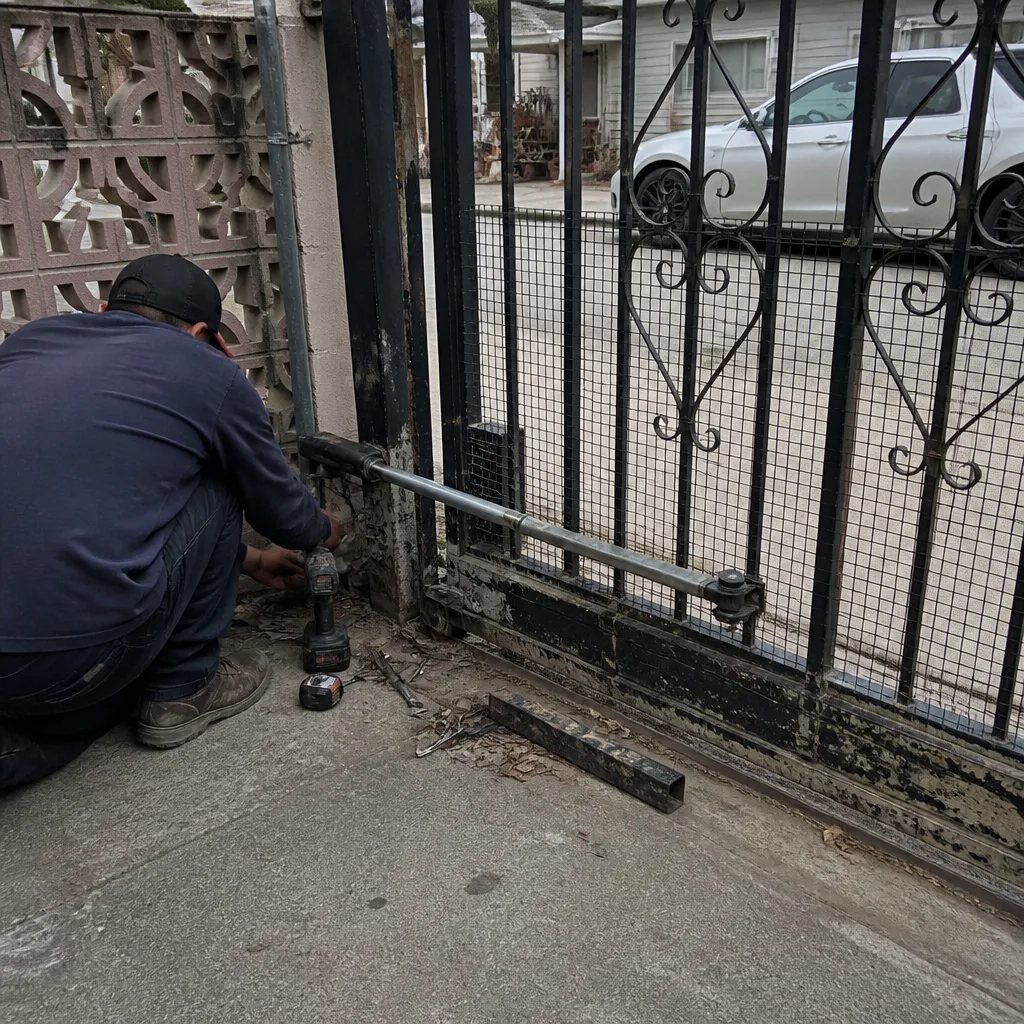 Before
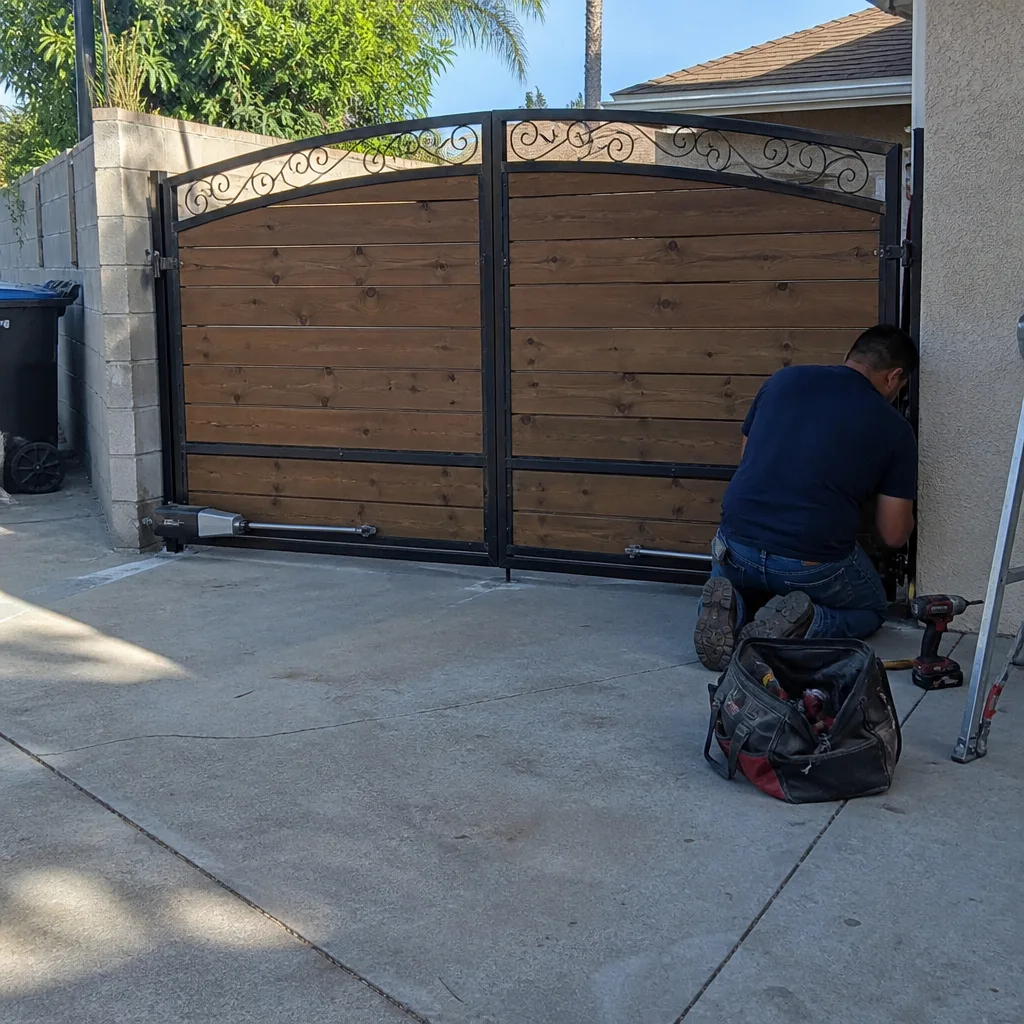 After
AfterGate Repair Maintenance Checklist for Anaheim Homeowners
Most gate maintenance checklists tell you to “lubricate the chain and check for rust.” That’s the equivalent of a car inspection checklist that says “look at the engine.” Here’s what the numbers actually need to say. In Anaheim, where summer driveway temperatures routinely exceed 120 degrees and the marine layer rolls through western neighborhoods each evening, your gate’s hardware expands and contracts daily. This guide provides specific pass/fail thresholds for every checkpoint, so you can distinguish normal wear on your Anaheim property from a failure that will cost you a motor or a hinge replacement within six months. For more on professional service, see our Gate Repair page.
Quick Answer
A proper gate maintenance checklist for Anaheim homeowners combines monthly visual checks, quarterly lubrication, and annual torque and travel-time measurements. The most useful checks are the ones with numbers attached: a swing gate should travel from open to closed in 14 to 20 seconds, a slide gate in 12 to 16 seconds, and a motor drawing more than 20% above its nameplate amperage under load is telling you it is working too hard. If your gate fails any of the thresholds below, address the issue before the hardware does.
Table of Contents
- Operator Torque and Travel-Time Benchmarks
- Logging Limit-Switch Positions with Photo Reference
- Anaheim-Specific Wear Accelerators
- Task and Frequency Table: What You Do vs. What We Measure
- Keeping a Maintenance Log That Doubles as a Repair Record
- Hinge, Chain, and Photo-Eye Checks with Numeric Benchmarks
- Battery Backup and Power Supply Checks in Anaheim Heat
- Common Mistakes to Avoid
- When to Call a Professional
- Frequently Asked Questions
BeforeAfterOperator Torque and Travel-Time Benchmarks
The single most neglected measurement on a residential gate operator is torque, because most homeowners never see it performed. Torque is the rotational force the motor applies to move the gate leaf, and it can be read indirectly through amperage draw on the operator’s control board or directly through a force gauge on the gate edge. For a swing gate operator in Anaheim’s typical single-family installations, normal force at the leading edge should register between 15 and 40 pounds for a gate under 12 feet. A slide gate under 400 pounds should never require more than 45 pounds of force to move through its full travel. If a technician places a force gauge on your gate and reads above these thresholds, the motor is overcoming resistance caused by a failing bearing, a dragging wheel, or a misaligned track. In our experience, a gate requiring twice its normal continuous force will burn out its motor within three to eighteen months, depending on daily cycle count. The operator’s nameplate lists its full-load amperage; a properly tuned motor runs at 60 to 70% of that number during normal travel. A motor running consistently at 85% or higher under its nameplate rating needs the load on it examined.
Travel time is the second number to record. For a 10-foot swing gate, a complete open or close cycle should take 14 to 20 seconds. For a 12-foot slide gate, 12 to 16 seconds is correct. These are speed settings programmed into the operator; they are not signposts of wear by themselves, but changes over time are. A gate that took 15 seconds to open in March and 22 seconds in September is not speeding up its motor, it is fighting friction. That friction is usually a dry or failing ball bearing in a hinge or a wheel that has stopped rolling and started sliding. The fix is often a $40 bearing replacement instead of a $900 motor replacement, but you must catch the change before the motor’s thermal overload begins tripping. Gate motor and opener service in Anaheim includes this measurement on every maintenance visit precisely because it is the earliest reliable warning of impending failure.
Here are the pass/fail numbers to record annually for a swing gate:
- Leading-edge force: 15-40 lbs. Pass. Above 40 lbs. Fail.
- Travel time (10-ft leaf): 14-20 seconds. Pass. Outside this range, inspect speed settings and bearings.
- Motor amperage under load: 60-70% of nameplate FLA. Pass. Above 85%: fail.
- Obstruction-reversal force: gate must reverse on contact with a 40-lb. object. Any higher threshold: fail.
For a slide gate, the equivalent numbers are:
- Leading-edge force: up to 45 lbs. Pass. Above 45 lbs. Fail.
- Travel time (12-ft gate): 12-16 seconds. Pass. Outside this range, inspect wheels and track.
- Wheel spin check: each wheel must rotate freely by hand. Any wheel that skids or binds: fail.
- Track alignment: no more than 1/4 inch lateral deviation over an 8-foot section. Larger deviation: fail.
Logging Limit-Switch Positions with Photo Reference
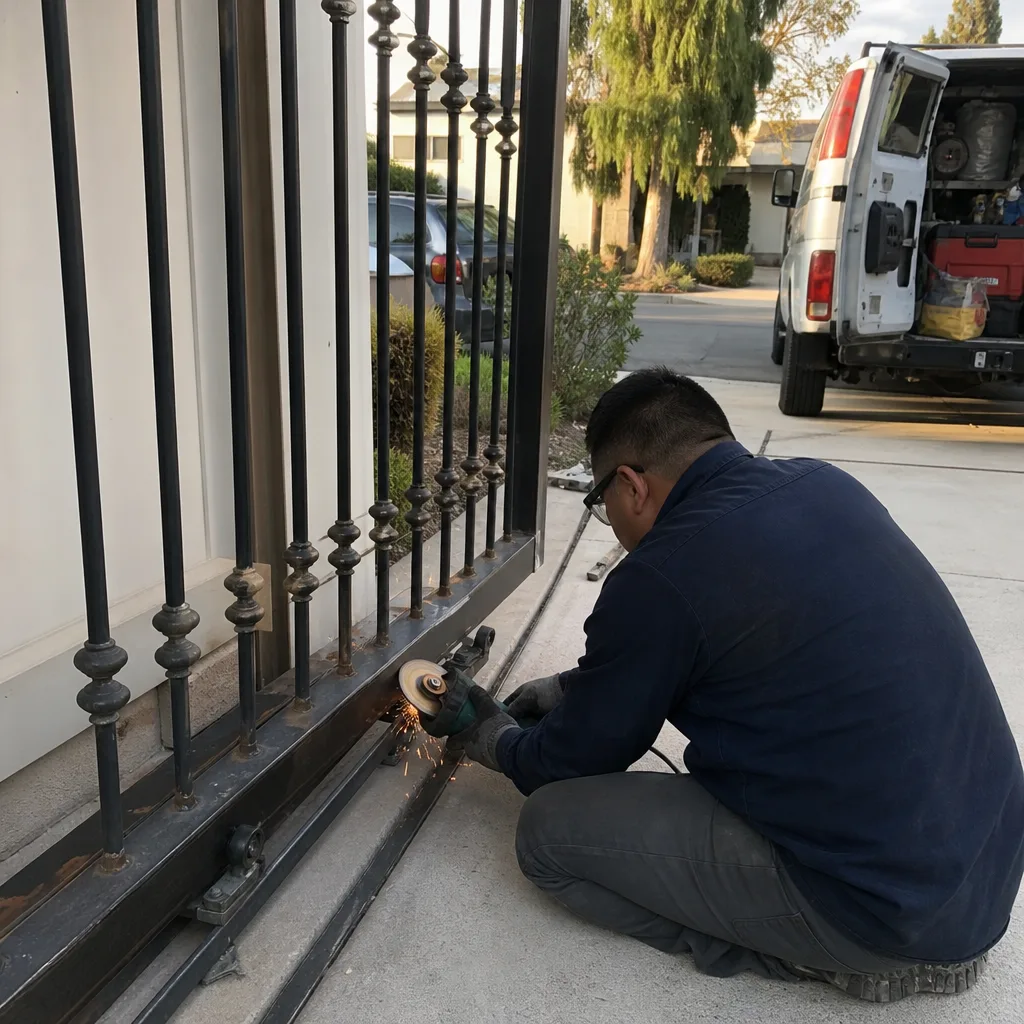
A limit switch tells the motor where to stop. On most Anaheim residential gates, limit switches are electromechanical switches or magnetic reed switches mounted inside the operator housing or on the gate track. Their exact position determines whether the gate closes fully against its stop or stops an inch short and leaves a gap your dog can squeeze through. What most homeowners do not know is that limit switches drift. Vibration from daily operation, temperature cycling on the metal arm, and the occasional bump from a delivery truck all move the switch a fraction of a degree at a time. The drift is invisible unless you photograph it.
Here is a five-minute method to create a permanent limit-switch photo log for your gate:
- Open the operator cover and locate the limit switch assembly. On Linear, Viking, DoorKing, and Ghost Controls operators, the limit switches are typically a pair of small rotating cams with a set screw each. Note the brand and model on your log.
- Photograph the assembly at a 90-degree angle with a coin or ruler in frame for scale. The set screw’s clock position, not just the switch location, is what matters.
- Record the gate’s stop position in inches from the closed stop post. Write down the gap, if any, between the gate leaf and the stop. A gap of under 1/8 inch is acceptable. A gap of 1/2 inch or more means the close limit has drifted.
- Repeat the photo every six months. Place the new photo beside the old one. A visible clock-position change of even 10 degrees on the set screw is enough to shift the gate’s stop by a noticeable distance.
- Keep the photos with your maintenance log. When a technician arrives, show that log. They will not spend the first hour re-diagnosing a drift problem you have already documented.
This is the commercial habit that transfers directly to a home gate: a written record of what a measurement used to be, not just what it is now. On commercial access-control jobs starting in 2014, Adrian Vance developed the practice of photographing every limit-switch position after every adjustment, because a previous technician’s good work is invisible without a reference. Your home gate deserves the same treatment. Without a photo log, every future service call starts from zero, and you pay a technician to rediscover what you already lived through.
Anaheim-Specific Wear Accelerators
Anaheim’s climate is not neutral. It actively degrades gate hardware in ways a generic national checklist never mentions. The three factors that accelerate wear on gates in this city are UV exposure, alkaline soil contact, and evening humidity in the western half of the city. Each one attacks a different component, and each requires a specific check.
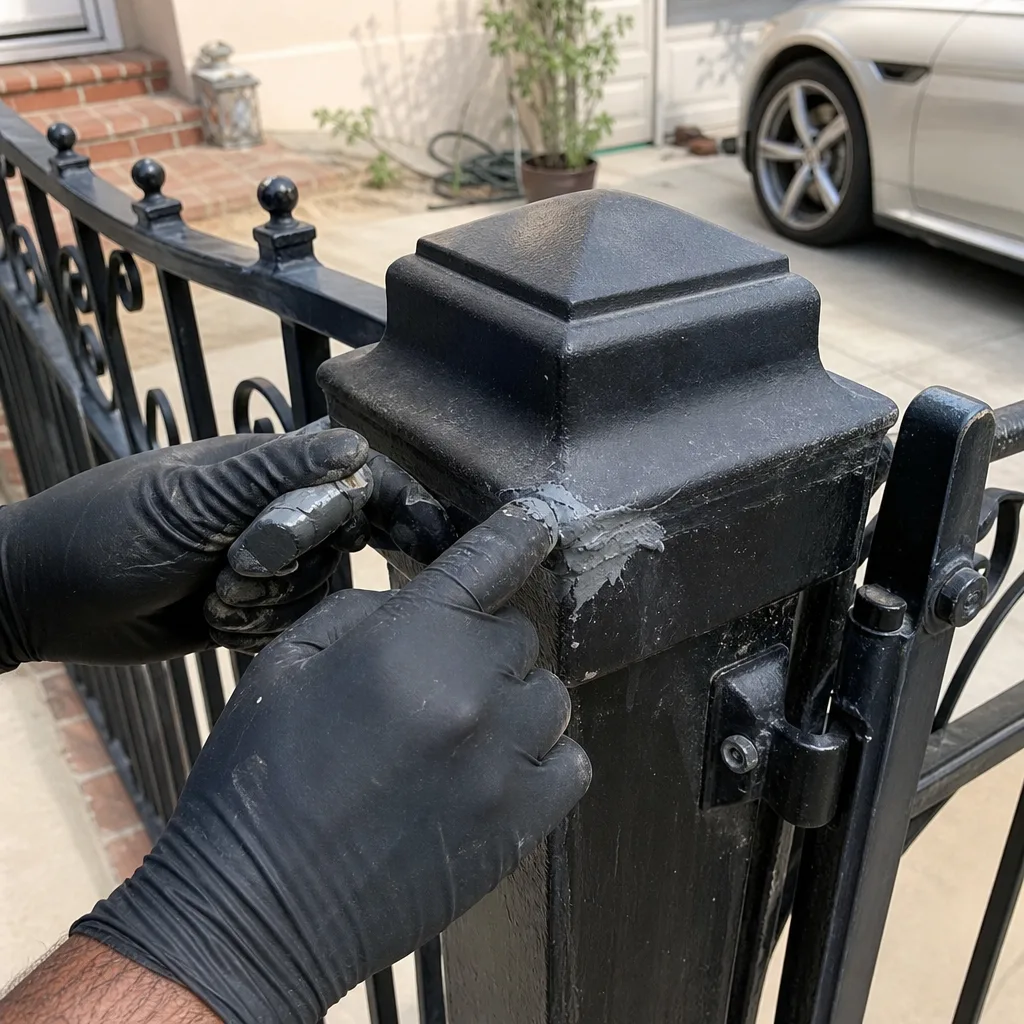
UV exposure is the most visible. Anaheim averages 280 sunny days per year, with a UV index that sits in the high-to-very-high range from April through October. That ultraviolet load degrades vinyl gate inserts, powder-coat finishes, plastic hinge caps, and the insulation on exposed operator wiring. A powder-coated steel gate in Anaheim with direct afternoon sun exposure typically shows visible chalking and fade within three to five years, and small chips in that coating become rust blooms within a single rainy season if left unpatched. The check here is not “look for rust.” It is a coin-tap test: tap a suspect area with a quarter. Solid coating produces a sharp ring. Delaminated coating produces a dull thud. Any spot that thuds needs wire-brushing, primed, and touched up before October, or you will be sanding rust by spring.
Alkaline soil is the invisible one. Much of Anaheim’s underlying soil is alkaline, and alkaline soil accelerates galvanic corrosion on buried steel posts and metallic gate hardware that makes direct contact with the ground. A steel post set directly in concrete that sits in alkaline soil develops rust at the soil line twice as fast as the identical post in neutral soil. We have pulled posts in Anaheim’s older central neighborhoods that were the thickness of a soda can at ground level while the top of the post looked new. The check: every April and October, scrape away two inches of soil or mulch from around each gate post and inspect the steel at the transition line. Blistered paint, flaking metal, or a powdery white or rust-colored deposit means the post is losing material. A post with more than 25% section loss at the soil line is a structural failure waiting for a windstorm.
Humidity is the slow one. Western Anaheim ZIP codes and any neighborhood within a mile or two of the 5 freeway’s marine-influenced corridor experience nightly humidity spikes from May through July and again in September before the Santa Anas return. That humidity condenses on cold steel in the early morning, and any exposed cut edge, any unpainted inside corner, any scratch collects moisture. An unpainted gate edge in these neighborhoods develops rust bloom within six months. The check: run your bare hand along the bottom rail and inside corners on a June morning. If your hand comes away with moisture and the metal has no intact coating there, that specific spot will be rusted by the end of the year. Seal gate seams and inside corners with a rust-inhibiting seam sealer, or accept that those spots are now annual touch-up locations.
Task and Frequency Table: What You Do vs. What We Measure
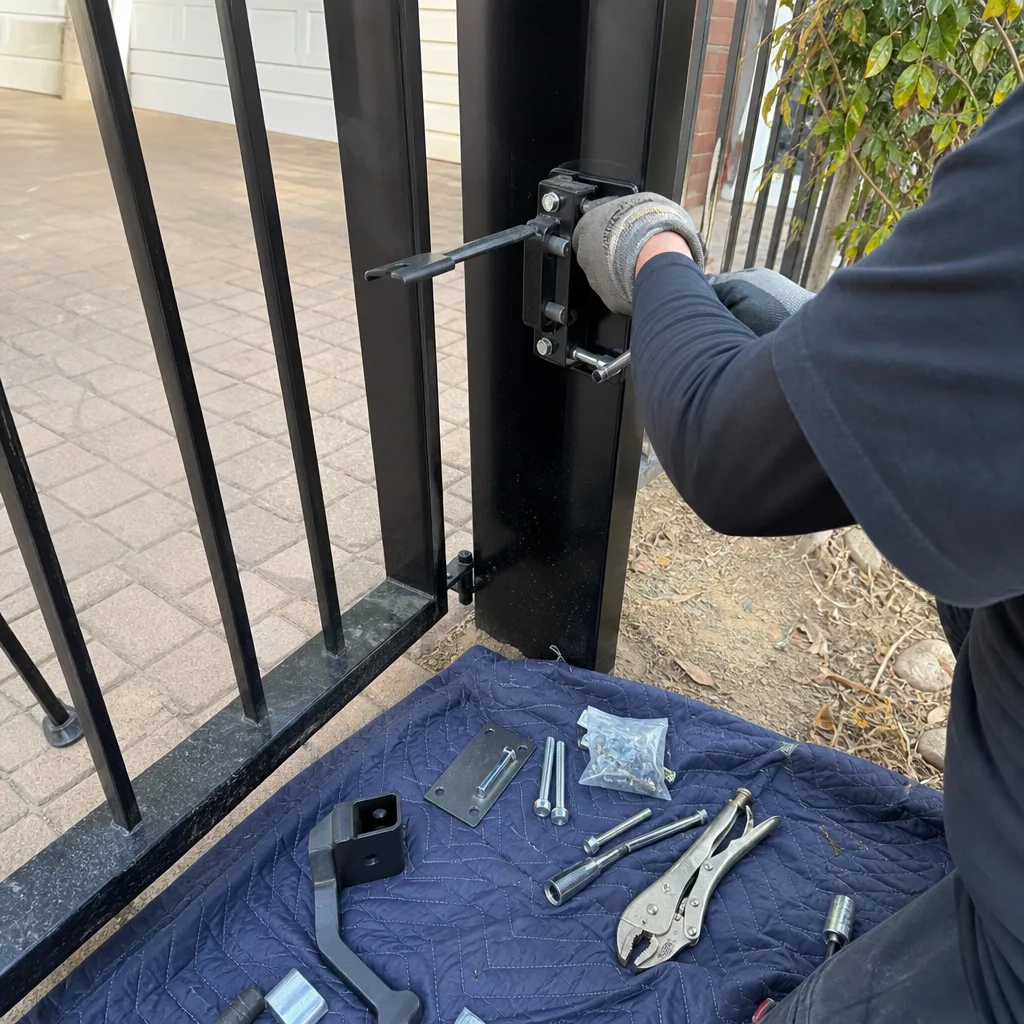
The most common mistake in Gate Repair Permits, Codes & Inspections in CA: What You Need to Know aside, treating every task as a homeowner chore is the error we see most. It is not about effort; it is about measurement tools. You have eyes and a wrench. We have a force gauge, a clamp meter, and a decade of baseline readings from 22,000+ gates repaired and installed since 2014. Every maintenance item below falls into one of two columns: what you should perform on a schedule, and what requires a trained technician’s documented measurement. In Anaheim, given heat and UV cycling, frequencies run slightly higher than national generic guidance.
Homeowner tasks
| Task | Frequency | Pass/Fail Threshold |
|---|---|---|
| Visual hinge and weld inspection | Monthly | No crack longer than 1 inch; no sag beyond 1/4 inch at latch side |
| Track and wheel debris clear (slide gates) | Monthly | Track free of pebbles, leaves, pet hair |
| Lubrication of hinges, wheels, and chain (white lithium grease) | Quarterly | No metal-on-metal squeal; wheel rotates by hand |
| Photo-eye lens cleaning | Monthly | Wipe with dry cloth; signal LED steady, not flashing |
| Coin-tap coating test | Annually (September) | Sharp ring pass; dull thud fail |
| Post soil-line inspection | Twice a year (April, October) | Less than 25% section loss pass; more fail |
Professional measurements
| Measurement | Frequency | Pass/Fail Threshold |
|---|---|---|
| Leading-edge force test | Annually | Swing: 15-40 lbs; Slide: up to 45 lbs |
| Motor amperage draw under load | Annually | 60-70% of nameplate FLA pass; above 85% fail |
| Limit-switch position photo log | Every 6 months | No visible clock-position drift vs. previous photo |
| Obstruction-reversal force test | Annually | Reverses on 40-lb contact; any higher fail |
| Earth-ground resistance check | Annually | Below 25 ohms pass; above fail |
| Battery backup load test (if equipped) | Annually | Battery holds gate through minimum 10 full cycles from full charge |
Notice the pattern: homeowner tasks are visual and mechanical. Professional measurements involve electrical load, calibrated force, and documented baseline comparisons. If a gate technician arrives without a force gauge or a clamp meter, they are not performing maintenance; they are spraying lubricant and calling it a day. That is the service equivalent of checking your car’s oil by wiping the dipstick on a blue paper towel and not reading the level. Gate repair in Anaheim should always leave you with numbers, not adjectives.
Keeping a Maintenance Log That Doubles as a Repair Record
Your maintenance log is the single highest-leverage document you can keep on your gate, because it converts every future repair from an investigation into a confirmation. A technician who reads a log that says “limit switch reset March 2025, close gap 1/8 in., motor amp draw 4.8A on a 6.0A nameplate” knows in thirty seconds that this month’s 6.0A draw is a 25% increase, not a mystery. Without that log, the same technician runs the same diagnostic tests again, and you pay for their time reacquiring information you already owned.
Keep the log simple. A spiral notebook in the garage or a shared note on your phone works. Every entry should contain five fields:
- Date and time of the observation or service.
- The specific reading or measurement. Write the number, not the adjective. “4.4 amps” not “running warm.”
- What was adjusted or replaced, if anything. Include the part number and brand when a part is replaced.
- A photograph or video reference link. For limit-switch positions, weld inspections, and post soil-line findings, the photo is the evidence.
- The next scheduled check date. A log with no future date is a record of neglect.
In Anaheim, where summer heat causes daily expansion and contraction on a 14-foot steel gate, three years of logged amperage readings might show a gradual climb from 4.0A to 5.2A. That specific trend is enough to schedule a bearing inspection before the motor fails. If you keep only the receipts in a drawer, you have a pile of paper that tells you what you spent, not what the gate told you. A documented photo record of every visit, including what was found and what was set, is part of the Haven Standard precisely because it turns accumulated history into a durable asset. You own the record. Anyone with a wrench can read it and act without redundant diagnostic time.
Hinge, Chain, and Photo-Eye Checks with Numeric Benchmarks
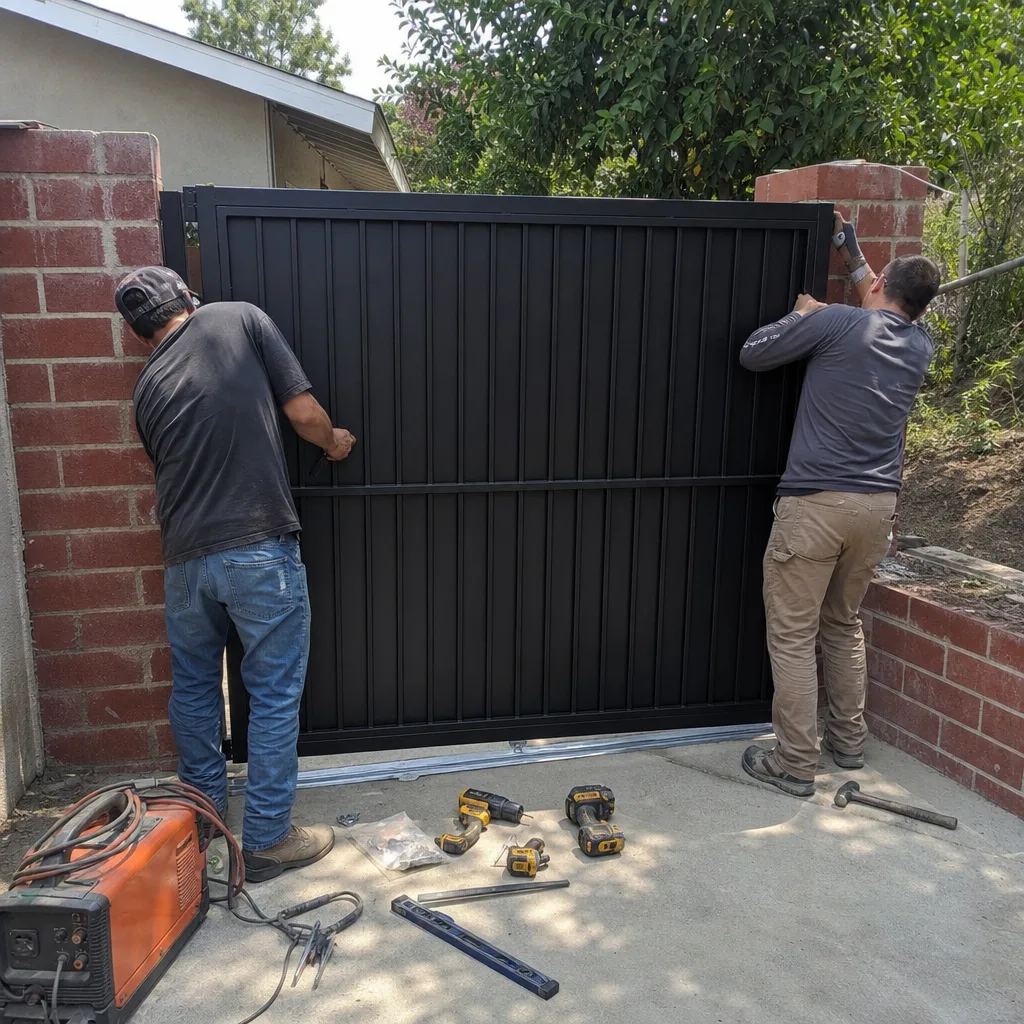
Hinges, chains, and photo-eyes are the components most likely to generate false alarms and unnecessary service calls in Anaheim, because each one degrades slowly and visibly. The checks below give you pass/fail thresholds so you know whether to act now or record and revisit.
Hinges
A swing gate hinge has two wear indicators: vertical sag and lateral play. To check sag, measure the gap between the latch side of the gate leaf and the lock post at three points: top, middle, bottom. The gap at the bottom should not exceed the gap at the top by more than 1/4 inch. A differential greater than 1/4 inch means the hinge pin or bushing is worn and the gate is cantilevering. To check lateral play, grip the gate near the hinge post and push and pull perpendicular to the gate face. Movement greater than 1/8 inch at the hinge means a worn pin or an undersized hinge for the gate weight. Any of these failures left unaddressed for a season in Anaheim turns a $50 bushing replacement into a $300 weld job or a dropped gate leaf.
Chain drives
Chain-drive slide gates are common on older Anaheim properties. The chain’s tension should allow no more than 1 inch of vertical deflection when pressed firmly with a gloved thumb at the midpoint of its longest unsupported run. More than 1 inch of slack and the chain can jump a sprocket tooth under load, which on a moving gate under motor power means the gate lurches, which accelerates wear on every downstream component. Less than 1/2 inch and the chain is overtight, which loads the motor and sprocket bearings unnecessarily and shortens their life. Lubricate chains with a dry-film chain lube each quarter, not grease, because grease traps Anaheim’s airborne dust and turns into an abrasive paste that machines the sprocket teeth into needles.
Photo-eyes
A photo-eye, the infrared beam across the gate opening that stops or reverses the gate when something interrupts it, requires alignment precise enough that the receiver sees the transmitter’s beam at all times. On a gate that has been bumped or that sits on expanding and contracting concrete through Anaheim’s heat cycles, photo-eyes drift out of alignment by fractions of an inch. The check: with the gate open and the area clear, block the beam with your hand. The operator’s indicator LED should change state, and the gate should not close when you press the close command. If the LED blinks occasionally without any obstruction, the beam is on the edge of alignment and will become an intermittent nuisance. Clean both lenses with a dry cloth monthly; dust and spider webs on a photo-eye are the single most common false-service complaint on Anaheim gates, particularly in neighborhoods with heavy landscaping and sprinkler overspray onto gate posts.
Battery Backup and Power Supply Checks in Anaheim Heat
Anaheim heat kills batteries faster than use does. A sealed lead-acid battery in a gate operator backup system, sitting inside a dark metal operator housing in direct sun, sees internal temperatures above 140 degrees routinely from June through September. At those temperatures, a battery’s expected service life drops from five years to between eighteen months and three years, depending on quality and charging profile. Most Anaheim gate owners have no idea the battery is already dead until the power fails and the gate does not open.
The check is annual and simple. Every September, test the battery backup by disconnecting the operator’s AC power at its service disconnect or breaker and running the gate through normal open and close cycles on battery. A healthy battery should carry the gate through a minimum of ten full open-close cycles without slowing noticeably. Any battery that struggles to complete five cycles, or that produces a visibly slower gate by cycle seven, is end-of-life. Given that Anaheim experiences periodic high-wind events that knock power out for hours at a time, a dead battery backup is not a minor inconvenience. It is the difference between a secure closed gate and a gate that must be manually released and left unsecured during the outage. We also recommend checking the charging voltage at the battery terminals once a year: a properly functioning charging circuit delivers between 13.6 and 13.8 volts on a 12-volt system. A charger delivering below 13.2 volts is undercharging the battery and guaranteeing early failure. A charger above 14.0 volts is cooking it.
Common Mistakes to Avoid
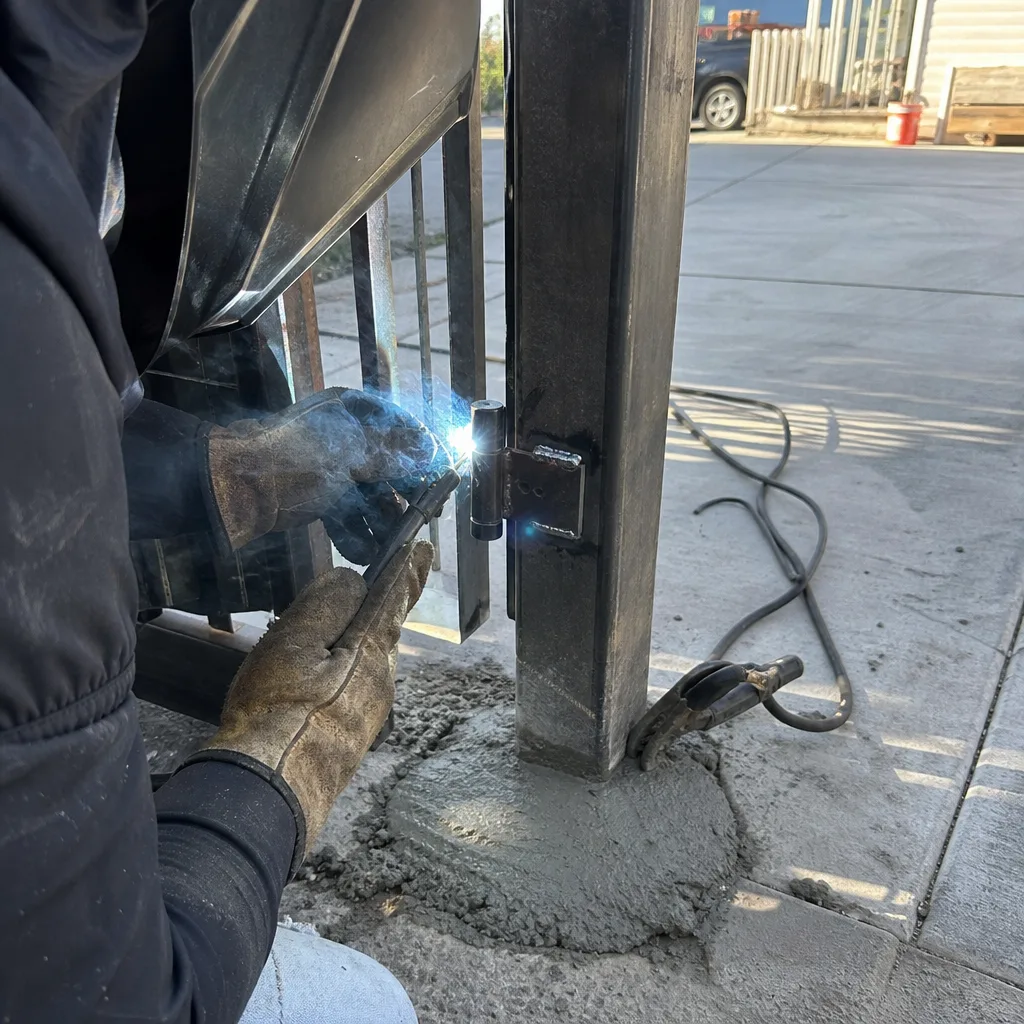
- Lubricating everything with WD-40. WD-40 is a water displacer, not a lasting lubricant. It cleans, then evaporates, and leaves metal surfaces dry within days. Use white lithium grease on hinges and a dry-film lubricant on chains. Anything else is borrowed time.
- Ignoring a slow gate. A gate that takes three seconds longer to open than it did last year is telling you about increasing friction, not about a motor that has decided to slow down. Treat any travel-time increase over 15% as a service trigger.
- Painting over rust without removing it. Rust is a chemical process that continues under any paint you apply on top. If you do not remove the rust to bright metal and apply a rust-inhibiting primer, you are putting wallpaper over rot. It will be worse in twelve months.
- Testing the photo-eye by waving a hand in front of it and calling it done. That only tells you the beam is present at that moment. The meaningful test is to check whether the gate holds position when the beam is blocked mid-cycle and whether the operator’s fault indicator records the event.
- Ignoring the sound of the motor. A motor that now produces a low hum in addition to its normal operating sound is pre-overheat. Document the sound change with a phone recording, and schedule an amperage draw check. Motor replacement after a thermal failure is always more expensive than bearing replacement before it.
- Assuming a battery backup is fine because the gate runs on AC power. A battery can be dead for two years without ever being called on. The only meaningful battery test is the annual disconnect test described above. Everything else is guesswork.
- Running extension cords to a gate operator permanently. Extension cords are for temporary use. A permanent extension cord buried or running along a fence is a shock and fire hazard, and it also creates a voltage drop that makes the gate motor draw more amperage. Run proper conduit and UF-rated wire, or have an electrician do it.
When to Call a Professional
You should call a gate professional the moment a quantitative threshold fails: leading-edge force above 45 pounds on a slide gate, motor amperage above 85% of nameplate, a limit-switch position that has drifted, or hinge sag beyond 1/4 inch. See Gate Repair Warning Signs: A Anaheim Homeowner’s Reference Guide for the full list. These are not cosmetic conditions. They are wear measurements that, left unaddressed, become repair costs, and no homeowner with a checklist can measure them without a force gauge, a clamp meter, or a baseline photo log. A professional visit also provides the written record that protects you from paying for the same diagnostic work twice. Vance Gate Repair Anaheim offers free estimates in Anaheim. Call (657) 567-5799, and a live person answers.
Frequently Asked Questions
Annually for motorized gates, with a supplemental post-summer check in September given Anaheim’s heat load on operators and coatings. Gates with high cycle counts (more than 20 open-close cycles per day) should be serviced every six months. Call (657) 567-5799 for a written maintenance quote.
A proper visit includes a force-gauge test, an amperage-draw measurement, a limit-switch position photo log, a battery load test if equipped, and a full hinge and wheel inspection. Any technician who shows up without a force gauge or clamp meter is not performing maintenance; they are doing a visual walkaround.
Expect annual maintenance on a single motorized gate in Anaheim to run roughly $150 to $350, depending on the access to the operator and whether any adjustments are needed. Repairs found during maintenance are quoted separately with a written price before any work begins. That price includes a documented photo record of what was measured and adjusted.
You can and should handle monthly visual inspections, quarterly lubrication with the correct products, and track cleaning. For more guides & resources, visit our blog. You cannot perform torque, amperage, or force measurements without specialized tools, and no homeowner should attempt to tension a torsion-type closer or perform electrical work on a gate operator. Those are the checks that actually predict failure.
A properly loaded motor runs warm but not too hot to hold your hand on for five seconds. If the housing is too hot to touch comfortably, the motor is overheating, likely due to high amperage draw from a load problem. Schedule a force and amperage check rather than waiting for the thermal overload to trip repeatedly and shave months off the motor’s life.
Photo-eye misalignment and dead battery backups are the most common false alarms, but the most expensive avoidable failure is a burned-out motor from a bearing or wheel problem that went unmeasured. An annual force and amperage check catches the bearing problem for under $100 before it becomes a motor replacement for $700 or more. Call (657) 567-5799 to schedule a free estimate.
The Bottom Line
A gate maintenance checklist is only as good as its measurements. Anaheim homeowners who record travel times, force readings, amperage draws, and limit-switch photo positions own a log that predicts failures instead of reacting to them. Homeowners who check only visually are running a car inspection that says “look at the engine.” The difference is the difference between a $40 bearing and a $900 motor. Gate installation in Anaheim and existing gate maintenance both benefit from the same documented approach. If you would rather hand the checklist to someone who brings the tools to run it, Vance Gate Repair Anaheim is ready at (657) 567-5799.
Written by Adrian Vance, Owner at Vance Gate Repair Anaheim, serving Anaheim since 2014.