
Last updated September 20, 2026
Free on-site gate assessment - hinges, posts, and your LiftMaster or Nice gate operator checked before anything is quoted
The assessment is free and the quote is the invoice.

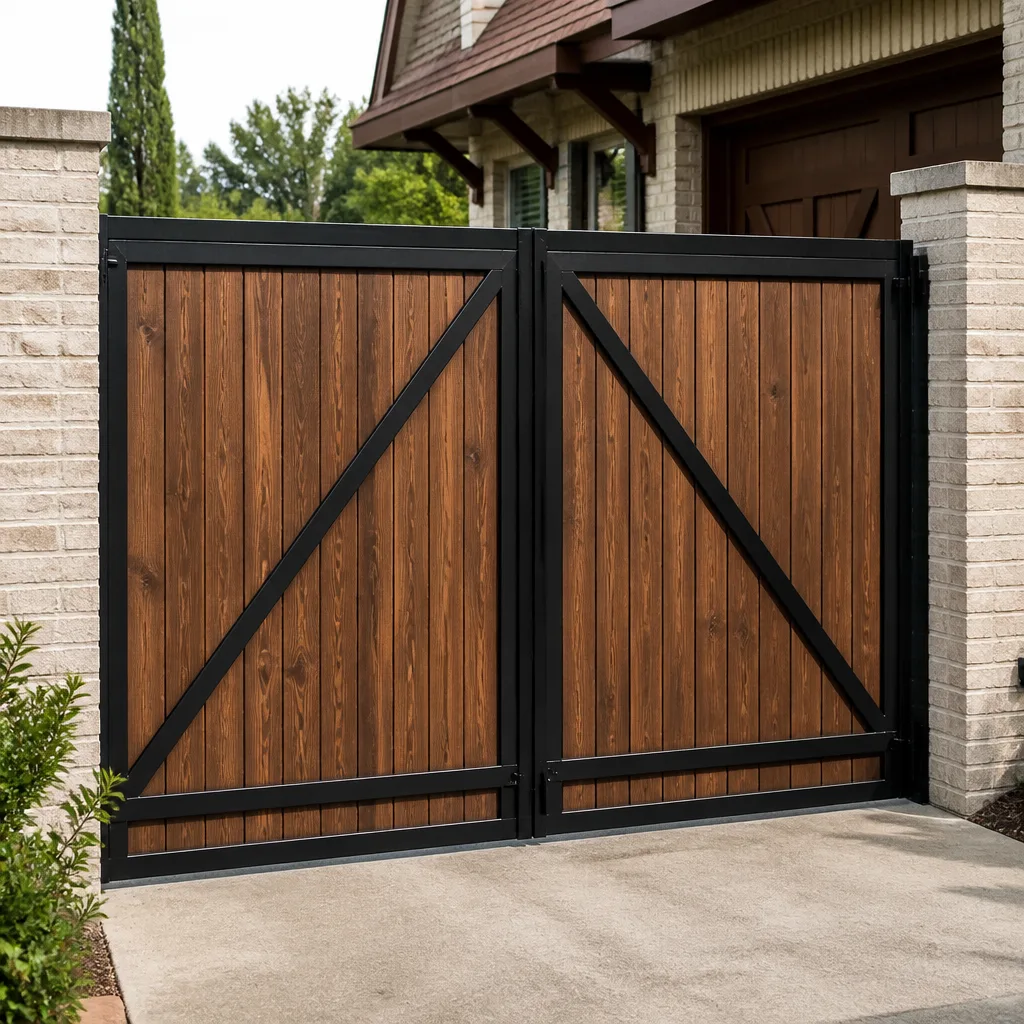
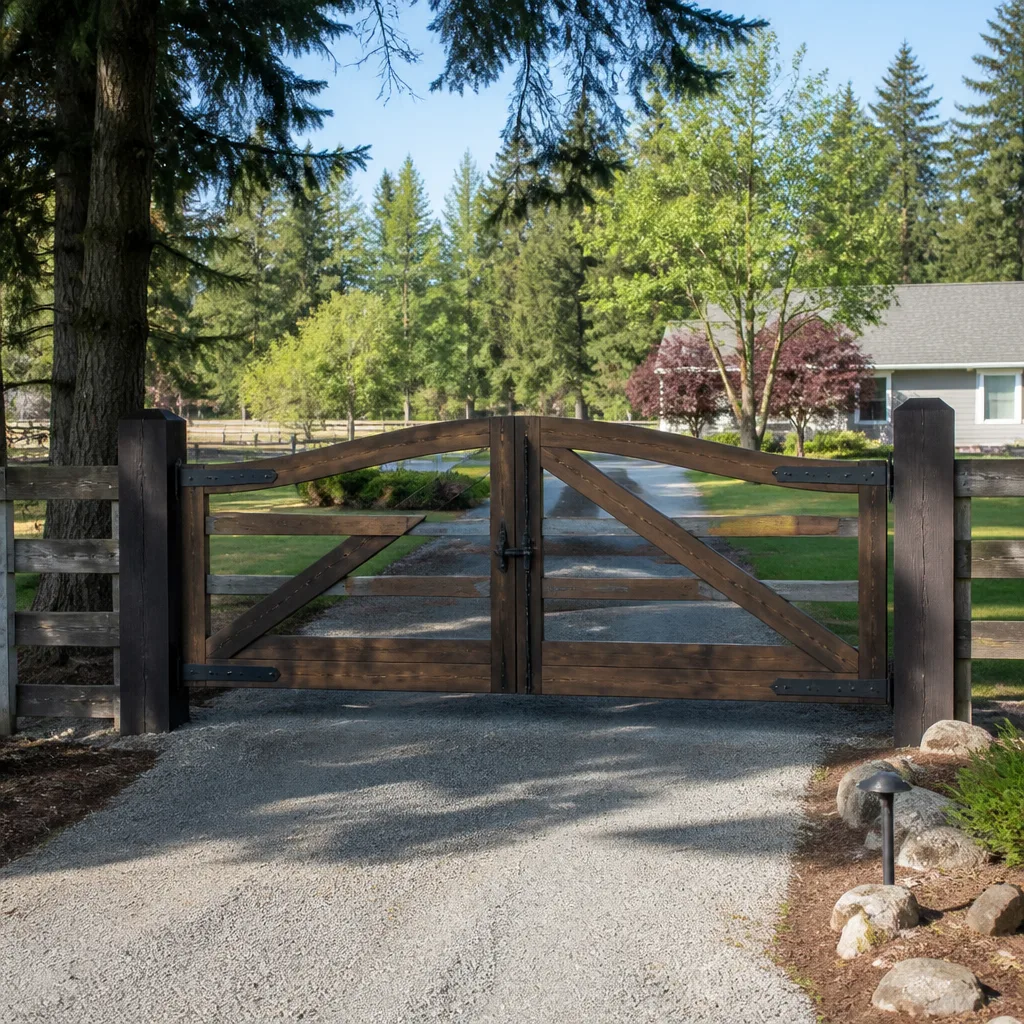
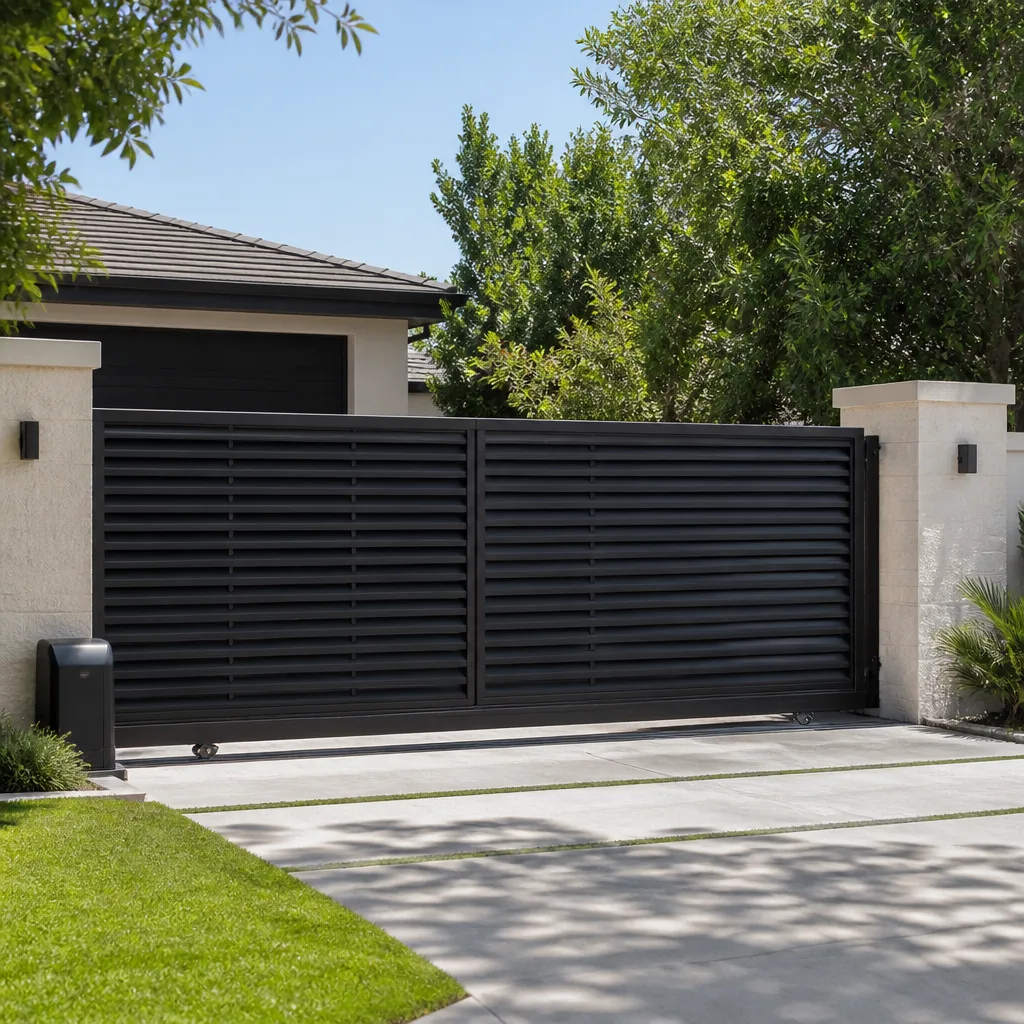
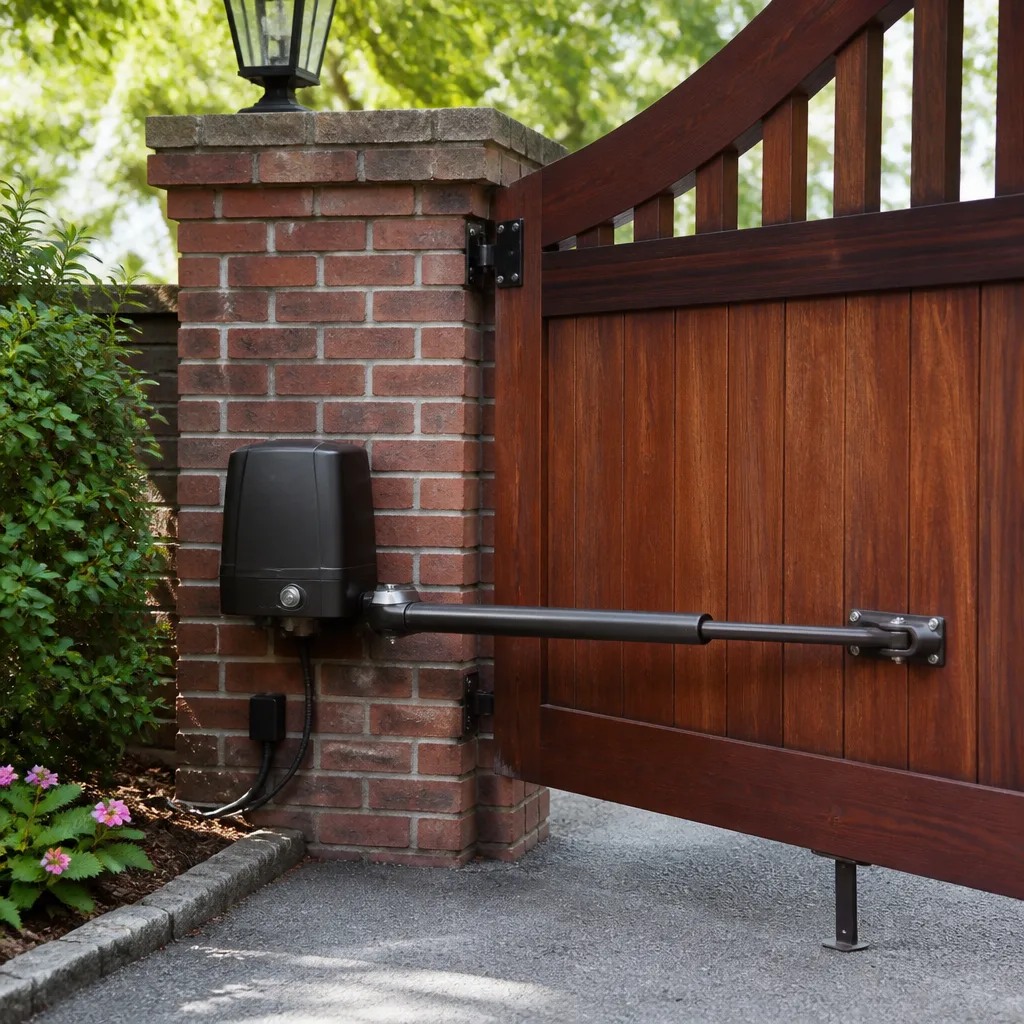
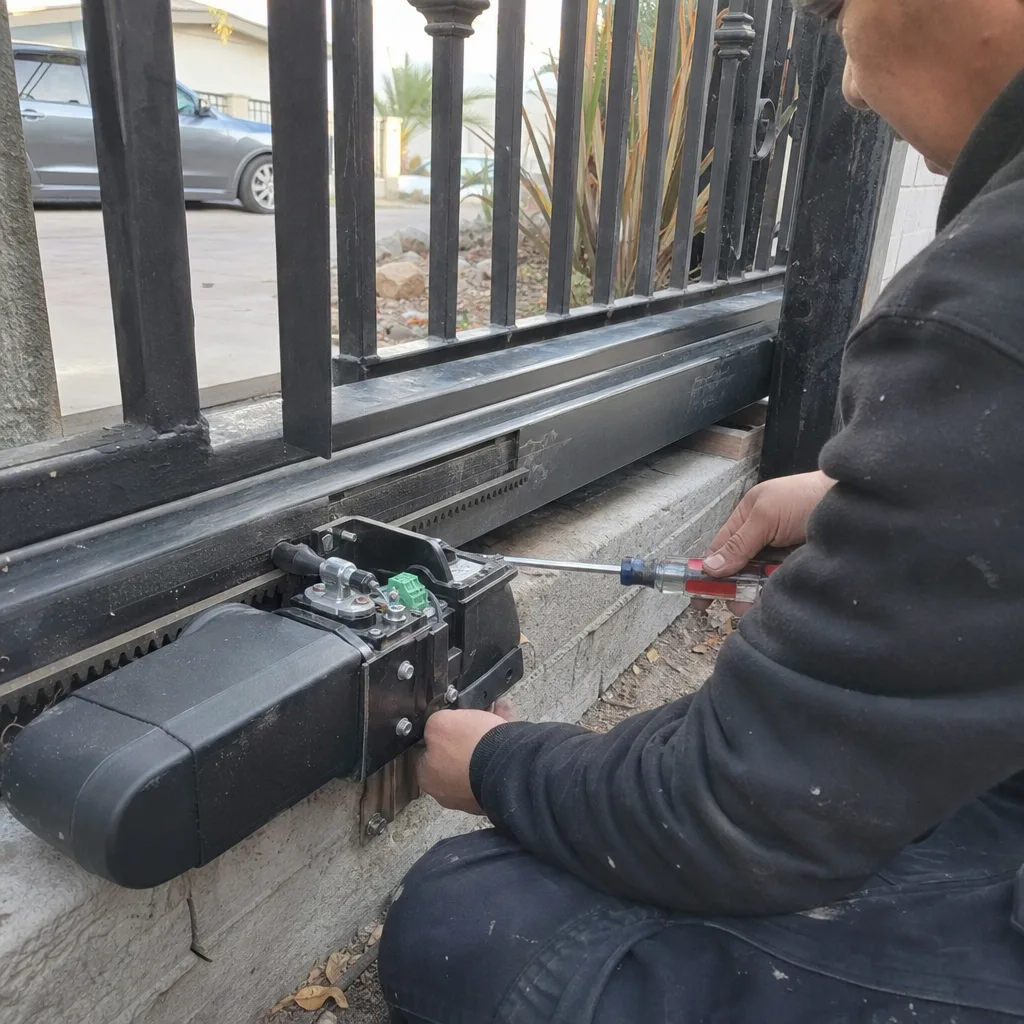
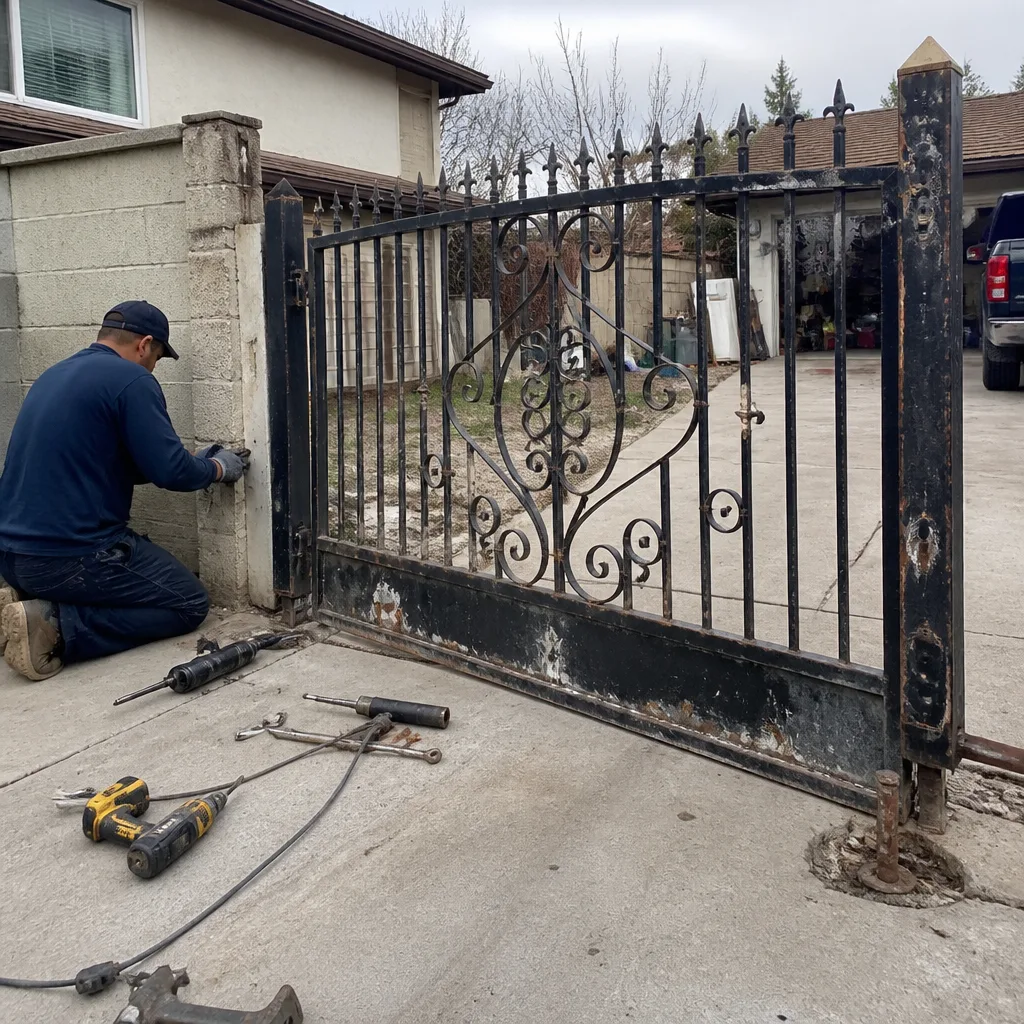 Before
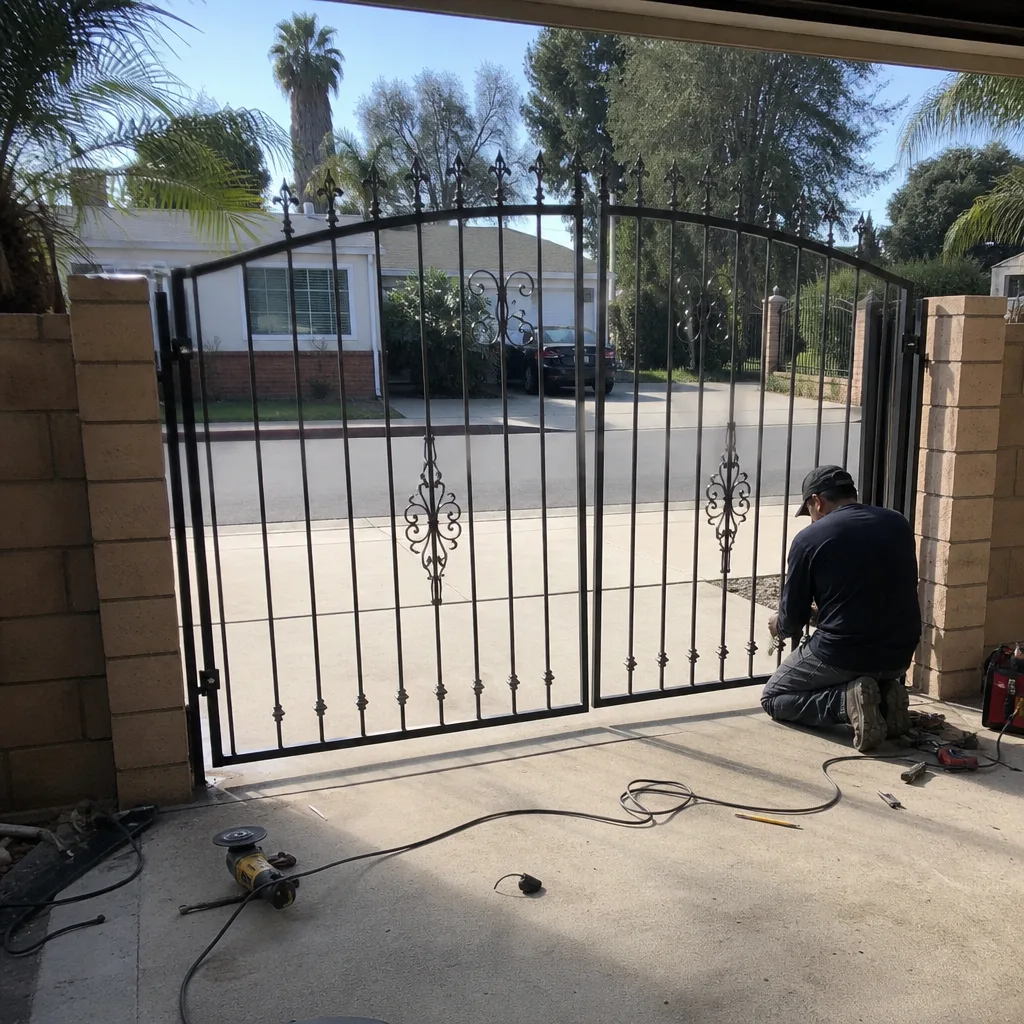 After
After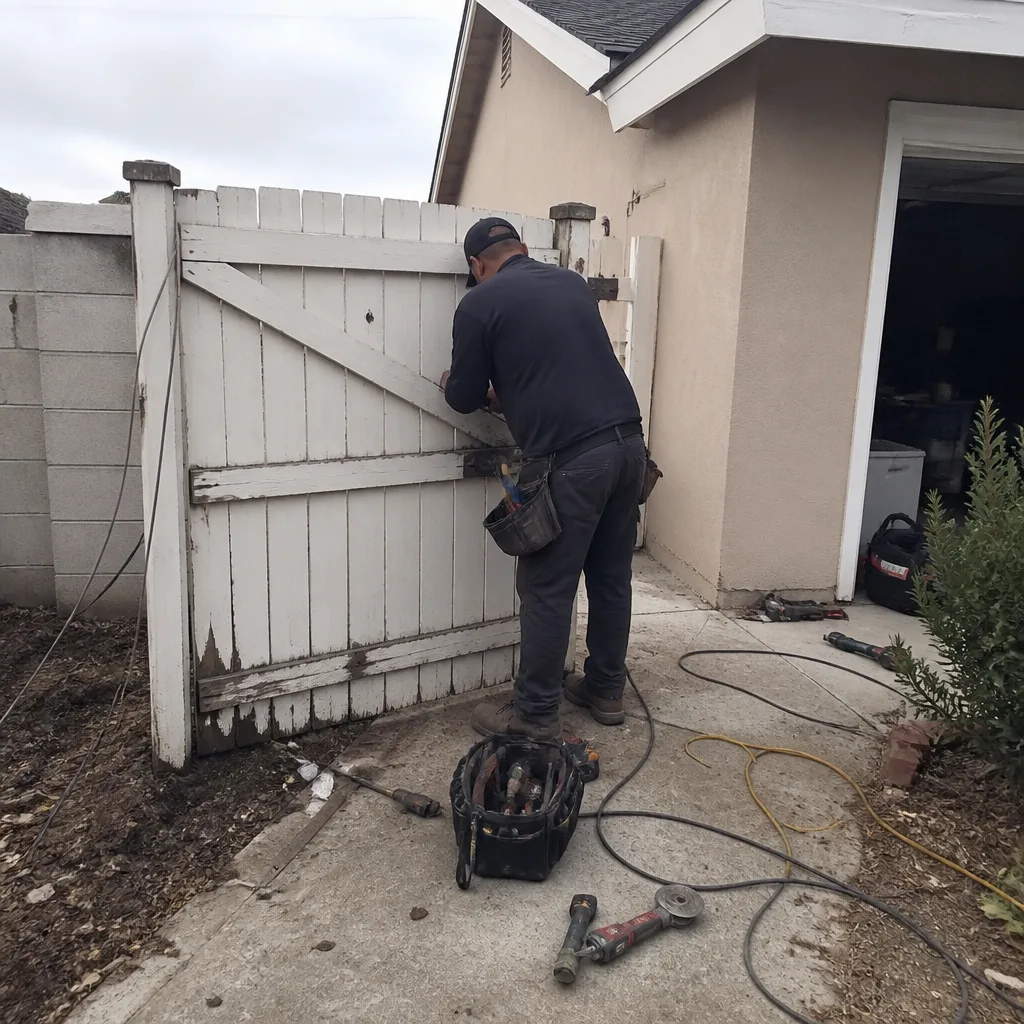 Before
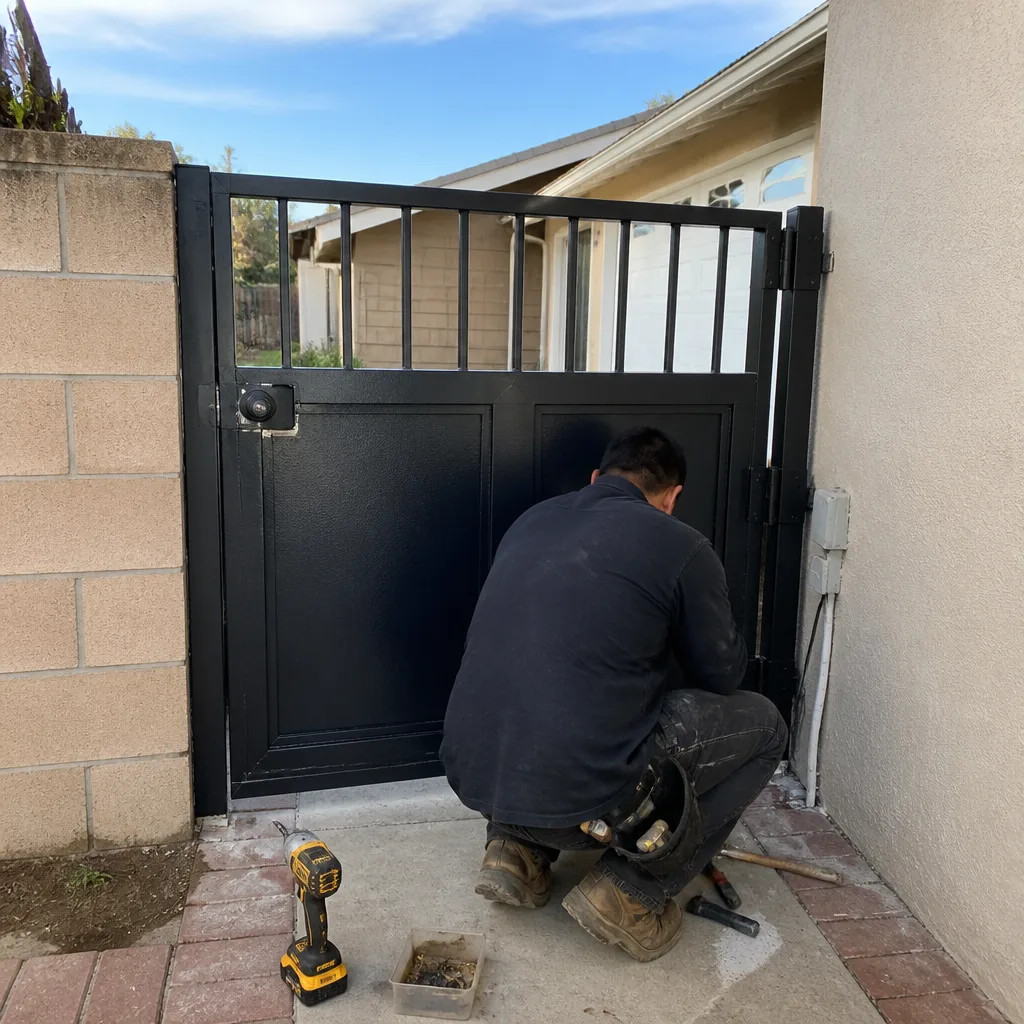 After
After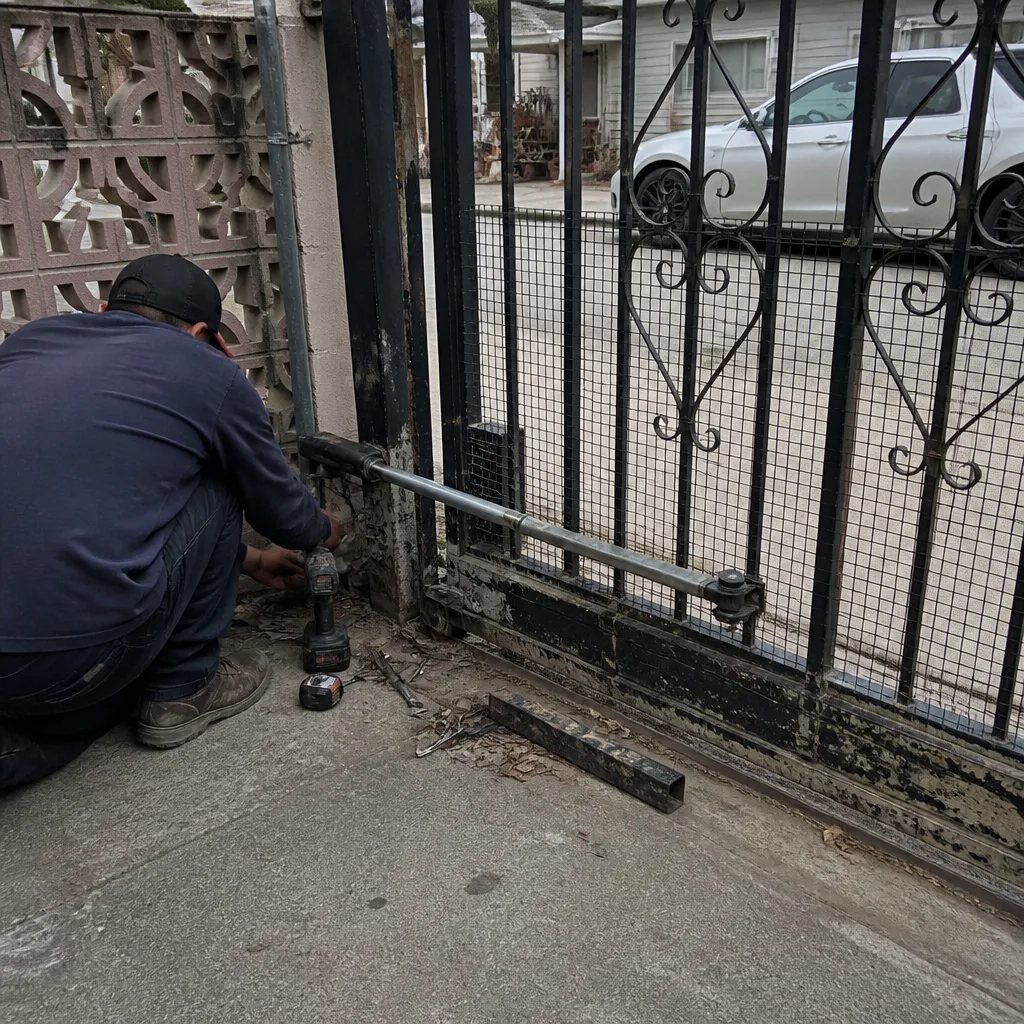 Before
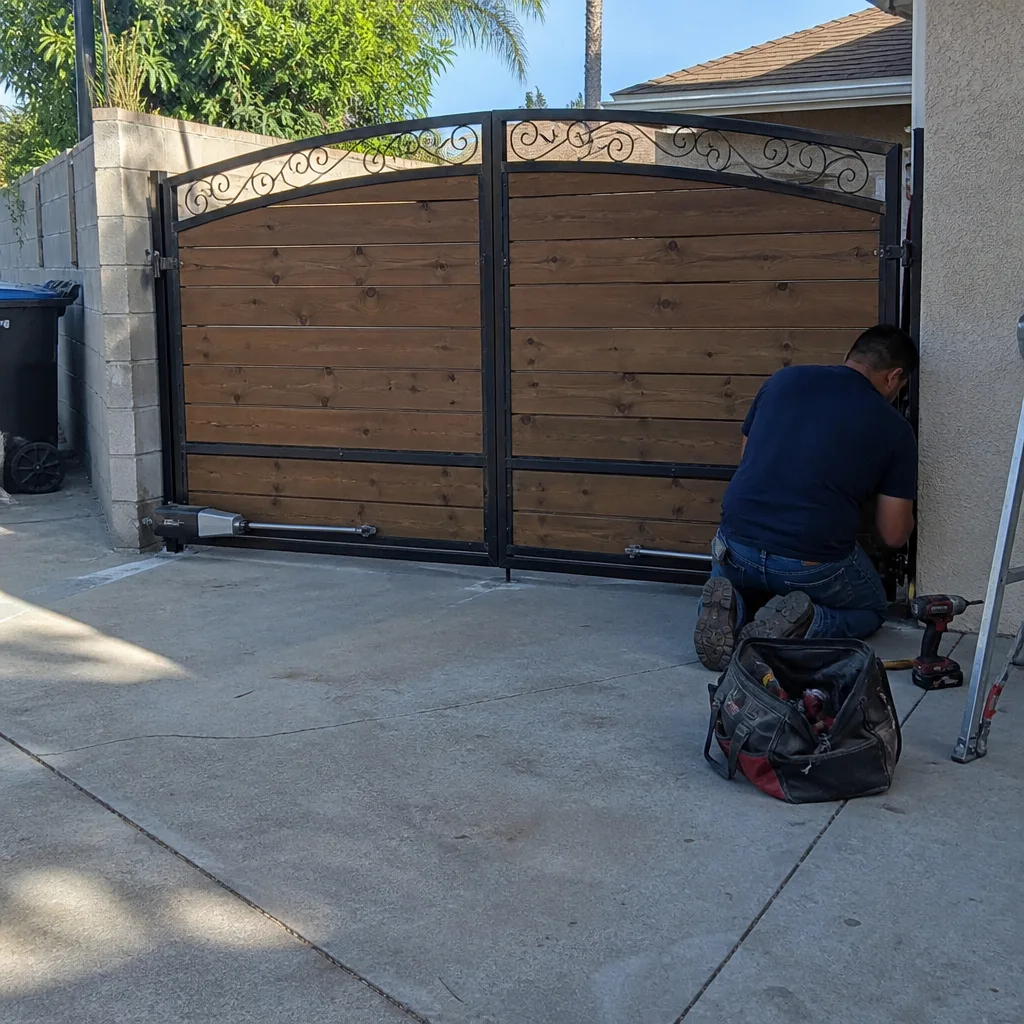 After
AfterThe Complete Guide to Gate Repair in Anaheim
Here’s a statistic that should make every Anaheim homeowner pause: the majority of repeat gate-repair calls happen within 18 months of the first repair, and the second visit usually costs more than the first. The reason is rarely bad workmanship. It’s that nobody documented what actually caused the original failure, so the next technician starts from zero, guesses, and replaces parts that were never the problem. This guide walks through the five root-cause categories behind most gate failures in Anaheim, how to identify them before you call anyone, and what a complete repair from our Gate Repair services should actually include. Read it through, and you’ll know more about your gate than most technicians will expect.
Quick Answer
Gate repair in Anaheim is a diagnostic problem before it’s a parts problem. Most failures trace back to one of five documented categories: mechanical wear, electrical fault, operator failure, structural shift, or code-compliance gap. Identifying which category you have determines whether you spend $90 on a capacitor or $900 on a new operator plus hinge work.
Table of Contents
- The Five Root Causes of Gate Failure
- Why Anaheim Soil Causes Hinge Failures That Look Like Motor Problems
- What a Complete Repair Record Should Contain
- Symptom Repairs vs. Root-Cause Repairs: Real Cost Comparison
- How to Read a Written Scope of Work
- What to Know About the Major Gate Automation Brands
- What You Can Check Yourself (and What You Shouldn’t Touch)
- Common Mistakes to Avoid
- When to Call a Professional
- Frequently Asked Questions
BeforeAfterThe Five Root Causes of Gate Failure
Every gate failure we’ve documented in Anaheim gate repair work falls into one of five categories. Not ten. Not a mystery. Five. The value of knowing these categories is that they tell you what kind of technician you need, what the repair should cost, and whether the person on the phone is diagnosing or guessing.
1. Mechanical wear. Bearings, hinges, rollers, wheels, chain drives, belt drives, arm brackets. These are parts that move every time the gate cycles, and movement means wear. A swing gate that opened smoothly for eight years may now shudder, creak, or bind because a bearing has worn oval or a hinge pin has scored. Mechanical wear is the most common category and the most straightforward to repair, because the evidence is visible and tactile.
2. Electrical fault. A broken wire, a corroded connection, a failing capacitor, a photo-eye misaligned by half an inch, a low-voltage transformer that’s no longer outputting what the board needs. Electrical faults are the most misdiagnosed category because the symptoms mimic operator failure. A gate that opens but won’t close often has a photo-eye issue, not a dead motor. A gate that hums but doesn’t move often has a capacitor problem, which is a $30 to $90 part on many systems.
3. Operator failure. The motor, the control board, the limit switches, the gearbox. This is what most people assume is wrong when any gate misbehaves. Sometimes they’re right. But operator failure is the most expensive assumption to make without evidence, and we regularly see operators replaced when the actual fault was a $12 wire connector that corroded through after a wet winter.
4. Structural shift. Post anchors moving in the soil, gate frames sagging under their own weight, concrete pads settling. Anaheim’s clay-heavy lots, especially near the Santa Ana River corridor, expand and contract with seasonal moisture changes. A post that was plumb five years ago may now lean two degrees, and that two degrees puts enough stress on the hinge side to make any motor strain, any photo-eye misalign, and any latch bind.
5. Code-compliance gap. Vehicle gates installed without required safety devices: photo-eyes, reversing edges, audible alarms. In many cases, a gate that “works fine” is still a liability because it doesn’t meet current UL 325 or local building-code requirements for entrapment protection. This category doesn’t produce a symptom until something goes wrong, which is exactly why it belongs on this list.
Here’s what this categorization means for you: before you call a technician, observe your gate for one full cycle. Watch. Listen. Note what it does and doesn’t do. The specific behavior almost always points to a single category, and we’ll map those symptoms below.
Why Anaheim Soil Causes Hinge Failures That Look Like Motor Problems
This is the section most generic gate guides skip, and it’s the one that saves Anaheim homeowners the most money. Here’s the fact: Anaheim sits on clay-heavy soils that expand when wet and contract when dry. The seasonal cycle is wet winters, dry summers, and a transitional spring that moves soil more than either extreme. For gates mounted on concrete piers set into this soil, the result is measurable post movement over three to five years.
When a post shifts, the hinge geometry changes. The gate leaf no longer hangs true. Now the operator has to push a gate that’s binding against its own weight or dragging on the ground at the latch side. The motor strains. The limit switch reads resistance as travel and shuts down mid-cycle. The homeowner calls and reports “the motor is dying,” because that’s what the behavior looks like. The actual fault is structural: the post moved, the hinge alignment went with it, and the operator is the victim, not the culprit.
We’ve documented this repeatedly across Anaheim neighborhoods, from the older lots west of Harbor Boulevard to the newer tracts in Anaheim Hills where decomposed granite behaves differently than the river-basin clay. The diagnostic difference matters because the repair paths are not the same:
- Symptom path: Replace the operator because it’s “burned out.” Cost: $700 to $1,400. Result: the new operator burns out in a year because the post is still moving. Repeat cost.
- Root-cause path: Re-set and re-anchor the post, re-hang the gate leaf, verify hinge alignment, then test the operator under load. Cost: $400 to $900 including the post work. Result: the existing operator frequently survives, because it was never the problem.
The second path is slower and less glamorous, and it’s the one Vance Gate Repair Anaheim takes by default. We’d rather re-anchor a post and document the new position than sell you a motor that will fail against the same bad geometry. One of the nine automation brands we service, from DoorKing to Ghost Controls to Elite, will still fail if the gate it’s driving is fighting itself.
What a Complete Repair Record Should Contain
Here’s the test we use: if a different technician, five years from now, cannot read the service record and understand exactly what was wrong, what was changed, and why, the record is incomplete. Most gate repair invoices in Anaheim contain two lines: “repair gate” and a dollar figure. That’s not a record. That’s a receipt, and a receipt is not diagnostic data.
A complete repair record contains at minimum these items:
- Observed symptoms, written as behavior, not interpretation. “Gate opens 14 inches, then reverses, all four test cycles” tells the next technician more than “gate broken.”
- Diagnostic findings with readings. Resistance values, capacitor test results, limit-switch positions, voltage at the board. If a photo-eye was misaligned by roughly two inches, that measurement goes in the record.
- Exact part numbers installed. Not “new motor.” Which motor, which part number, which manufacturer, from which distributor. So if that part fails again, you know what failed and can warranty it.
- Adjustment settings after repair. Where the limit switches were set, what the force or sensitivity dial was adjusted to, where the photo-eyes were aimed after realignment.
- Photos with timestamps. Before, during, and after. What the technician found, what was changed, what the finished work looks like. A photo log is the cheapest insurance against a future dispute about whether work was done correctly.
- Wiring changes documented. If a wire was moved, spliced, or replaced, that’s a diagram amendment, not a footnote. The next technician should not have to open the junction box and guess.
The absence of this record is itself a cost driver. Without it, every future visit starts from zero. The technician can’t know if the limit switch was already set high to compensate for a sagging gate, if the photo-eyes were always misaligned, or if a previous repair addressed the same symptom without closing the cause. You pay again for diagnosis that was already done once. That’s the hidden tax of undocumented gate motor and opener service, and it’s entirely avoidable.
In our experience, because Adrian Vance came from commercial access-control work starting in 2014, documentation is not an add-on. It’s the job. We leave a written record and a photo log on every single visit, because we’ve seen what happens in the commercial world when a gate fails at 2 a.m. and nobody knows what the last technician did. The residential customer deserves the same record.
Symptom Repairs vs. Root-Cause Repairs: Real Cost Comparison
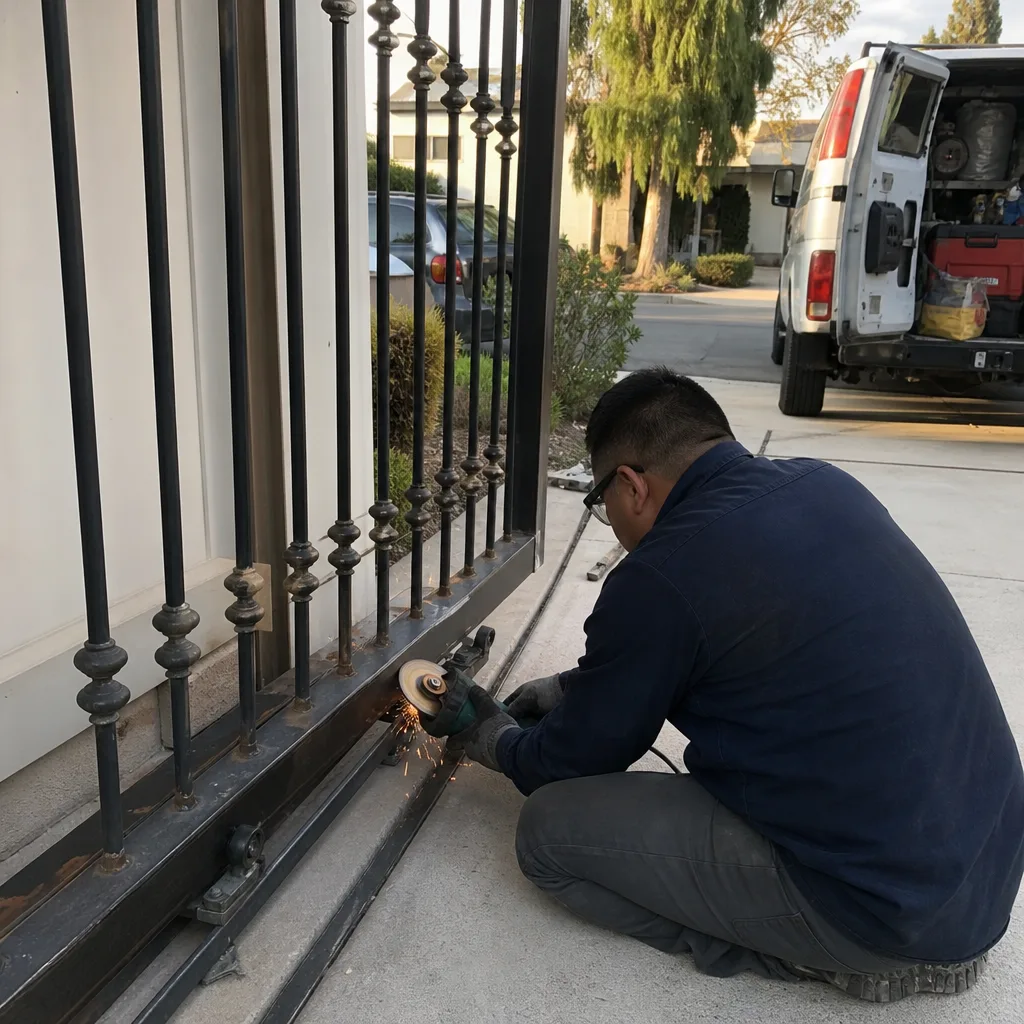
The dollar gap between fixing a symptom and fixing a cause is the most important number on this page. Here’s what we see in Anaheim, based on repair patterns across the city’s housing stock:
| Failure Scenario | Symptom Repair | Root-Cause Repair | Cost Gap |
|---|---|---|---|
| Gate opens but won’t close | Replace control board ($450-$700) | Realign photo-eye, clean lens, verify wiring ($90-$180) | Often $300+ saved |
| Gate hums, no movement | Replace operator ($700-$1,200) | Replace start capacitor ($40-$120) | Often $600+ saved |
| Gate sags, drags at latch side | Replace hinges, ignore post lean ($350-$600) | Re-anchor post, re-hang leaf, replace hinges only if worn ($450-$900) | Similar cost, but one lasts |
| Gate reverses mid-cycle | Replace motor ($800-$1,300) | Reset limit switches, adjust force settings ($120-$250) | Often $500+ saved |
| Intermittent complete failure | Replace control board and transformer ($500-$800) | Find and replace corroded wire run ($150-$400) | Often $200+ saved |
Warning: a root-cause repair is sometimes the more expensive path. The post-anchor example above costs more than slapping on new hinges. We’re not suggesting the cheaper path is always the right one. We’re suggesting the documented path is always the right one, because it tells you what you’re actually paying for.
How to Read a Written Scope of Work
The Haven Standard, the operating framework Vance Gate Repair Anaheim follows on every job, starts with Clause 1: have it in writing. But a written scope only protects you if you can read it and verify that the document addresses the documented cause, not just the visible symptom. Here’s what to look for:
- The scope names a cause, not just a repair. “Replace gate motor” is a task. “Replace gate motor after capacitor test confirmed open circuit on start winding” is a diagnosis. The second sentence tells you why the motor is being replaced. If a scope names a task without a cause, ask for the cause in writing before you approve anything.
- The scope lists specific parts with identifiers. A make and model is the minimum. A part number is better. This lets you verify what was actually installed against what was quoted.
- The scope separates labor, parts, and any structural work. If you’re paying $300 for materials and $600 for labor, the scope should show both lines. A single lump-sum number hides the breakdown and makes it impossible to compare against a warranty claim later.
- The scope says what happens if the repair doesn’t hold. What’s the warranty period? What’s covered, parts or labor? Does the warranty apply to the root cause or only to the replaced part? Under the 365-Day Done Right Promise, if our repair is not right within one full year, we make it right at no additional charge. That sentence should be in writing.
- The scope describes what you get afterward. A documentation package, a photo log, updated wiring diagrams, written limit-switch settings. If the technician cannot hand you a record of what they changed, they haven’t given you a complete repair regardless of how well the gate works that day.
You don’t need to be an electrician to read a scope. You need to look for specificity. Specific diagnoses, specific parts, specific numbers. Vague scopes are either lazy or hiding something, and in our experience it’s usually the former but the customer pays for both the same way.
What to Know About the Major Gate Automation Brands
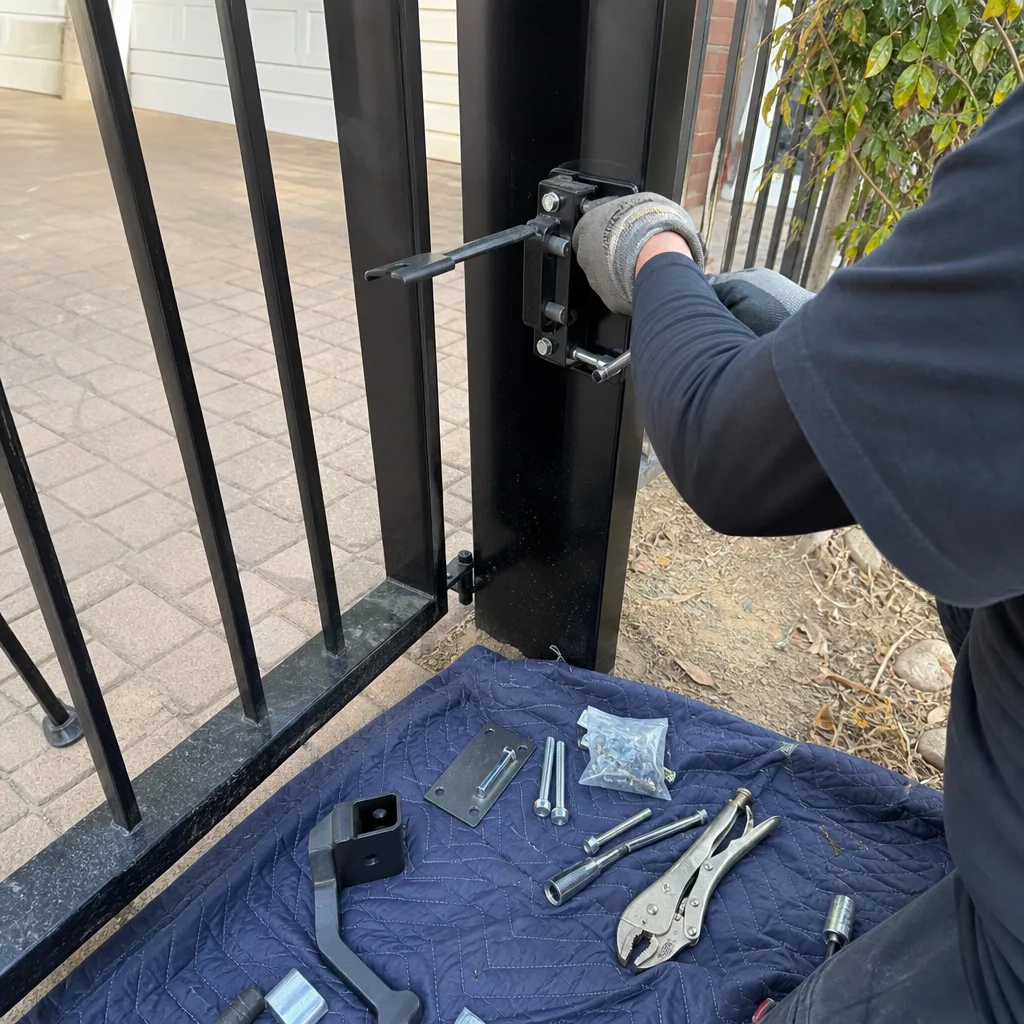
Anaheim homes have a mix of gate automation brands, and the brand on your property affects parts availability, repair cost, and how likely a technician is to actually have the right component on the truck. Here’s what matters about the three brands we see most often in Anaheim:
Viking. Heavy-duty operators, often spec’d on larger residential and light-commercial gates. Viking boards and limit assemblies are robust but they’re also less common in stock at local supply houses. If your technician doesn’t carry Viking-specific boards, expect a parts wait. We keep common Viking components in the van because we service enough of them across Anaheim to justify the inventory.
Ghost Controls. Popular on residential swing gates, especially retrofit installations on existing ornamental iron. Ghost Controls systems use a linear-arm design that’s relatively easy to install but sensitive to hinge geometry. If a Ghost Controls operator is failing early, check the post anchors and hinge wear before you blame the motor.
Elite and DoorKing. Both show up frequently on slide gates and higher-cycle residential applications. DoorKing is the more common brand on older Anaheim installations, and its boards tend to fail in predictable ways that a technician with board-level experience can diagnose quickly. Elite operators are solid but the wiring harnesses are less forgiving of splice jobs done without documentation.
We service nine automation brands total, including all four of these, plus LiftMaster, FAAC, BFT, Linear, and Mighty Mule. The point of that breadth is simple: we’d rather repair the operator already in place than sell you a different brand because that’s what the technician is familiar with. Anyone can sell a new motor. The harder job is working on the one you have, and that’s the job we take.
What You Can Check Yourself (and What You Shouldn’t Touch)
Some gate diagnostics are safe for a homeowner to do in ten minutes, and they’ll save you a service call if the fix is trivial-see more guides & resources for additional homeowner tips. Here’s the boundary.
Safe to check yourself:
- Photo-eye alignment. Look at the small infrared beam sensors near the bottom of the gate opening. If one is knocked sideways, dirty, or has a spider web across the lens, that’s your open-but-won’t-close problem. Clean it, straighten it, test again.
- Obstructions in the track or swing path. A rock, a branch, a child’s toy, or soil buildup can cause reversal. Clear the path and test.
- Visible wiring at the operator. If you can see a loose wire nut, a corroded terminal, or rodent damage without opening an enclosure, note it. That’s evidence for the technician.
- Manual release function. Most operators have a clearly marked release mechanism. If the gate moves freely by hand with the operator released, the mechanical side is likely sound and the problem is electrical or operator.
Do not attempt yourself:
- Opening the operator enclosure with power live. Capacitors hold charge even after disconnect. A capacitor can shock you after the unit is powered down. Not worth it. Call a professional.
- Adjusting limit switches or force settings without knowing what they are. These settings govern safety behavior. Setting a gate’s force too high to “fix” a sticking gate masks the real problem and creates an entrapment hazard. This is exactly how UL 325 violations happen.
- Any work on the gate’s structural posts or hinges. A swing gate under tension can move suddenly when a hinge bolt is removed. Clamps, proper support, and experience matter.
The rule we use: you can observe, clean, and clear. You should not open, adjust, or unbolt. The line between observation and intervention is the line between free diagnosis and a hospital trip.
Common Mistakes to Avoid
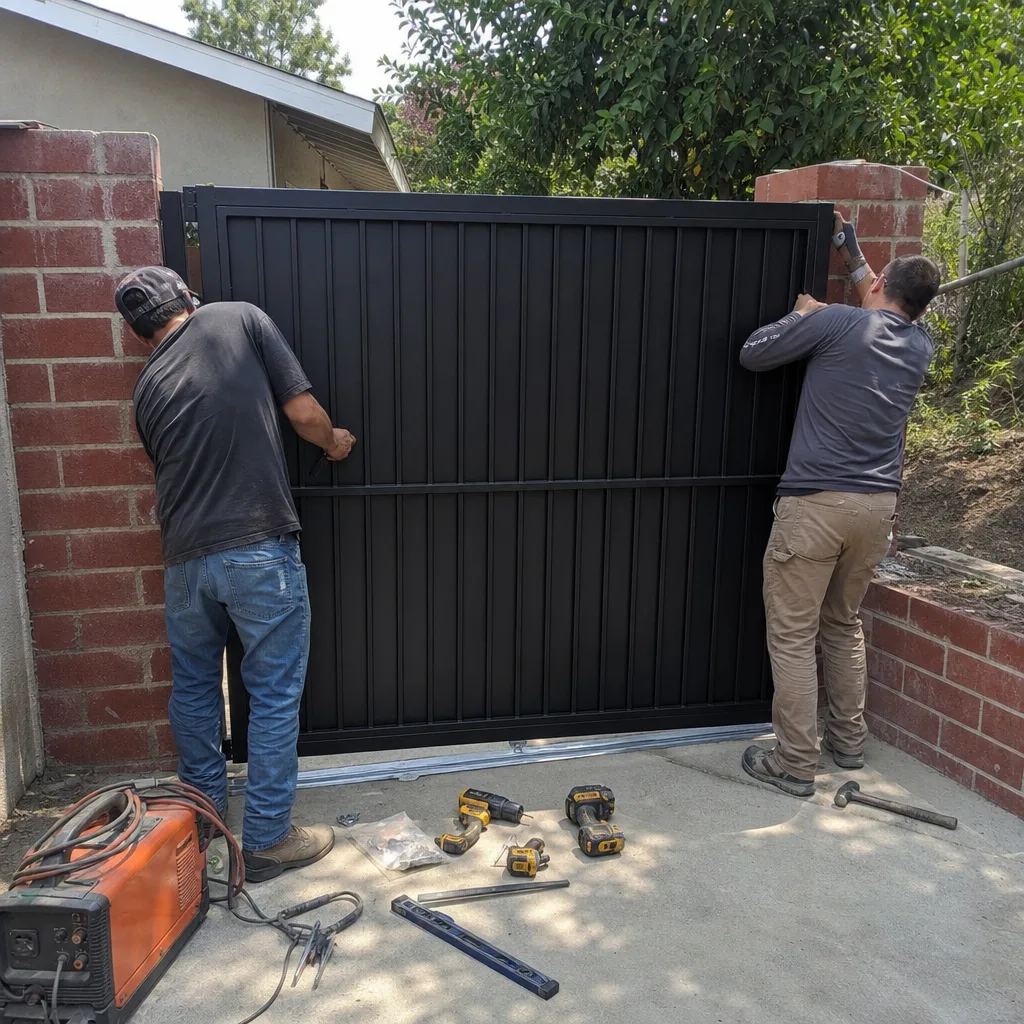
- Assuming the motor is dead because the gate stopped moving. A hum with no movement is almost never a dead motor. It’s a capacitor, a mechanical bind, or a voltage issue. Replacing the motor without testing the capacitor is the single most common wasted repair spend we see in Anaheim.
- Paying a technician who won’t write anything down. If the “estimate” is verbal and the invoice has one line, you have no record. No record means no warranty leverage, no documentation for the next repair, and no way to verify anything.
- Fixing the same symptom twice without asking why. If your gate reversed last fall and reverses again this spring, the first repair didn’t close the cause. Something is still out of alignment, still binding, or still shorting. Stop paying for the same discovery.
- Ignoring post lean because the gate still opens. In Anaheim’s clay soil, post movement is progressive. The longer you ignore it, the worse the hinge geometry gets and the more likely you lose the operator too. A $600 post fix now beats a $600 post fix plus a $900 motor next year.
- Letting a handyman “take a look” at a gate operator. Gate automation involves line voltage, low-voltage control circuits, safety devices, and code requirements. A generalist who’s good at fencing knows nothing about UL 325. We’ve had to correct enough handyman gate wiring to say this plainly.
- Waiting until the gate fails completely to call. Creaking, slowing, intermittent reversal, hums, extra cycle time, visible sag. These are early warnings. Every one of them is cheaper to address before the full failure takes something else down with it. A $150 adjustment today is cheaper than a $1,200 operator replacement in nine months.
When to Call a Professional
Call when the failure involves the operator, the electrical system, or the structural connections. Call when the gate has reversed more than twice in a week. Call when you hear grinding, smell burning, or see the gate hesitate at the same point in every cycle. Call when a vehicle gate has no visible photo-eyes or reversing edges, because code-compliance retrofits are not weekend projects. And if another company gave you a written estimate and you want a second set of eyes on it, bring the paperwork. We review it at no cost. Vance Gate Repair Anaheim offers free estimates in Anaheim, call (657) 567-5799, and every quote is in writing before any work begins.
Frequently Asked Questions
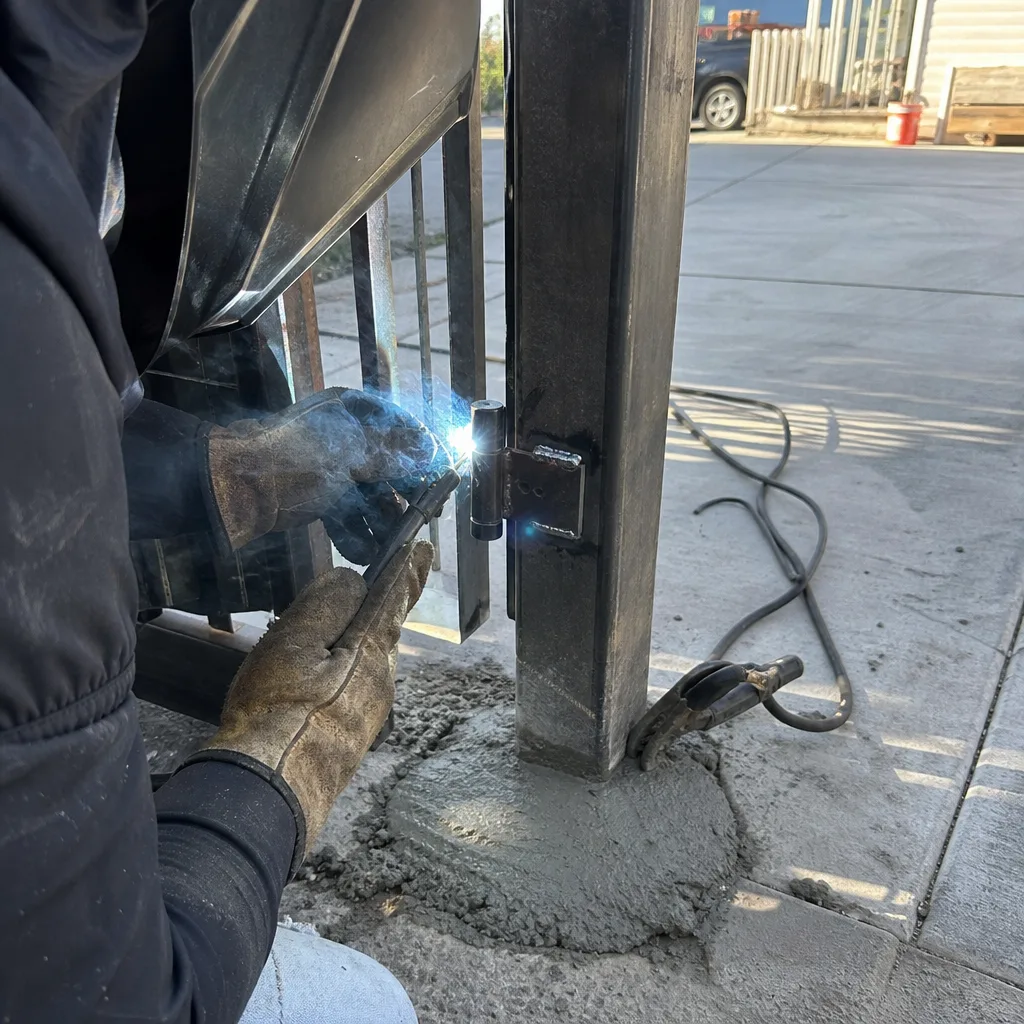
Most Anaheim gate repairs run between $120 and $900 depending on the failure category. Electrical fixes like photo-eye realignment or a capacitor replacement are typically $90 to $250. Operator-level repairs, including limit-switch resets and force adjustments, run $120 to $400. Structural work like post re-anchoring lands between $400 and $900, and full operator replacements go from $700 to $1,400 depending on the brand. Call (657) 567-5799 for a written, line-item quote, free, with no obligation.
Yes. We dispatch same-day for emergency gate failures in Anaheim, and a live person answers the phone 24/7, so you’ll never leave a voicemail and wait for a callback. For non-emergency diagnoses, we typically schedule within one to two business days. Call (657) 567-5799 to get on the schedule.
Most openers can be repaired without replacement. Failed capacitors, misaligned limits, bad wiring connections, and worn gears are all serviceable components. We repair all nine major brands, including Viking, Ghost Controls, DoorKing, and Elite, and we won’t recommend a replacement until we’ve documented why repair is not viable. Call (657) 567-5799 for a diagnostic visit and a written answer either way.
A complete gate repair includes a written scope of work before the job starts, the specific parts installed with part numbers, the diagnostic readings, and a documented photo record of what was found and what was changed. At Vance Gate Repair Anaheim, under Clause 4 of the Haven Standard, every visit leaves a photo log at no additional charge. If a company won’t provide that record, the repair is incomplete regardless of how the gate functions afterward. Call (657) 567-5799 for a free estimate that includes the documentation standard.
Heat expands Anaheim’s clay-heavy soil and the metal components of your gate. What often happens is the post shifts slightly, the gate binds, and the operator’s force sensor reads the added resistance as an obstruction and reverses. The fix is usually a mechanical adjustment to the hinges or post, not an operator replacement. In our experience, this heat-cycle binding is most common on older installs in the flat neighborhoods west of the 57, where the soil is closer to the Santa Ana River basin composition. Call (657) 567-5799 and we’ll diagnose it in one visit, in writing.
UL 325 is the safety standard for automated gates, requiring entrapment protection such as photo-eyes, reversing edges, and alarms. If your gate lacks these devices, it’s a code-compliance gap that you may be liable for whether or not the gate works. A gate installation in Anaheim without proper safety devices is not a complete install. Call (657) 567-5799 for a free safety assessment on your existing gate.
The Bottom Line
Gate repair in Anaheim is a diagnostic discipline more than a mechanical one. The five root causes, mechanical wear, electrical fault, operator failure, structural shift, and code-compliance gap, each have a different repair path and a different cost floor. Knowing which category you’re dealing with before you call anyone determines whether you spend $90 or $900, and whether the repair lasts 18 months or 18 years. Demand a written scope. Demand a diagnostic record. Demand a photo log. If the technician can’t produce those, you’re not getting a repair; you’re getting a roll of the dice with your money.
Written by Adrian Vance, Owner at Vance Gate Repair Anaheim, serving Anaheim since 2014.