
Last updated September 20, 2026
Free on-site gate assessment - hinges, posts, and your LiftMaster or Nice gate operator checked before anything is quoted
The assessment is free and the quote is the invoice.

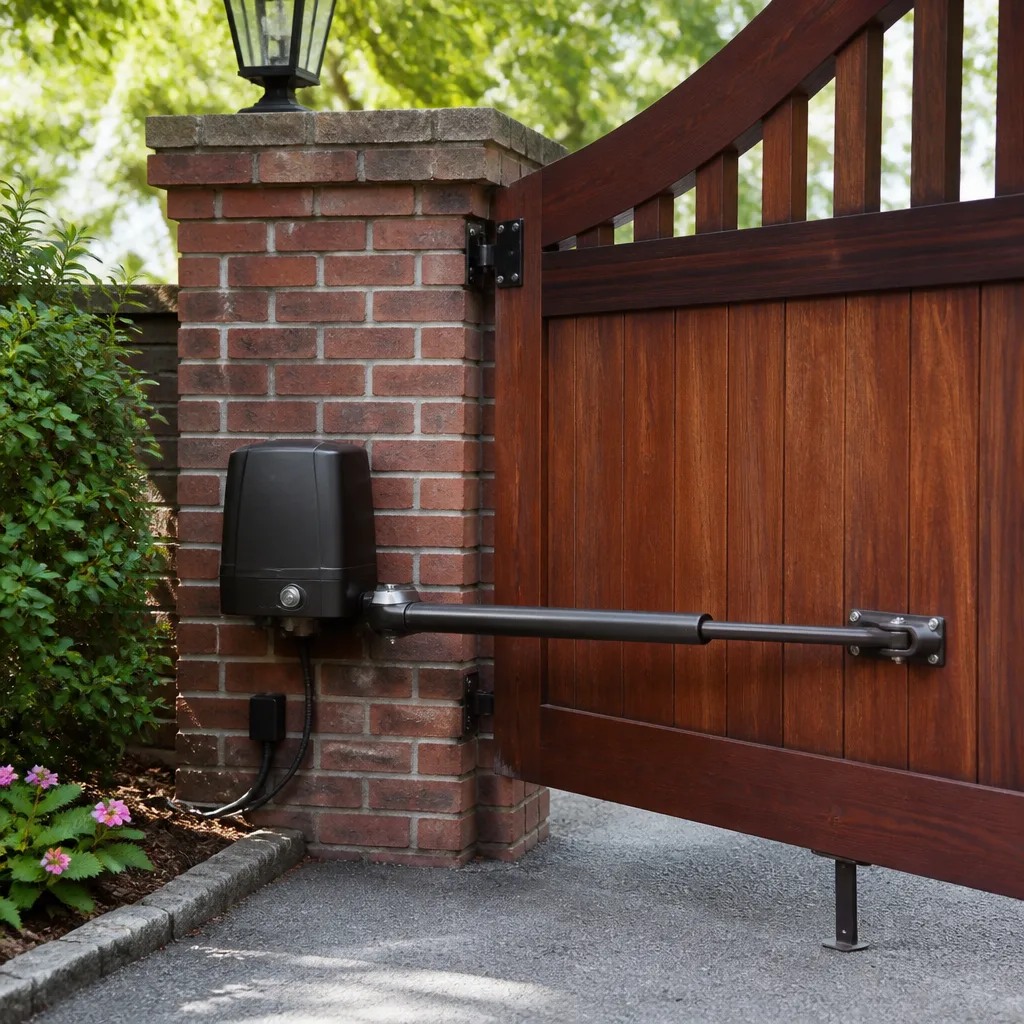
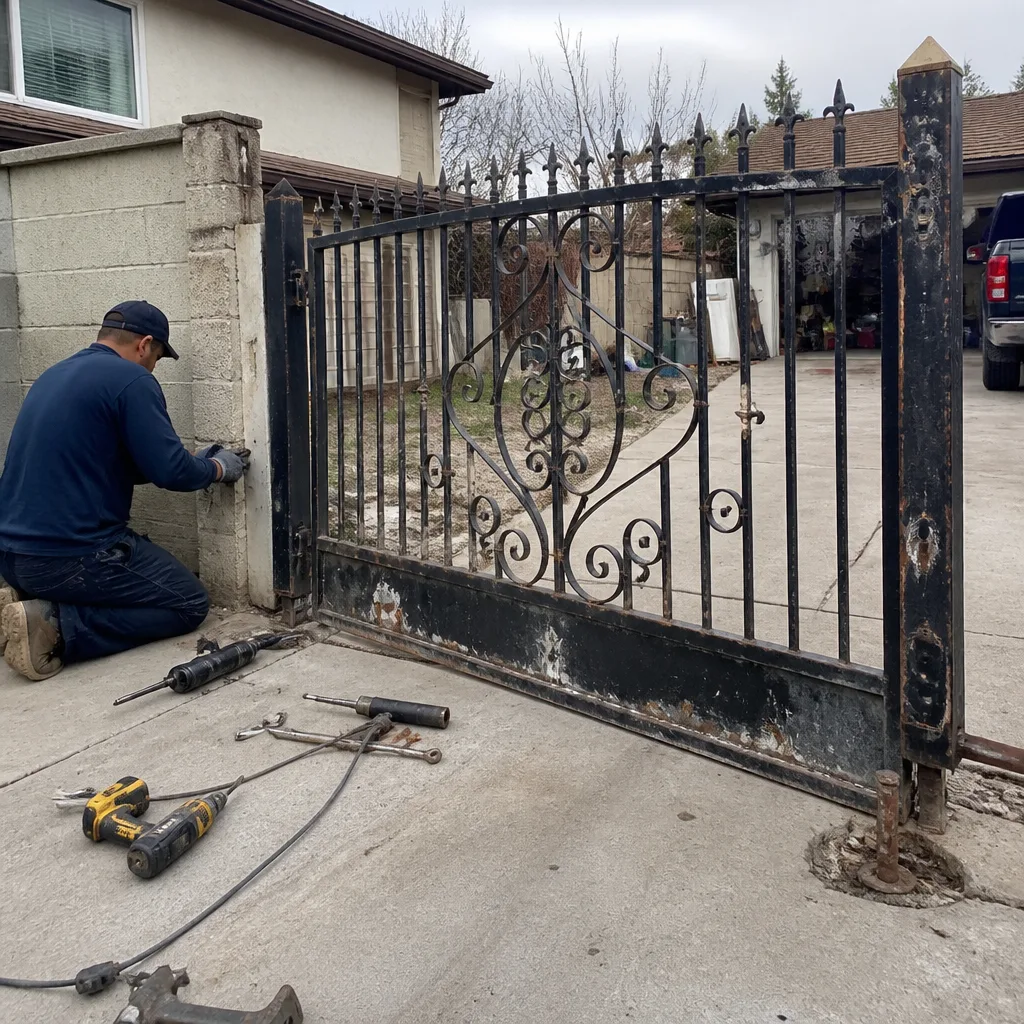 Before
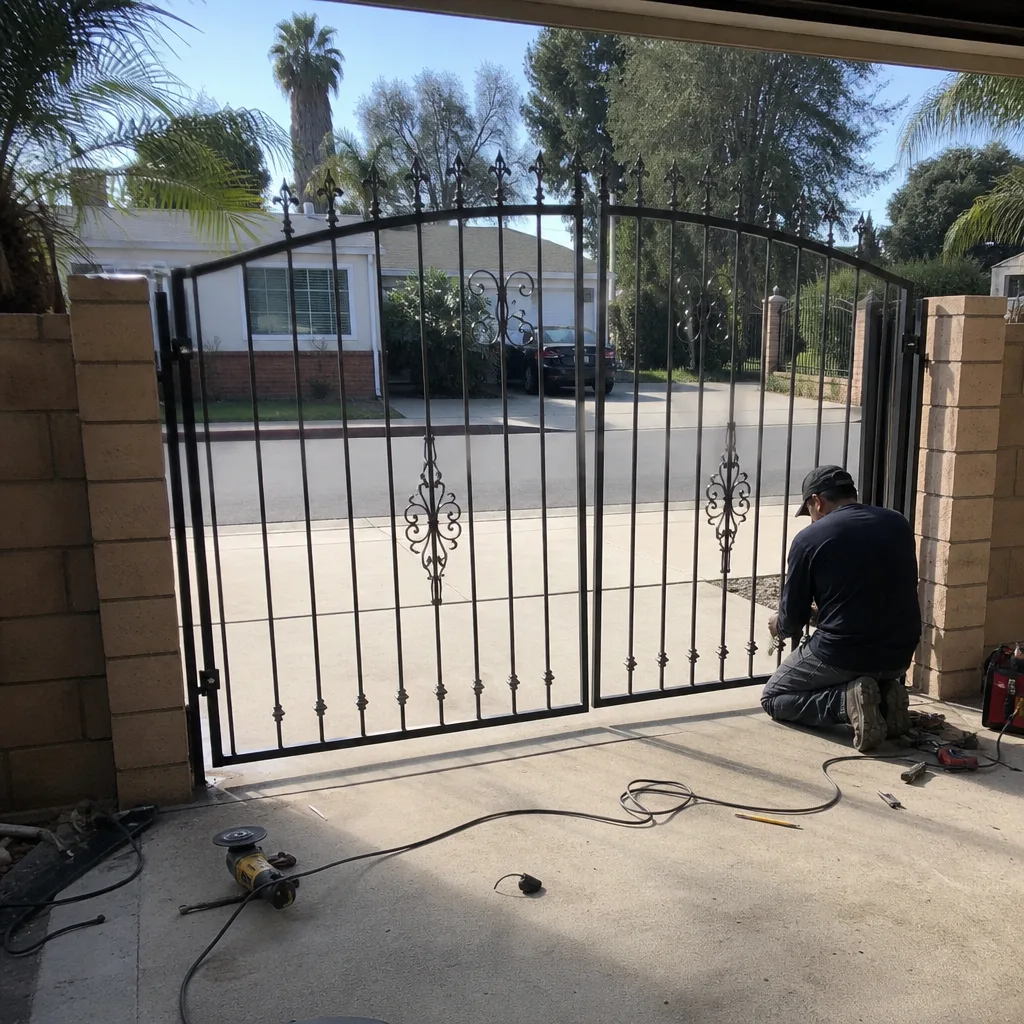 After
After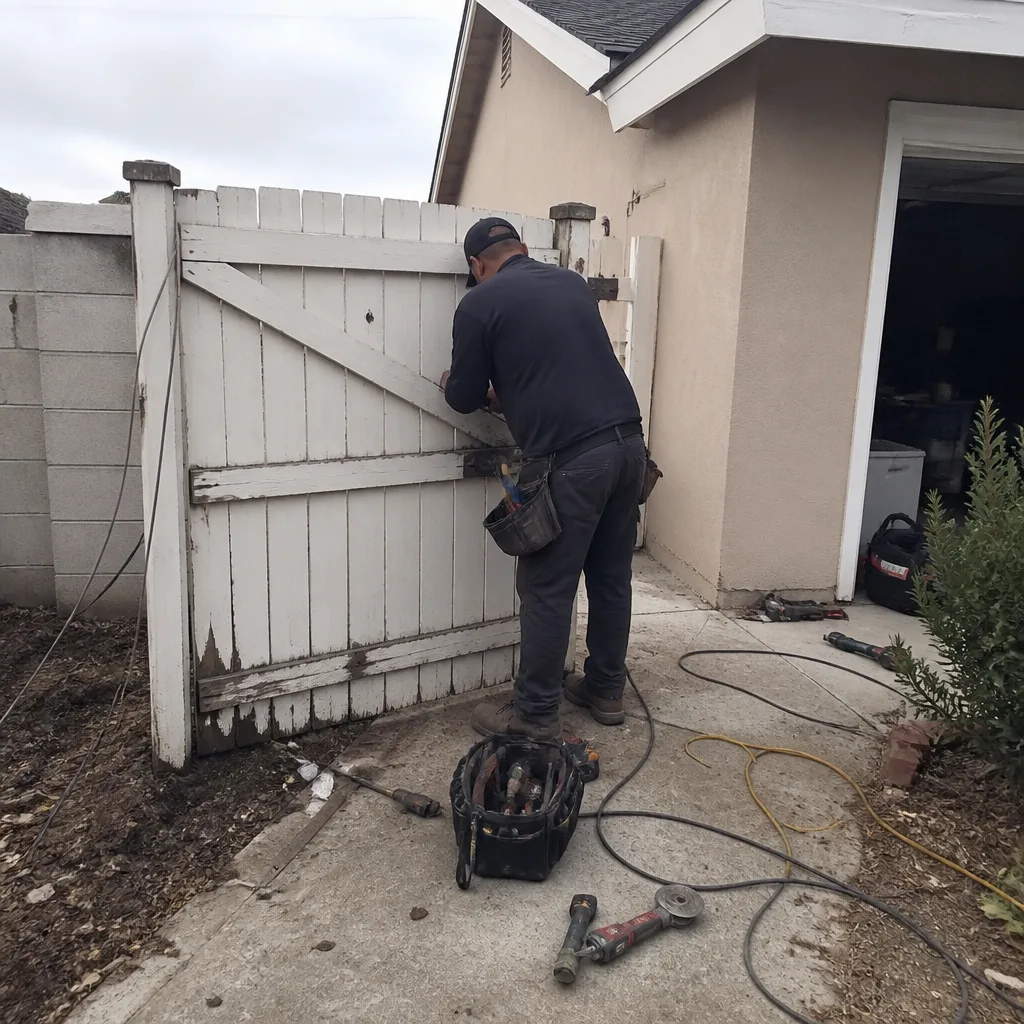 Before
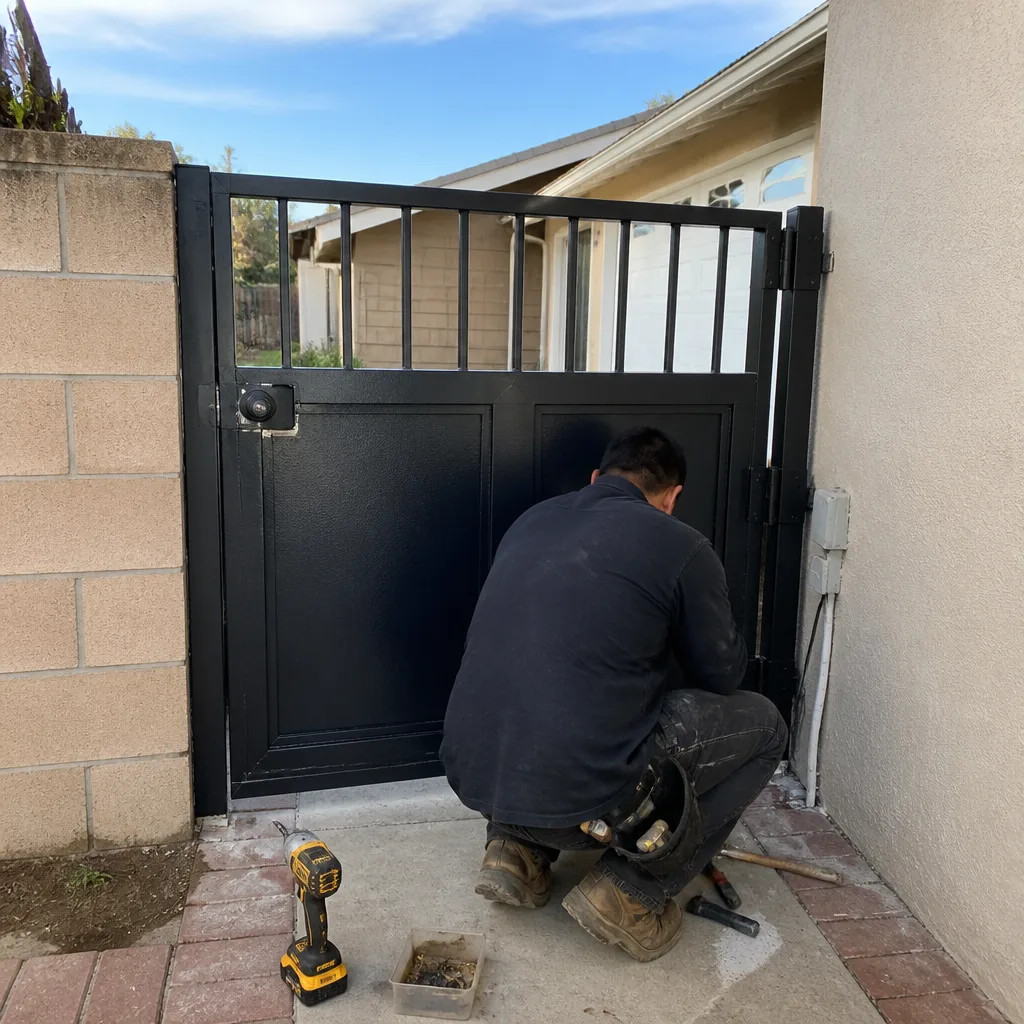 After
After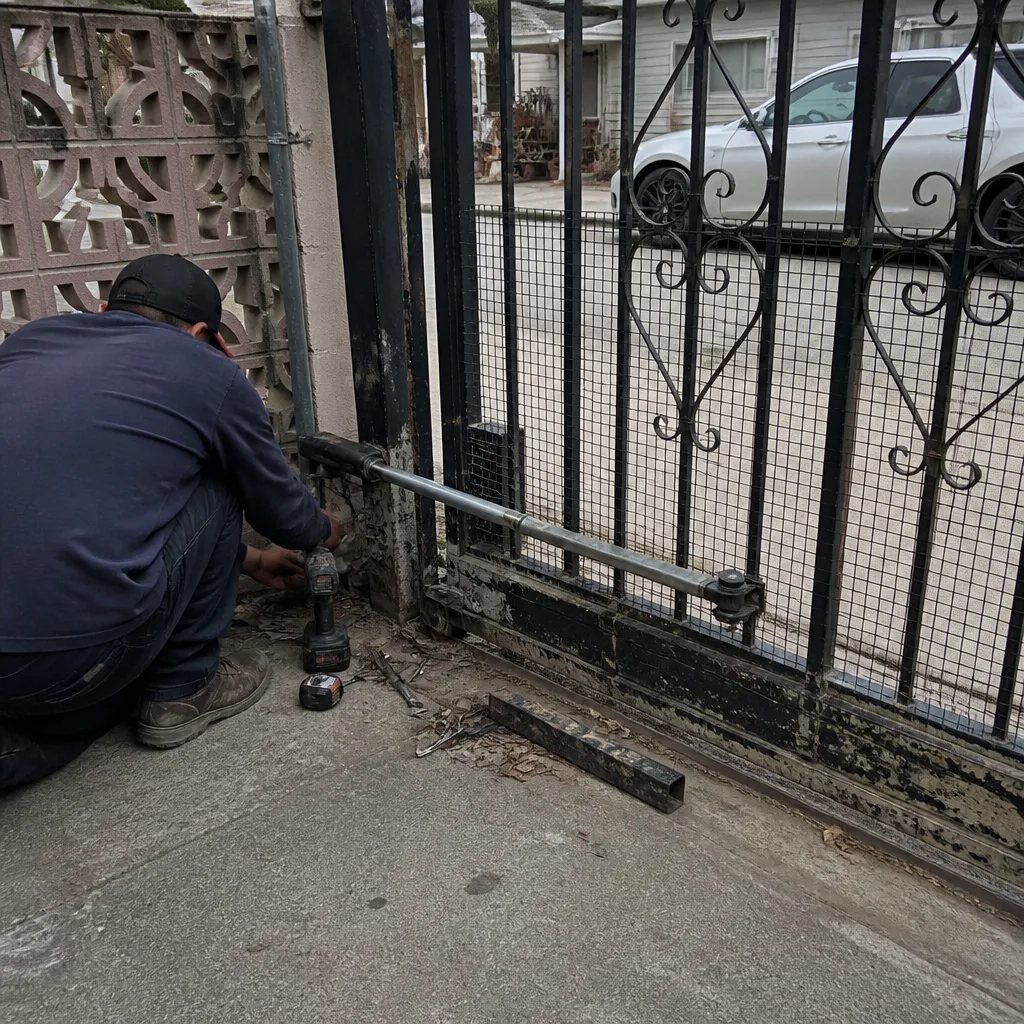 Before
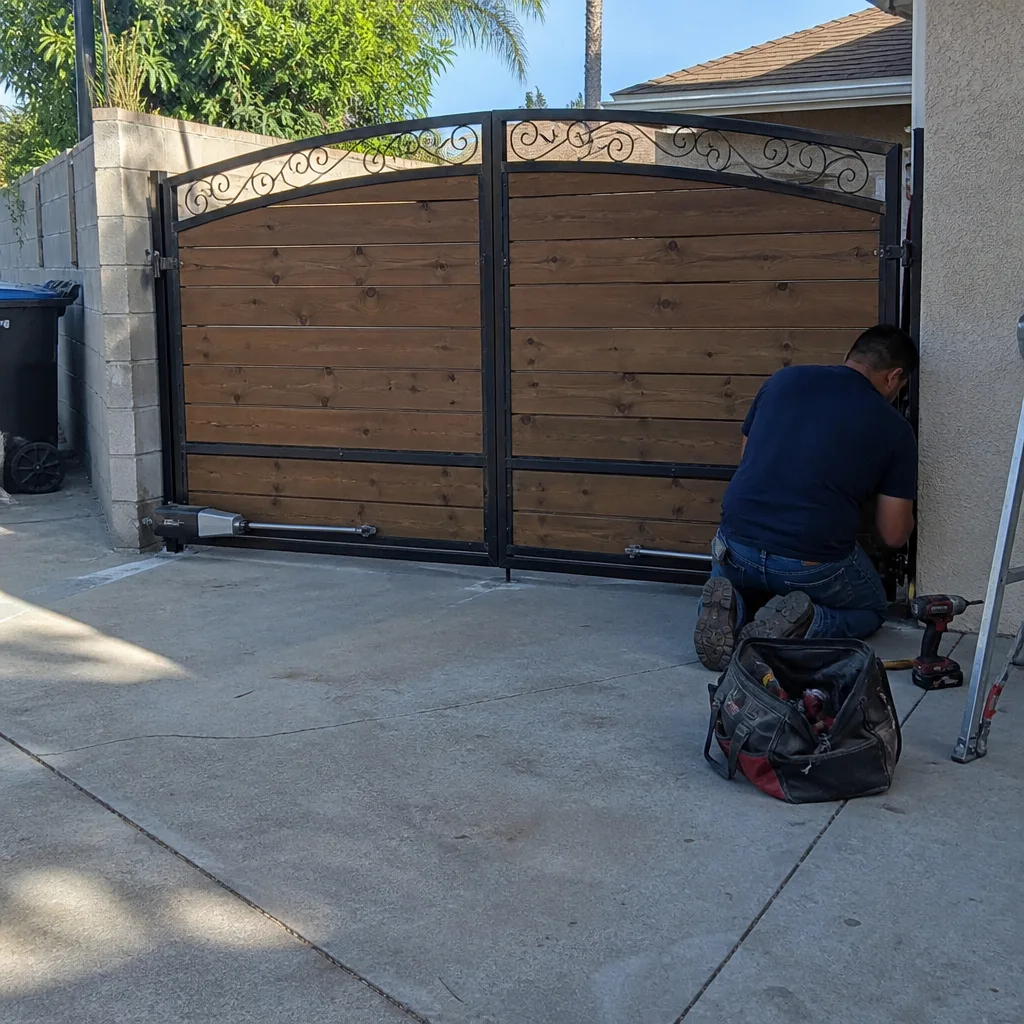 After
AfterGate Repair Warning Signs: A Anaheim Homeowner’s Reference Guide
A gate that takes 11 seconds to open instead of 8 doesn’t feel broken. It feels like a slow Tuesday. But that 38% increase in travel time is a measurable indicator of motor load increase, and it has a documented cause that costs less to fix now than after the motor burns out at the worst possible moment. In Anaheim, where gates cycle against heat, Santa Ana winds, and the fine dust that settles on every horizontal surface, we’ve watched too many small, specific failures get rationalized as “normal slowness” until the gate strands a car in the driveway at 7 a.m. This guide gives you a precise symptom-to-cause reference so you can stop interpreting and start measuring.
What follows is the same diagnostic framework our technicians use for our Gate Repair services when they arrive at an Anaheim driveway. You’ll learn how to establish a travel-time baseline, what different grinding sounds actually indicate, why intermittent failures are harder to diagnose than complete stoppages, and exactly when each warning sign crosses from “monitor it” to “schedule the repair.”
Quick Answer
Gate repair warning signs fall into five measurable categories: travel-time drift, sound changes, intermittent operation, visible structural wear, and electrical or control irregularities. Any single sign in categories one through three warrants a baseline measurement and a call to Gate Repair in Anaheim for a professional diagnosis; any sign in categories four or five should be scheduled within two weeks, because the failure is already underway. In Anaheim’s climate, the most commonly missed early warning is a travel-time increase of 20% or more, which typically indicates rising motor draw and can be corrected before the operator fails.
Table of Contents
- Travel-Time Drift: The Early Indicator Most Homeowners Miss
- Sound-Based Diagnostics: Grinding, Clicking, and What Each One Means
- Intermittent Failure Patterns: Why “Mostly Works” Is a Warning
- Visible Indicators: Cracks, Bubbling, and Conduit Separation
- Electrical and Control Irregularities: Photo-Eyes, Keypads, and Limit Switches
- When Each Warning Sign Crosses from Monitor to Schedule
- Common Mistakes to Avoid
- When to Call a Professional
- Frequently Asked Questions
BeforeAfterTravel-Time Drift: The Early Indicator Most Homeowners Miss
A slide or swing gate has a normal operating cycle that is consistent when the operator is healthy. The motor draws a predictable amount of current, the gate travels at a steady rate, and the limit switches stop it at the same two positions every time. When a mechanical problem develops, whether it’s a dry bearing, a failing capacitor, a fence post that has shifted three degrees out of plumb, or accumulating debris in the track, the motor has to work harder. The first observable symptom of that increased load is slower travel. Not dramatically slower. Just enough that you’ll notice it only if you’re looking for it.
Here’s how to establish a baseline at home:
- Open the gate from the full stop position. Use the stopwatch on your phone to measure the time from first movement to final stop.
- Close the gate and time it again. The opening and closing times should be within one second of each other.
- Log both numbers. A notepad by the keypad or a note on your phone works fine.
- Repeat the measurement once a month at roughly the same time of day.
- If either direction drifts 20% or more from baseline, call for a professional measurement of operator draw.
In Anaheim’s summer months, a gate’s travel time can naturally vary by 5 to 8% due to thermal expansion of steel and aluminum components. That’s not a warning sign by itself. A 20% shift is. The cause could be a tired capacitor (a $40 to $120 part on most residential operators) or a wheel set that has stopped rolling freely. Both are inexpensive compared to replacing a burnt operator, which typically runs $900 to $2,600 depending on the brand and whether any structural support work is needed.
One note on swing gates specifically: wind loading matters in Anaheim. During Santa Ana season, a swing gate moving against a 25 mph gust will open slower. That’s not mechanical drift; that’s environmental load. Measure your baseline on a calm morning for an accurate comparison.
Sound-Based Diagnostics: Grinding, Clicking, and What Each One Means
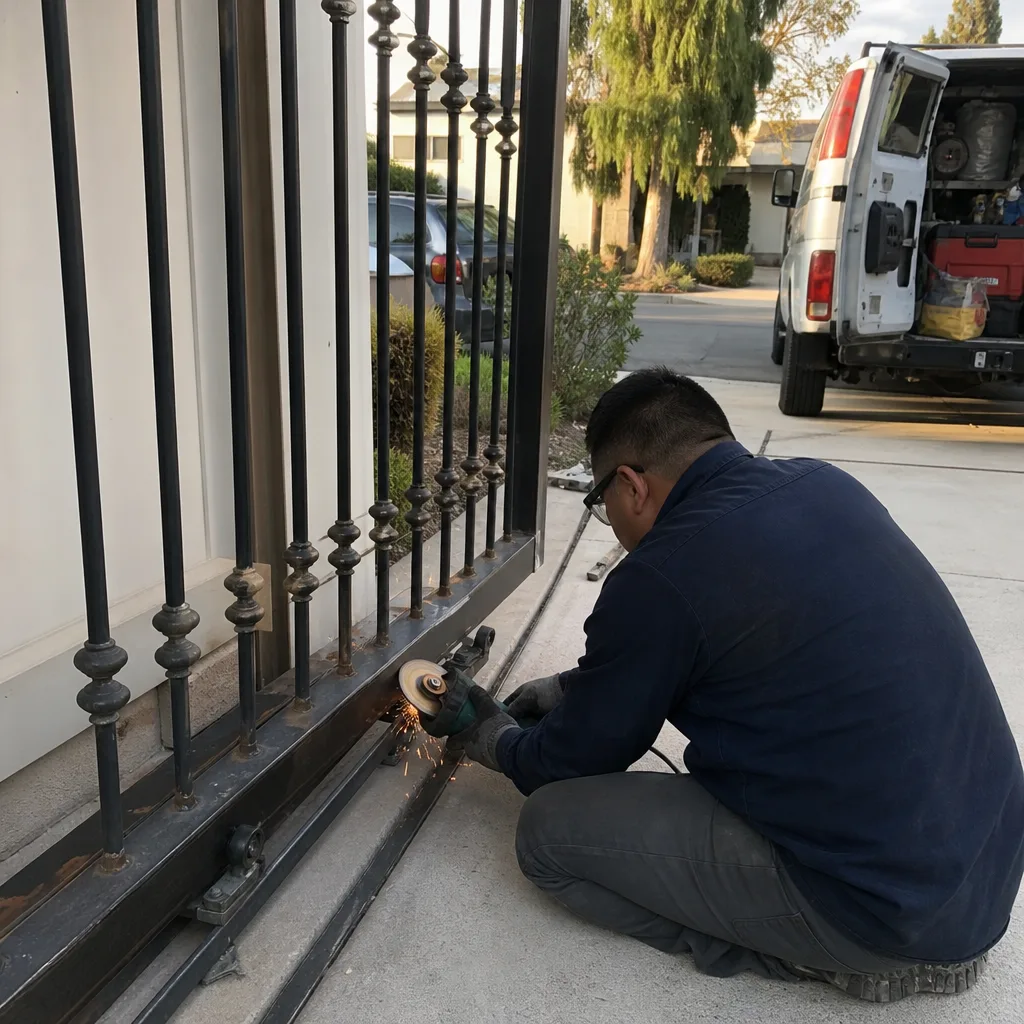
Gates communicate before they fail, and the vocabulary is surprisingly specific. We’ve trained hundreds of Anaheim homeowners to describe what they hear accurately enough for a phone diagnosis. The distinction matters because different sounds mean completely different repairs, and the wrong guess can waste a service visit or, worse, allow a small problem to destroy a larger component.
A grinding sound from a slide gate that follows the rhythm of the gate’s movement usually indicates a chain or rack problem. The chain may be sagging, the rack may be out of alignment with the pinion gear, or the chain tensioner may have backed off. These repairs involve mechanical adjustment and occasional chain replacement. A chain and sprocket replacement on a typical residential slide gate in Anaheim runs from $350 to $800, depending on the operator model and gate length.
A grinding sound that comes from the operator housing itself, and sounds less like metal-on-metal contact and more like a coffee grinder, typically indicates a gearbox problem. The internal worm gear or reduction gears are wearing, and metal particles are circulating in the grease. This is a more expensive repair because it requires opening the operator, cleaning the gearbox, and replacing the worn gear set. On LiftMaster and DoorKing residential operators, a gearbox rebuild commonly runs from $400 to $900. Ignoring it means the fragments eventually seize the gearbox, at which point the repair cost doubles or the operator requires replacement.
A rapid clicking sound when you press the remote or keypad, with no gate movement, points to a low-voltage problem: a failing capacitor, a weak battery in the receiver, or a control board that’s not sending enough current to the motor. The click is the relay engaging without the motor responding. This is a relatively inexpensive diagnosis, and the repair often falls in the $150 to $350 range.
A squealing sound that starts high and fades is frequently a belt-drive operator with a slipping or glazed belt. Tightening or replacing the belt on a LiftMaster or Elite belt-drive unit runs between $180 and $400. Left unaddressed, the belt eventually shreds, and the gate stops mid-travel.
One Anaheim-specific factor: our dry summers accelerate grease breakdown in gearboxes. The operator housing bakes in direct sun, internal temperatures climb, and the factory grease breaks down faster than the manufacturer’s maintenance schedule anticipates. If your gate has run five summers or more without a gearbox service, the grinding you hear may be dry grease rather than a failing gear set. Both sound similar; the repair costs are very different. A professional can tell the two apart in about ten minutes.
Intermittent Failure Patterns: Why “Mostly Works” Is a Warning
An intermittent gate is more diagnostically complex than a gate that has stopped entirely, as covered in our Seasonal Gate Repair Care for Anaheim: Year-Round Homeowner’s Guide. A dead gate presents a static failure: the technician arrives, tests the circuit, finds the open, and replaces the failed component. An intermittent gate presents a moving target. The problem is present at 7 a.m., gone at noon, and back at 8 p.m. The homeowner’s log may be the only reason the diagnosis lands on the first visit instead of the third.
The most common intermittent failure patterns we see in Anaheim residential gates:
- Temperature-correlated failures: the gate works in the morning and fails in the afternoon heat. This points to a capacitor or control board component that drifts out of specification when warm. The fix is component replacement in the $180 to $500 range.
- Humidity-correlated failures: rare in Anaheim, but we see them in yards with heavy irrigation near the operator. A photo-eye or control board connection is corroding and losing continuity when moisture is present.
- Position-correlated failures: the gate stops in the same spot every time, or fails only when opening but never when closing. This points to a limit switch problem or a physical obstruction at a specific point in the travel. A limit switch replacement on most residential operators runs $120 to $280.
- Time-of-day failures: the gate fails at 7 p.m. but works at 7 a.m. This is often tied to the photo-eye receiving direct low-angle sunlight and being blinded. Shielding or repositioning the beam fixes it, a $90 to $200 adjustment.
Here’s the logging method that makes an intermittent gate diagnosable:
- When the gate fails, note the exact time and date.
- Note the temperature if you can, and whether the sun was hitting the operator or photo-eye directly.
- Note what you were doing: remote, keypad, intercom, or vehicle sensor.
- Note what the gate did: nothing at all, partial movement, reverse mid-travel, or opened but wouldn’t close.
- Note how long it took before the gate worked again, and what you did in between: nothing, waited, cycled the power switch, or tried a different control.
A log with five or six entries will usually let a technician identify the failure pattern without a single “could not reproduce” service call. That’s the difference between one trip and three.
Visible Indicators: Cracks, Bubbling, and Conduit Separation
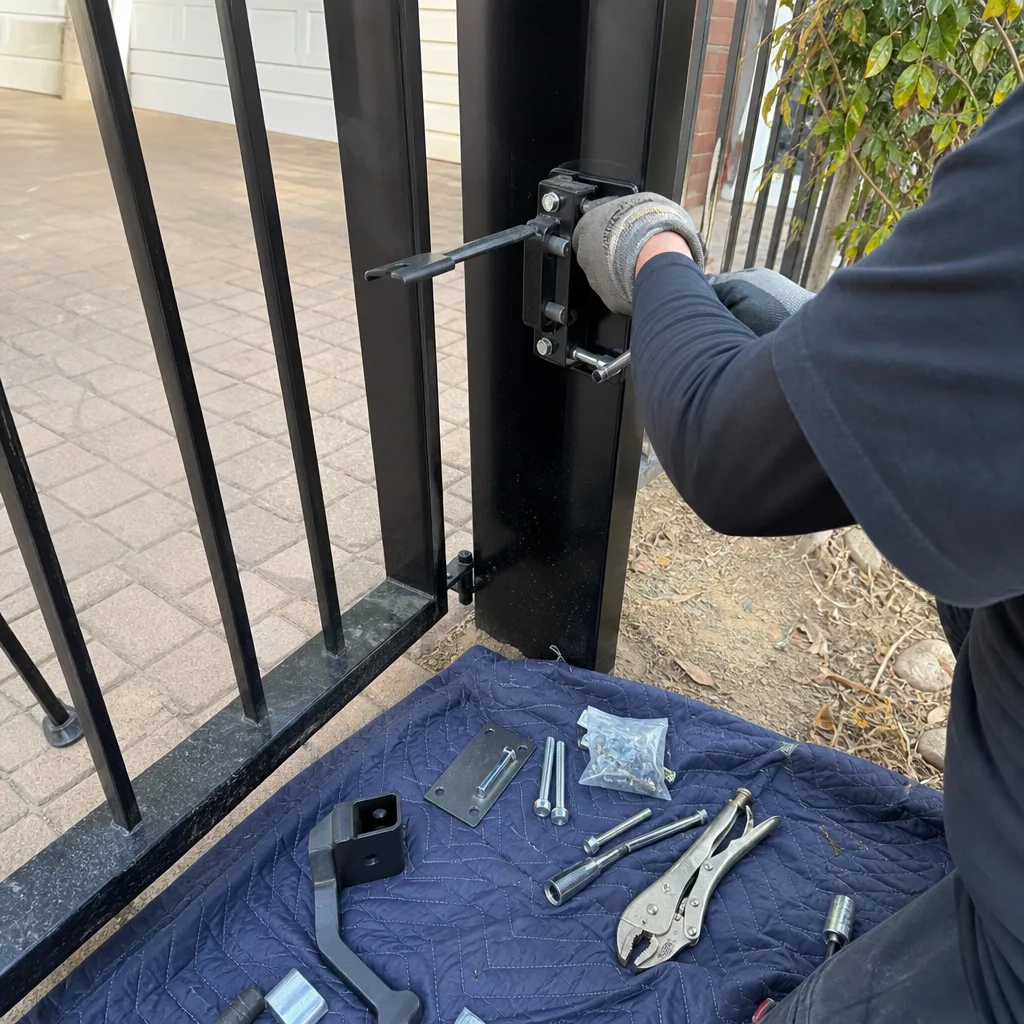
Some warning signs don’t make a sound. They show up as geometry changes, surface changes, or wiring changes that a homeowner can spot in a ten-minute walk around the gate. These are the indicators that get missed because people don’t know to look for them.
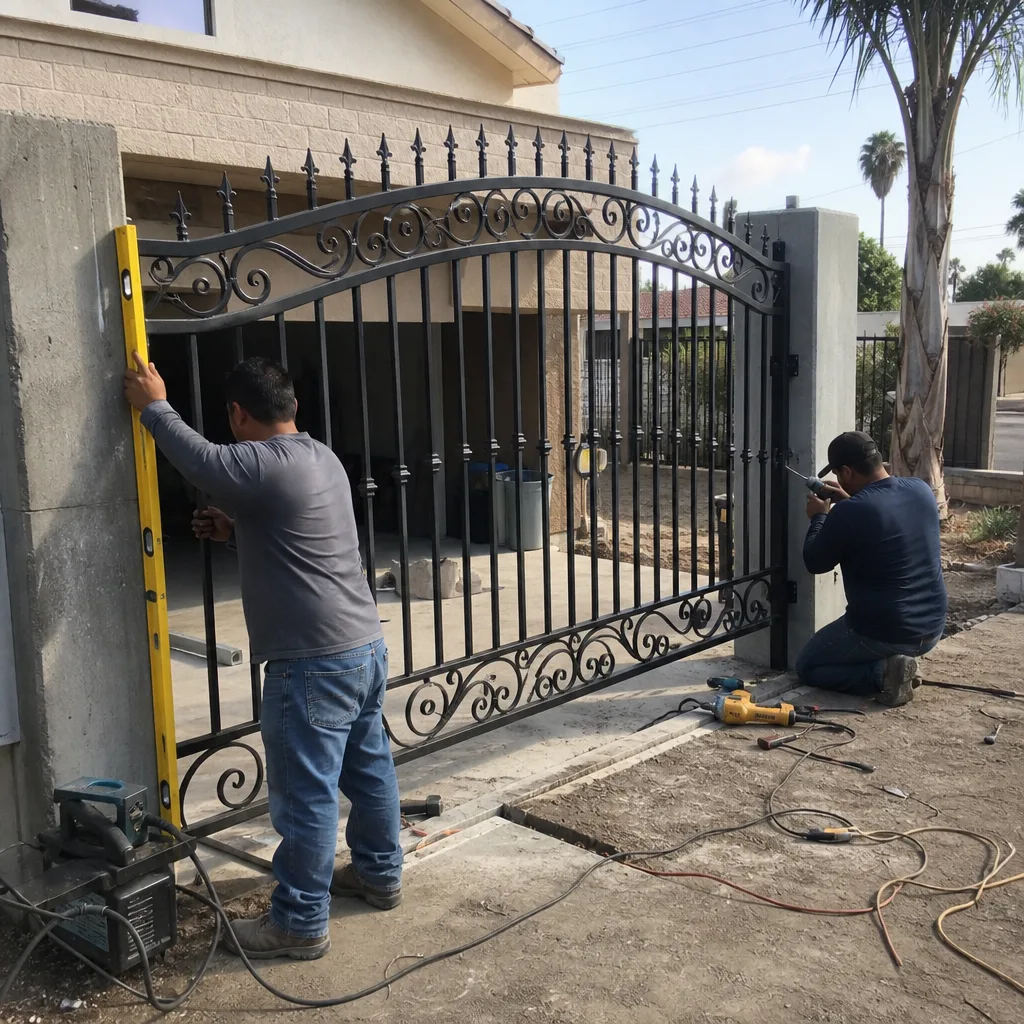
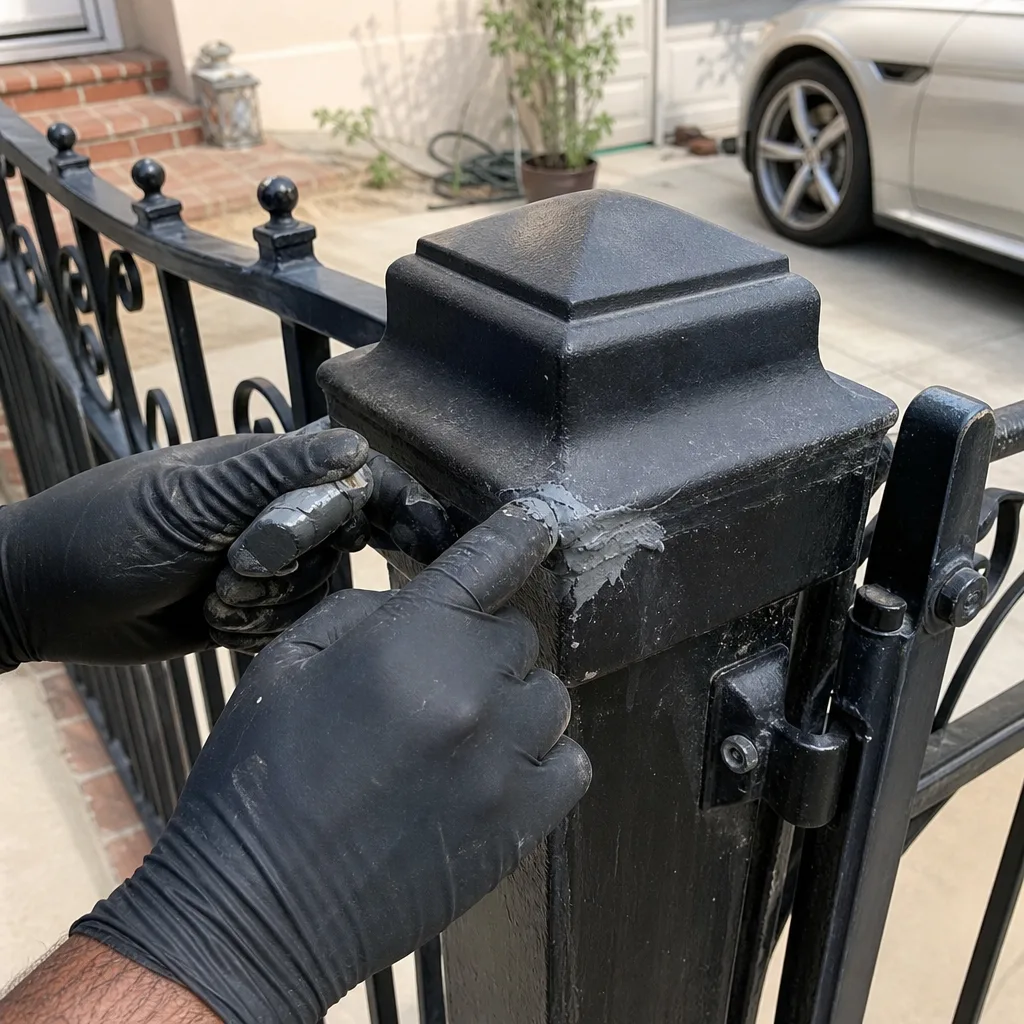
Hairline cracks at weld joints near hinge plates are the earliest structural warning a swing gate gives. The hinge plate is where the entire weight of the gate concentrates, and repeated cycling produces fatigue cracks that start as a line thinner than a pencil lead. In Anaheim’s dry climate, rust doesn’t accelerate these cracks the way it does in coastal environments, but it also doesn’t make them easier to see. Look along the top and bottom edges of each hinge plate, and along the weld bead where the frame rail meets the plate. A crack under 1/16 inch can usually be stop-drilled and welded for $150 to $400. A crack that has propagated through the frame rail means the gate needs a structural rebuild, which runs $600 to $1,800 depending on gate size and material.
Powder-coat bubbling at the post base tells you that moisture is trapped between the coating and the steel beneath, and the steel is oxidizing. The bubble is small; what’s happening underneath is larger. In an iron gate that stands in Anaheim’s irrigated landscaping, the post base is the most common point for invisible rust. If you press a bubble and it crunches, the rust is active. A gate with active rust at the base has not yet failed structurally. It has, however, begun a process that will eventually require post replacement. Address it before the bubbling spreads more than a few inches, and a repair typically involves grinding, treating, and re-coating at $250 to $600.
Wire conduit separation near the operator housing is the one visible sign that homeowners in Anaheim dismiss more than any other. The flexible conduit that carries low-voltage wiring from the operator to the control box or photo-eye will sometimes pull out of its fitting where it enters the operator housing. The conduit gap exposes the wires to sunlight, sprinkler spray, and rodents. Once the insulation cracks, you get a short that trips the operator or, worse, an intermittent short that behaves like the failure patterns described above. Re-seating the conduit and replacing any damaged wire is a $120 to $300 repair. The alternative is a short that eventually damages the control board, and that repair starts at $400.
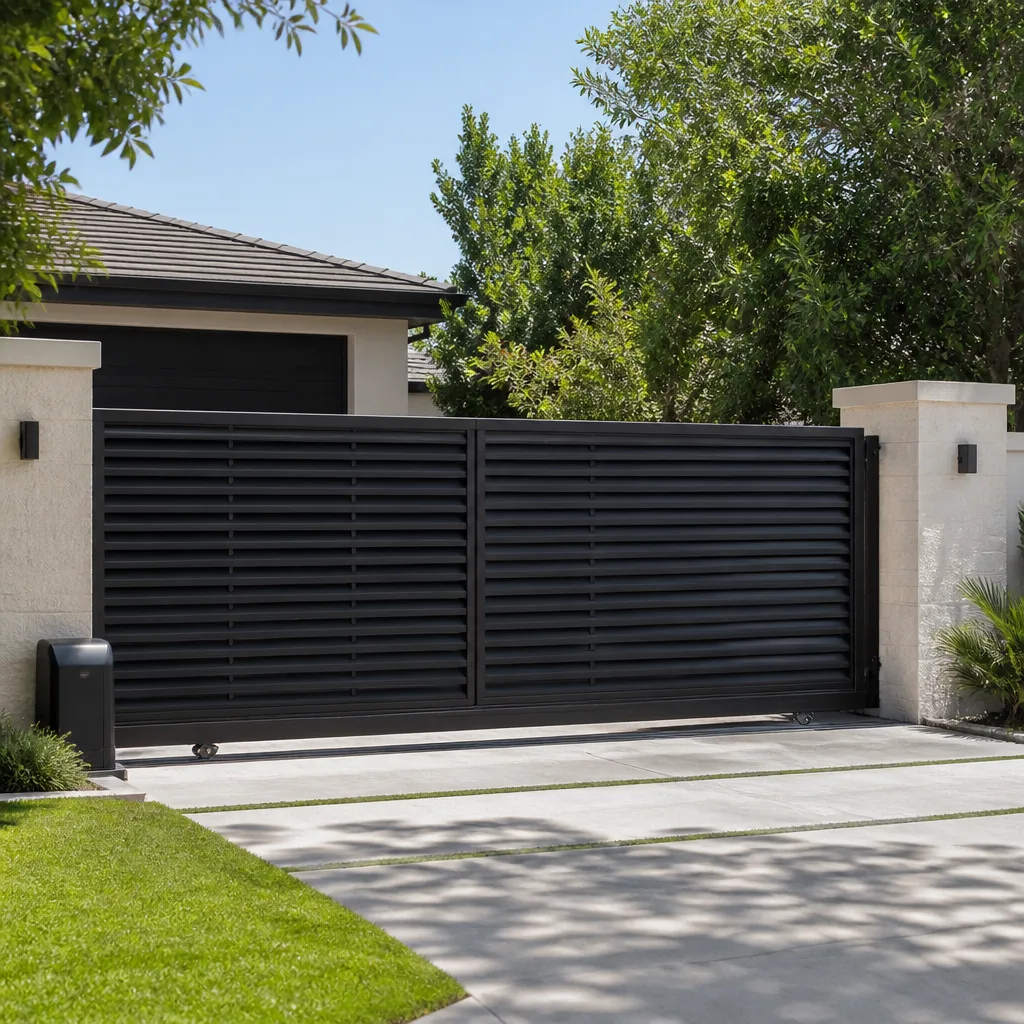
Track deformation on slide gates is visible as a flattened spot in the V-track or a wheel that no longer makes full contact. When one wheel lifts, the gate’s weight redistributes to the remaining wheels, and those wheels wear at an accelerated rate. Replacing a wheel set and re-leveling the track on a residential Anaheim slide gate runs $350 to $700.
Electrical and Control Irregularities: Photo-Eyes, Keypads, and Limit Switches
Not every gate warning sign is mechanical. The controls and safety systems on modern gate operators have their own failure modes, and they often announce themselves in ways that look like the gate is “misbehaving” rather than failing.
A photo-eye that is misaligned by two inches is the single most common cause of a gate that refuses to close, reverses mid-travel, or holds open for no apparent reason. The photo-eye is the infrared beam that stops the gate if anything crosses the path, and it’s required by code on any automated gate installed after 2001 in Anaheim. When the beam is partially blocked or knocked out of alignment, the operator interprets the condition as an obstruction and refuses to close. The fix is usually a realignment and a beam strength test, $90 to $180. We’ve also seen photo-eyes that are perfectly aligned but so coated with dust and irrigation overspray that the beam is too weak to register. Cleaning and resealing the lens solves it.
A keypad that works intermittently or requires multiple presses is often a low-battery condition or a failing keypad membrane, not a control board problem. The keypad is exposed to Anaheim’s UV and heat, and the rubber membrane breaks down after four or five summers. Keypad replacement on most residential operators runs $150 to $350 including the part and programming.
A gate that drifts past its normal stop position by an inch or two points to a limit switch problem. The limit switch is what tells the operator where to stop, and when it slips or wears, the gate over-travels. You may hear the motor straining briefly at the end of each cycle. That straining is the operator trying to push the gate past its physical stop, and it will destroy the gearbox if left unchecked. A limit switch adjustment or replacement is $120 to $280 on most residential operators, and it should be done before the over-travel exceeds half an inch.
A battery backup that no longer holds a charge matters more in Anaheim than homeowners expect. Power flickers and short outages are common during Santa Ana wind events, and a gate without battery backup becomes inoperable during every outage. Testing the battery once a year, and replacing it when the runtime drops below half its rated duration, is a $180 to $400 preventive step that avoids being locked in or out during the next wind event.
When Each Warning Sign Crosses from Monitor to Schedule
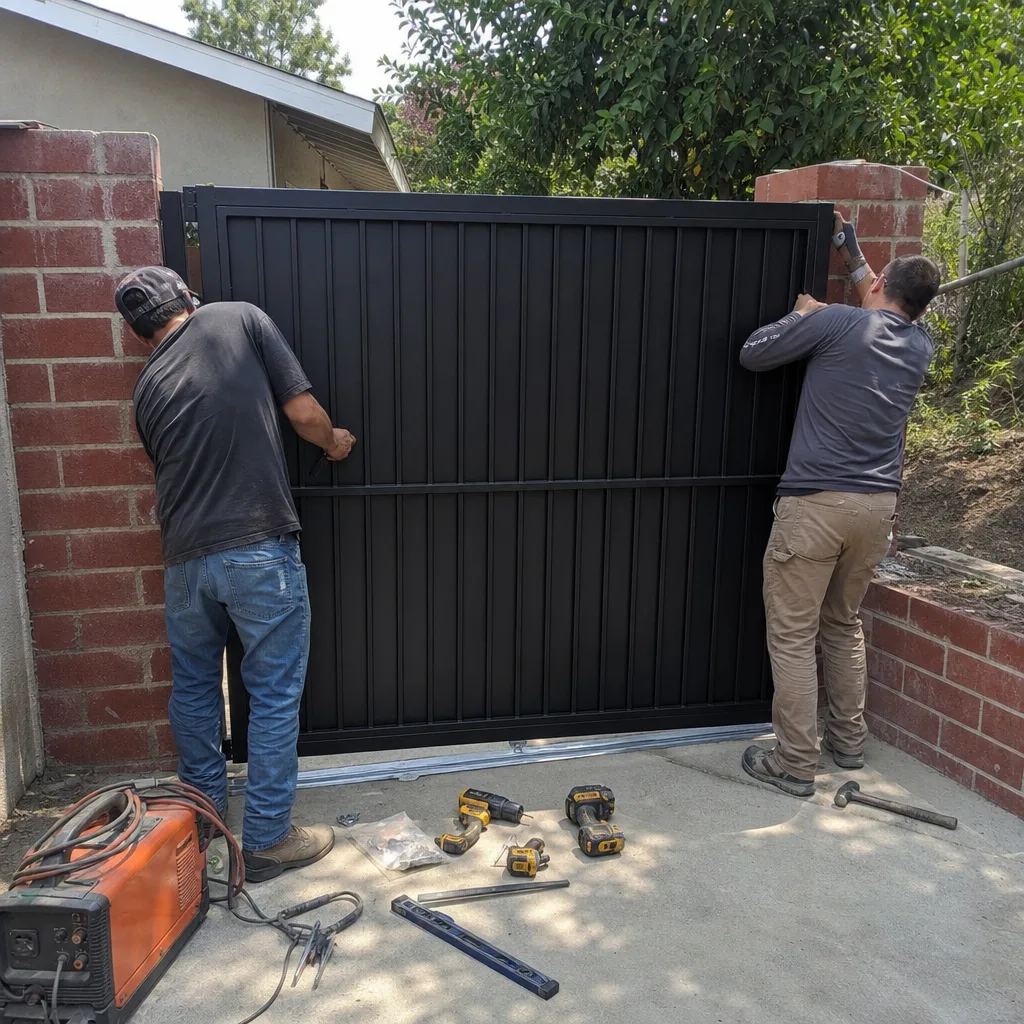
The question every homeowner actually wants answered is not “what’s wrong with my gate” but “how long can I wait before I have to deal with this.” Here’s the threshold table we use with Anaheim customers, organized from the longest monitoring window to the shortest.
- Travel-time drift under 10%: Monitor. Log monthly. No action needed beyond observation.
- Travel-time drift 10-20%: Schedule a diagnosis within 60 days. The problem is real and measurable, but the repair window is still comfortable.
- Travel-time drift over 20%: Schedule within 2 weeks. The operator is working harder than it should, and the additional load is accelerating wear on the gearbox and motor.
- New grinding sound from gearbox: Schedule within 30 days. Dry grease or early gear wear is correctable at moderate cost; full gearbox seizure is not.
- Grinding from chain or rack: Schedule within 3 weeks. Continuing to run the gate deepens the rack damage and increases the eventual repair cost.
- Frequent photo-eye false stops: Schedule within 2 weeks. The gate is still functional, but each false stop is a cycle the operator doesn’t need.
- Hairline weld crack at hinge plate: Schedule within 30 days. Cracks propagate under load, and a welded stop is cheaper than a structural rebuild.
- Powder-coat bubbling at post base: Schedule within 60 days unless the bubbling is spreading, in which case schedule within 2 weeks.
- Conduit separation at operator housing: Schedule within 2 weeks. Exposed wiring is one rain event or one rodent chew away from a short.
- Gate stops mid-travel with no warning light: Schedule immediately. This is a completed failure, not a warning sign.
The pattern across every threshold is the same: the repair window closes as the problem compounds. A dry bearing is cheap. A seized bearing takes the wheel with it, and the wheel takes the track. Each stage multiplies the cost.
Common Mistakes to Avoid
- Assuming slow is normal. Gates do not wear gradually like car tires. A gate that moves 25% slower than it did six months ago has a specific, identifiable cause. Measuring travel time once a month is free and catches the problem before the operator fails.
- Spraying WD-40 into the operator housing. The operator is not a squeaky door hinge. Spray lubricant thins the grease in the gearbox and accelerates wear. If the gate is squealing, the cause is a belt, a bearing, or a dry joint – not something that responds productively to a spray can.
- Ignoring intermittent failures because they resolve. An intermittent gate has not healed; it has simply stopped exhibiting the failure at that moment. The failure is still there, waiting for the right temperature, humidity, or usage pattern to reappear, usually at the worst possible moment.
- DIY limit switch adjustments without a multimeter. The limit switch interacts with the operator’s control logic. Adjusting it by feel without measuring the current draw and stop position can produce an over-travel condition that damages the gearbox. This is a $120 to $280 professional adjustment on most operators.
- Waiting until the gate is fully dead before calling. A gate that has stopped completely is often cheaper to diagnose than an intermittent one, but the underlying repair tends to be more expensive because the failure has progressed through its warning stages and become total. The component that was a $300 repair last month is now a $1,200 replacement.
- Replacing a photo-eye without testing the wiring. The photo-eye is a common point of failure, but it’s not the only thing that causes false stops. A shorted wire or a failing control board input can mimic a bad photo-eye. Replacing the photo-eye without testing the circuit wastes $150 and leaves the real problem in place.
- Assuming one brand of operator behaves like another. A LiftMaster slide-gate operator and a DoorKing slide-gate operator may serve the same function, but their limit switch designs, motor draw characteristics, and control board behavior are different. A diagnostic observation that is normal for one brand may be a warning sign for another. Anaheim homes have a mix of brands, and the right interpretation depends on knowing which one is on the property.
When to Call a Professional
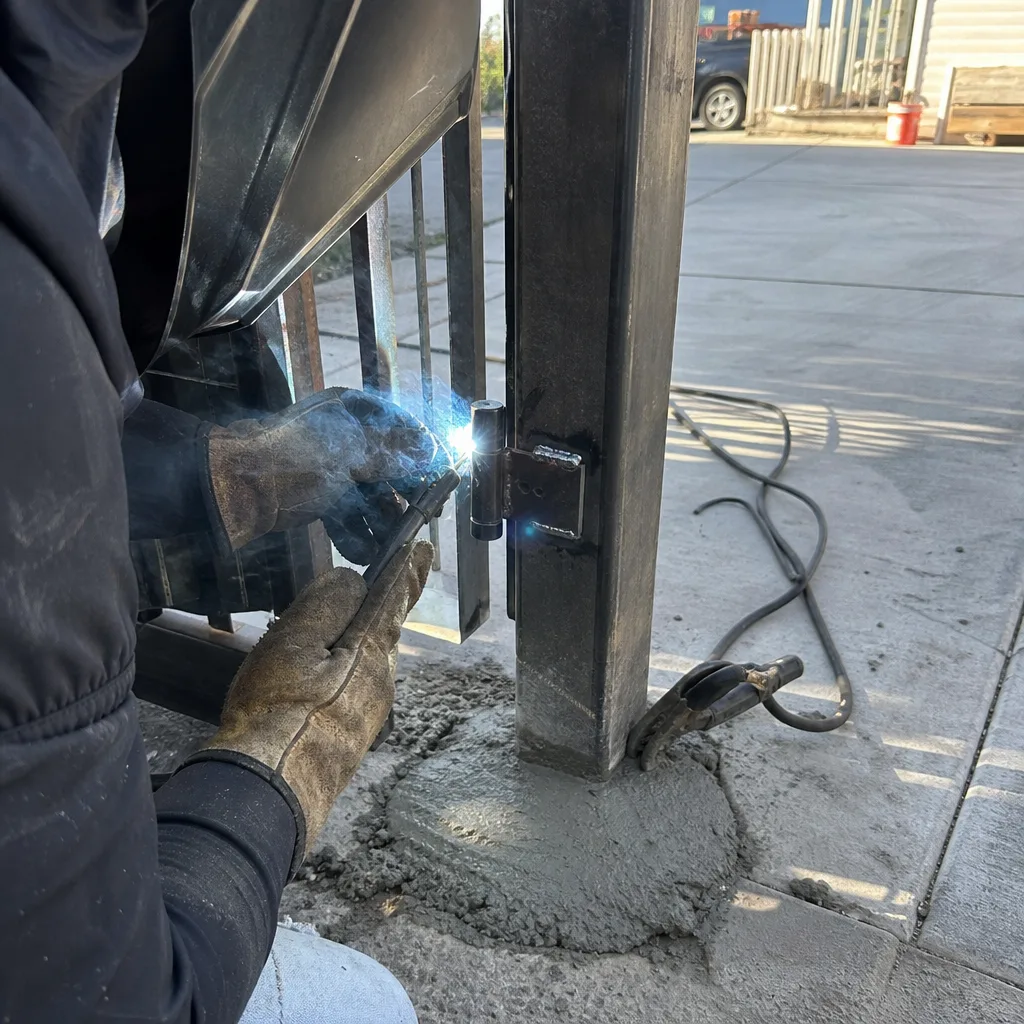
You should call a professional when any of the thresholds in the table above has been crossed, when the gate stops mid-travel with no obvious obstruction, when you hear a new grinding sound you cannot trace to a specific external source, or when you see a structural crack, conduit separation, or active rust at a load-bearing point. Gate operators combine line voltage, moving mechanical load, and control electronics, and a misdiagnosis can turn a $200 repair into a $1,800 one. Gate Motor & Opener in Anaheim work should always be handled by a technician with the right test equipment and the right parts for the operator on your property.
Vance Gate Repair Anaheim home service area includes all of Anaheim, and we offer free estimates by phone. Call (657) 567-5799 and describe the symptom, the brand of operator, and the measurements from your travel-time log if you have them. We’ll give you a written price before any work starts, and every visit leaves a photographed record of what was found, what was set, and what was replaced.
Frequently Asked Questions
Gate repair in Anaheim typically costs between $150 and $900 for most common failures, with simple adjustments like photo-eye realignment or limit switch setting at the low end and gearbox rebuilds or structural repairs at the high end. For help choosing a provider, see How to Hire a Gate Repair Contractor in Anaheim: A Step-by-Step Guide. Full operator replacement runs $900 to $2,600 depending on brand and gate size. Call (657) 567-5799 for a written quote customized to your operator and symptom.
We can often identify the likely failure pattern from a phone description when the homeowner can provide the brand of operator, the specific sound or behavior, and the travel-time baseline. A phone diagnosis is not a substitute for an on-site measurement of current draw and component condition, but it lets us bring the right parts on the first visit and give you a realistic price range before we arrive.
In Anaheim’s dry, hot climate, the most common gate failure we repair is a burnt capacitor or failed control board caused by heat cycling inside the operator housing. The second most common is photo-eye misalignment or lens coating from dust and irrigation overspray, which causes false stops and refusal to close. Both are repairable without replacing the entire operator.
A residential gate operator in Anaheim should last 10 to 15 years with annual maintenance that includes gearbox grease inspection, limit switch verification, and photo-eye testing. Without maintenance, the typical lifespan drops to 7 to 10 years because heat and dust accelerate grease breakdown and capacitor aging. The operator that has run 12 years without service is on borrowed time even if it still opens every morning.
We service nine major automation brands including LiftMaster, DoorKing, Elite, and Mighty Mule, plus five additional lines. We work on whatever operator is already on the property rather than steering customers toward replacement when a repair is the appropriate fix. Gate Installation in Anaheim is available when replacement is genuinely the better option, but repair is always presented first when it saves money.
A slow-moving gate is a warning sign that the operator is under increased load, which accelerates gearbox and motor wear. The gate itself is not inherently dangerous while moving slower than normal, but the underlying condition will progress to a complete failure if left unaddressed. The failure tends to occur during the most inconvenient cycle, and a gate stuck half-open or half-closed creates a security and access problem that the original repair would have prevented.
The Bottom Line
Gate warning signs are measurable, specific, and cheaper to address before the failure becomes total. A travel-time log takes two minutes a month and catches the earliest indicator. A grinding gearbox has a repair window of about four weeks. A hairline weld crack can be stop-drilled and welded for a few hundred dollars, or ignored into a structural rebuild that costs five times as much. Anaheim’s heat, dust, and wind accelerate every failure mode described above, which means the monitoring habit matters more here than in milder climates. If you’ve noticed any of the signs in this guide, explore more guides & resources, or call Vance Gate Repair Anaheim at (657) 567-5799. You’ll get a written price before any work starts, and a documented photo record when the technician leaves.
Written by Adrian Vance, Owner at Vance Gate Repair Anaheim, serving Anaheim since 2014.